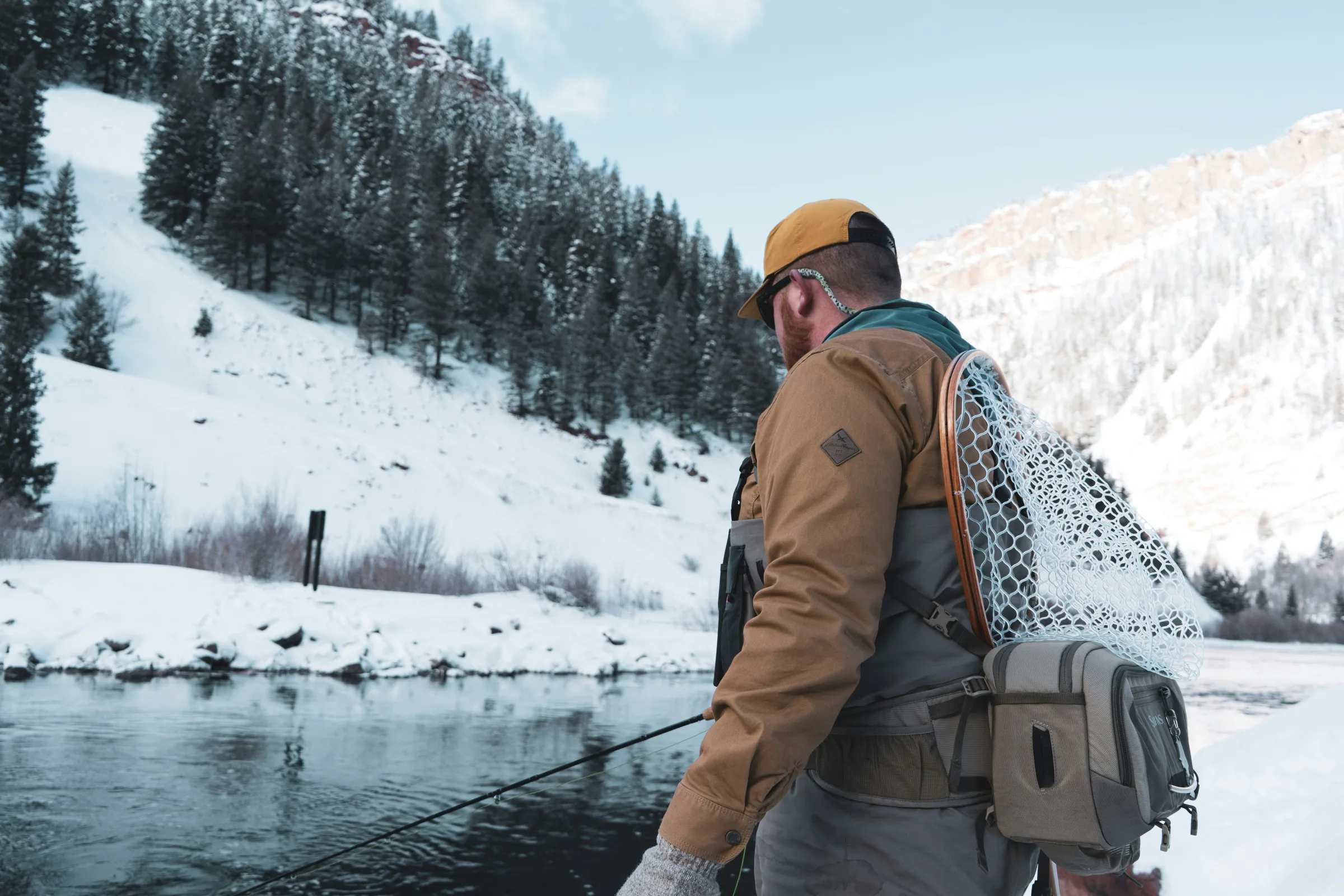
Most fly fishers put the rods away in October, and for a lot of rivers that is the right thing to do. But the fishing doesn't stop everywhere. Grayling are in season on English and Welsh rivers, steelhead are in the rivers around the Great Lakes and along the Pacific coast, most of the American tailwaters fish all year, and in New Zealand and Patagonia it is summer. Here is where to go.
A closed trout season is not a closed sport.
Not Everything Is Closed
Somewhere around the end of October the calendar tells most northern fly fishers that it is over for the year. For a lot of rivers that is true, and it should be: the brown trout are spawning, and the closed season exists to leave them alone while they do it. But a closed trout season is not a closed sport. Grayling are in season through the winter on English and Welsh rivers, the lake-run steelhead are in the Great Lakes tributaries, winter steelhead are coming into the rivers of the Pacific Northwest, most of the big American tailwaters fish all year, and on the other side of the world it is summer.
This page is a map of that water: what is open between November and March, what the fishing is like, and where to look first. Each water links to its own page, where you will find the live river conditions and the detail. Seasons and rules change and vary beat by beat, so treat this as the place to start, not the rulebook.
Grayling on the English and Welsh Rivers
The lady of the stream does her best fishing when the trout have gone off duty.
In England and Wales the statutory grayling season runs from 16 June to 14 March, but grayling are really sold as a winter fish. Once the trout close, the beats that spent the summer charging for trout rods start selling grayling days, typically from October, and the fish shoal up in the deeper glides and pool tails where they are easier to find than at any other time of year.
The chalkstreams are the famous end of it. The Test treats grayling as a winter product, with most bookable beats running from October to November or December and a few estate waters into mid-March. The Itchen sells grayling from October too, and the lower Itchen runs from 12 October to 31 January, fly only. The Hampshire Avon has a fair claim to be England's finest grayling river and is Frank Sawyer's river; most of its beats sell grayling from October, some to the end of December and some to the end of February. The Wylye, the Dorset Frome and the Kennet all sell grayling days through the winter, though dates vary from beat to beat at both ends.
The northern rivers are cheaper and often better. The Wharfe, the Ure and the Swale in Yorkshire carry grayling through the full statutory window on most association water, with autumn into December the classic period; on the Wharfe many beats are fly only and every grayling goes back. The Dove and the Derbyshire Derwent are fine Midlands grayling rivers, and the Teme, as good as any of them, opens to grayling on association water from 1 October. In Wales the Wye & Usk Foundation's Fishing Passport lists grayling from 16 June to 14 March on the Wye and the Irfon, and some beats allow trotting for grayling in winter, from October on parts of the Wye and from November on the Irfon.
In cold water the fish lie deep and close to the bottom. A heavy nymph fished close in under a short line, or a trotted float where it is allowed, finds them when nothing is rising. On a mild afternoon a small dark dry fly can still bring them up. The grayling season closes on 14 March so the fish can spawn, which is reason enough to handle them gently in the meantime.
Scotland: The Spring Salmon Opening
The first fish of the year is caught in January, in snow, by someone who has been out every day since the opening.
The Tay opens to salmon on 15 January, one of the earliest openings in Scotland, and the first days of the season draw anglers who would not miss them for anything. It is Scotland's biggest river by volume. The main river is graded in good conservation status for 2026, though two of its tributaries, the Earn and the Eden, are graded poor and are catch and release only. On the Tay itself, Scottish law requires every salmon caught before 1 April to be released, and the Tay District Salmon Fisheries Board asks anglers to release every fish all season.
Spring fish are few and precious. Fish a big fly or a tube deep and slow on a sinking line, cover the lies methodically, and expect blank days. When a fish does come, play it firmly, keep it in the water, and let it go.
Great Lakes Steelhead
Lake-run rainbows that came into the rivers in autumn and are still there in January.
The tributaries of the Great Lakes hold lake-run steelhead in autumn, through the winter and into spring. On the Ontario side the lower reaches of many of these rivers are open all year, though sanctuary reaches and Fisheries Management Zone seasons apply, and the rules are specific to each river: check the current Ontario Fishing Regulations Summary for the zone before you go.
The lower Niagara below the Falls is the outstanding winter fishery, a big emerald river through the gorge holding outsized steelhead and lake trout, though the flow is enormous and the wading and boating are serious. The Saugeen is Lake Huron's headline steelhead river and the Maitland at Goderich a quieter Huron-shore alternative. Around Georgian Bay the Nottawasaga, the Bighead and the Beaver all carry steelhead runs, and on Lake Ontario the Credit and the Ganaraska do the same within reach of Toronto.
In winter the fish settle into the slower, deeper water, and they do not move far to take. Nymphs and egg patterns drifted close to the bottom are the standard approach. Many of these rivers colour and clear quickly, so the fishable window is often on the drop after rain or a thaw. Shelf ice and frozen guides come with the territory.
Winter Steelhead in the Pacific Northwest
Rain-fed rivers, big fish fresh from the sea, and a fishable window that opens on the drop.
On the coast of British Columbia and Washington the winter steelhead run through the wettest months of the year. Close to Vancouver, the Chehalis in the eastern Fraser Valley has a hatchery-supported winter run and fishes on the clarity drop after rain. The Vedder (the lower Chilliwack) is the most accessible serious steelhead river in the province, best from late February into spring. The Squamish and Cheakamus fish for bull trout and Dolly Varden through the clear, cold months, with winter steelhead running alongside. On Vancouver Island the Cowichan has a year-round brown trout fishery on its fly-water reaches as well as winter steelhead, and the Stamp/Somass carries winter fish too. In BC, hatchery steelhead may be kept where they are marked and the rules allow it; wild fish go back. Steelhead fishing in BC needs a Steelhead Conservation Surcharge Stamp on top of the basic licence, and the bull trout and Dolly Varden of the Squamish system must be released.
On Washington's Olympic Peninsula the Hoh and the Sol Duc are the headline rivers of a rainforest coast built for winter steelhead. Last winter (2025–26) most of these rivers were open from 1 December to 31 March, with wild steelhead to be released and never lifted out of the water. WDFW sets each winter's season in December and closes rivers by emergency rule when runs are weak, so check its current notices before every trip. The Sol Duc clears faster than its glacial neighbours after a storm, which is why so many anglers try it first.
The Tailwaters: Trout Fishing That Never Closes
Cold water from the bottom of a dam doesn't much care what month it is.
A tailwater is a river that comes out of the bottom of a dam. The water is cold in summer and, crucially, never as cold as a freestone river in winter, so the trout keep feeding all year and many of the great American tailwaters are open all year. Some close their spawning reaches in winter, though: two spawning areas on the South Holston, and the catch-and-release area below Bull Shoals Dam on the White, are shut from November to January to protect spawning brown trout. They are also some of the most crowded rivers in the country in summer and pleasantly quiet in January.
The San Juan below Navajo Dam in New Mexico holds an astonishing density of big rainbows and browns, and the reach below the dam is Special Trout Water. The Bighorn below Yellowtail Dam in Montana fishes on sowbugs, scuds and midges. In the east the South Holston in Tennessee holds some of the highest trout densities in the lower 48. In Arkansas the White below Bull Shoals grows enormous brown trout and the Norfork, its short sibling, has been growing big wary browns since 1949. Arkansas changed its trout rules on these rivers in 2026, so check the current AGFC regulations before you fish them. Further west there is Lees Ferry below Glen Canyon Dam, the Green below Flaming Gorge, the Lower Provo, the Fryingpan with its mysis shrimp, the South Platte at Deckers and the lower Sacramento below Shasta and Keswick. Back east, the Chattahoochee below Buford Dam runs cold within reach of Atlanta.
The thing to watch on a tailwater is not the weather but the dam. Fishability follows the release schedule: low generation is wadeable, full generation is a float or a wait. Check the release before you set off, and on the Chattahoochee the National Park Service requires a life jacket to be worn when wading, boating or tubing from Buford Dam down to the GA 20 bridge. Winter flies are small: midges, tiny nymphs, and on a mild grey afternoon a hatch of blue-winged olives.
Summer in the Southern Hemisphere
If you can get there, December in New Zealand or Patagonia is midsummer.
For anyone who can travel, the northern winter is the southern summer. In Patagonia the season opens on 1 November and runs to the end of April or May, depending on the province, the national park and the water. The Chimehuín, where Argentine fly fishing effectively began, has mandatory catch and release for trout; the Malleo is a small, clear, technical dry-fly river, catch and release with barbless hooks throughout and fly only on its upper section; and the upper Limay below Lake Nahuel Huapi is fly only and catch and release as far as Rincón Chico.
In New Zealand the Taupō district is managed by DOC, not Fish & Game, and needs its own licence. Lake Taupō and the Tongariro are open all year; the Tongariro's famous run of lake-run rainbows comes up through the New Zealand winter and spring, roughly May to October, but the river and the lake's stream mouths fish through the summer too. In Southland the Mataura is one of the world's great brown trout dry-fly rivers, with reliable mayfly hatches and an afternoon rise, and the upper Oreti, open from 1 November to 30 April, is a fragile sight-fishing river for big, wary browns. Both need a Fish & Game licence, which is valid everywhere in New Zealand except the Taupō district, and non-residents fishing the upper Oreti, a designated water, also need a designated-waters licence.
Before You Go
Winter rules change more than summer ones. Check them every time.
Winter fishing has more moving parts than summer fishing. Beats sell grayling on dates of their own choosing, steelhead rivers close at short notice when runs are weak, sanctuary reaches protect spawning fish, and tailwaters change with every release. The season notes on each venue page give the general picture; the regulations from the authority that sets them are the ones that count, and the fishery or beat you are booking will know its own dates.
Cold water is less forgiving of mistakes, too. Wade carefully, wear a wading belt, and on big winter rivers a lifejacket. Play fish quickly and keep them in the water to unhook them: frost on the ground is hard on a fish held out in the air. And if a river is out of season, it is out of season for a reason.