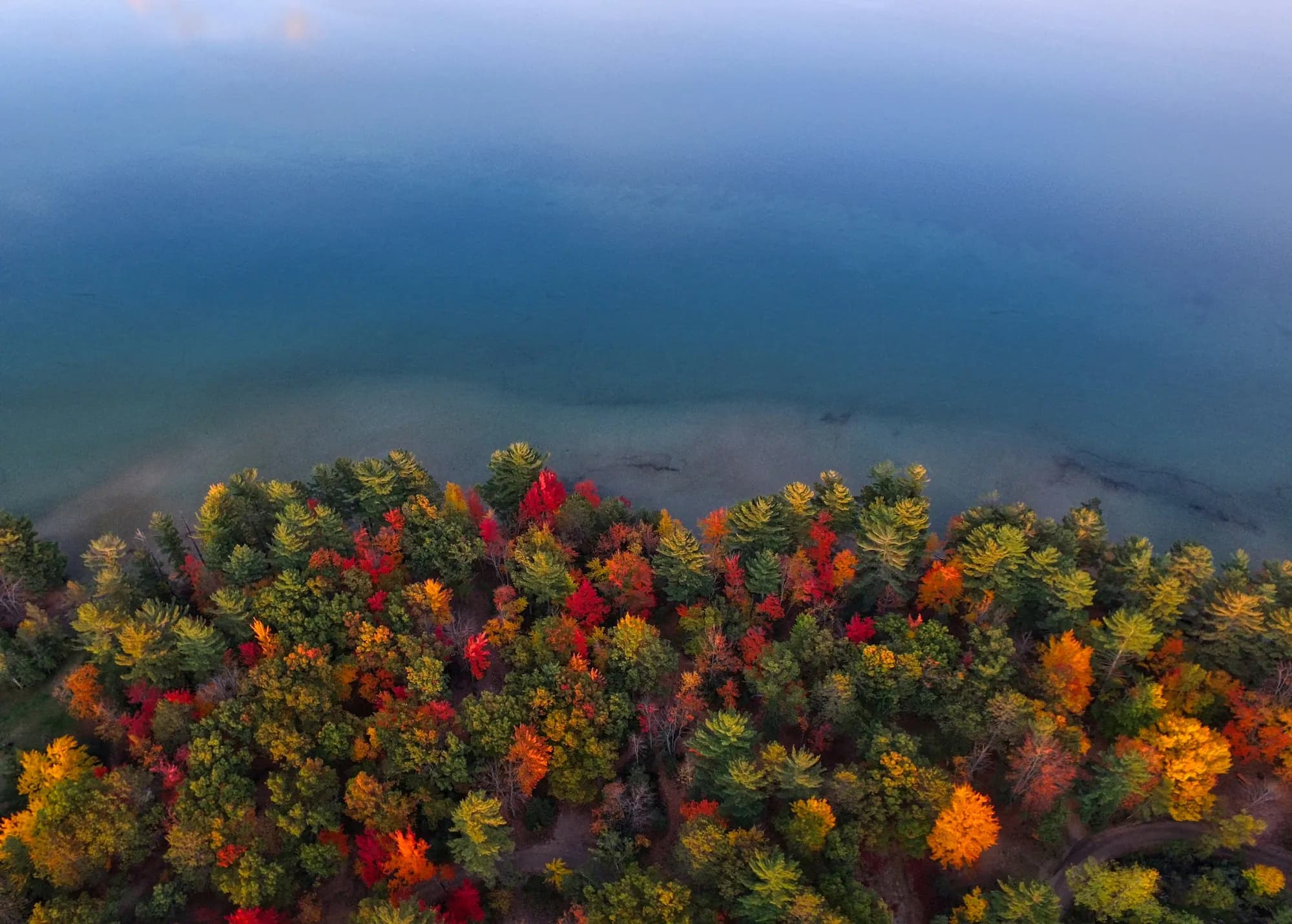
The Great Lakes are one of the great steelhead and salmon fisheries, and the tributaries that feed them keep a long and unusual calendar: kings in late August, coho behind them, steelhead from the fall right through to an April peak, and wild spring runs on the Superior side. Behind it all is the Driftless, a region of limestone spring creeks that fish all year and hold astonishing densities of trout. Put together, it is a year-round fishery in the middle of the country.
Salmon in autumn. Steelhead through winter. Spring runs in April. Driftless all year.
The Great Lakes: A Calendar of Runs
It is easy to treat steelhead as a winter event and miss the way the tributaries actually behave: late-August kings on the first cold nights, salmon crowding small rivers in autumn, steelhead arriving behind them and holding through winter, spring runs on the Superior side and an April peak on the Michigan rivers. Add the Driftless spring creeks, which fish for resident browns through the year, and the Au Sable's hatch-rich summer, and there is something fishing in every month.
This guide is about access and timing, and the rules are state by state. The method sits in the other playbooks. The fishing is often crowded in the salmon weeks and far better once the leaves drop. Snagging is illegal: release any foul-hooked fish, and keep out of the gravel where salmon and, in April, steelhead are spawning.
Michigan: The Lake Michigan Rivers
The Pere Marquette, the Manistee, the Muskegon and the Betsie.
The Pere Marquette is the river everyone learns Great Lakes steelhead on, with a flies-only stretch (check the extent and the current rules), the first kings of the season in late August and a long steelhead run that starts in fall and rides through to an April peak. It is spring-fed enough to stay open in a cold snap, gravelly and wadeable, and rewards a good dead drift more than a strong arm.
The big water below Tippy Dam on the Manistee gets huge runs of king and coho in the fall and a steelhead run that holds fish all winter and peaks in spring. Because it is a tailwater it fishes steady and cold while the freestones are out. The Muskegon below Croton is a big, even tailwater with strong steelhead and fall salmon runs, a drift-boat river that fishes when the freestones are blown or frozen. The Betsie is small and pretty, famous for fall salmon crowding a modest channel and then a good steelhead run behind them.
The Au Sable and the Upper Peninsula
Holy Water browns in summer, and a river for the name in spring.
The Au Sable is two rivers in one. The upper Holy Water is a hallowed resident brown-trout flies-only stretch, hatch-rich and technical, while a short reach below Foote Dam gets some Lake Huron steelhead and a fall salmon run. It is the birthplace of Trout Unlimited, and it fishes like a place that earned the name.
The Two Hearted is Hemingway's river in name and feeling only (the story's real setting was elsewhere), a remote, tannin-stained Upper Peninsula stream with a wild spring steelhead run and resident brook trout in the headwaters. You fish it for the place as much as the fish.
Lake Superior: The Brule and the North Shore
Cold north-woods rivers with smaller, partly wild runs.
The Bois Brule is a cold, spring-fed Lake Superior river with a long history, with runs of steelhead and lake-run browns up a tea-stained, ledge-rock river through deep north woods. It is wilder and colder than the Michigan rivers, with a smaller run that is partly wild.
The Knife River on Minnesota's North Shore is short, flashy bedrock water that comes up fast on snowmelt and rain and drops just as quickly. The spring steelhead run is the whole show, and it is a watch-the-gauge, go-when-it's-right fishery. Minnesota's other North Shore streams (the Lester, Sucker and Baptism) are also worth checking; look up each one's current rules and conditions.
Urban Steelhead: Milwaukee and the Root
Chrome in the city, from fall through spring.
The Milwaukee River is Wisconsin's major urban Lake Michigan steelhead tributary, where salmon, steelhead and browns move into very visible city water. The Root runs salmon and steelhead right through Racine, with the Wisconsin DNR's steelhead facility on its banks concentrating the run. Both are accessible water that delivers from fall through spring for anglers who do not mind a city backdrop. Check current Wisconsin DNR access information, and be clear about the difference between the lower migratory river and the wider watershed.
The Driftless: Spring Creeks With a Long Year
Timber Coulee, Black Earth Creek, the South Branch Root River and the Whitewater.
Timber Coulee Creek is the most famous water in the Driftless and, by reputation, a famously productive trout stream. It is a restored limestone spring creek that runs cold and clear through a narrow coulee, so the trout see everything and forgive nothing. Black Earth Creek, near Madison, is a Class I wild-brown fishery on the edge of a city and well regarded among Midwest anglers; the downside of fame is company, so fish the early and late ends of the day.
In Minnesota, the South Branch Root River at Lanesboro is the most-fished trout river in the state, with a state hatchery and a paved trail along it, and the Whitewater and its three branches through Whitewater State Park are the busy, beloved heart of southeast Minnesota trout fishing, with stocked browns, rainbows and brook trout in postcard limestone bluff country. Check each state's seasons, special regulations and any inland trout stamp; spring creeks offer fishing across a much longer year than freestones, where the seasons allow.
The Great Lakes Year
Something is running in every season.
Winter (December to February): steelhead on the Manistee and Muskegon tailwaters, the Pere Marquette staying open in a cold snap, the Driftless creeks wherever the season allows.
Spring (March to May): the Pere Marquette and Manistee steelhead peak in April, the Two Hearted, Knife and Bois Brule spring runs, and the Driftless hatches begin.
Summer (June to August): the Au Sable's hatch-rich Holy Water and the Driftless spring creeks. There is little Great Lakes tributary fishing in high summer; the first kings on the Pere Marquette arrive in late August.
Autumn (September to November): king and coho salmon on the Manistee, Muskegon, Betsie and lower Au Sable, then steelhead behind them once the leaves drop; Milwaukee and Root steelhead from fall.
Gear and Licenses
A nine-foot six-weight, a sink-tip, and the right paperwork for the state.
A nine-foot six- or seven-weight with floating and sink-tip lines covers the steelhead tributaries; a switch rod suits the bigger rivers. For the Driftless, a nine-foot four- or five-weight, fine tippet and small nymph and dry patterns. Waders with good traction and a wading staff matter on the bedrock and ledge-rock rivers.
The Michigan, Wisconsin and Minnesota Departments of Natural Resources issue licenses and publish the regulations, and some states require an additional Great Lakes trout and salmon stamp or endorsement (the Driftless states may also require an inland trout stamp). Check the current rules for the water you plan to fish.