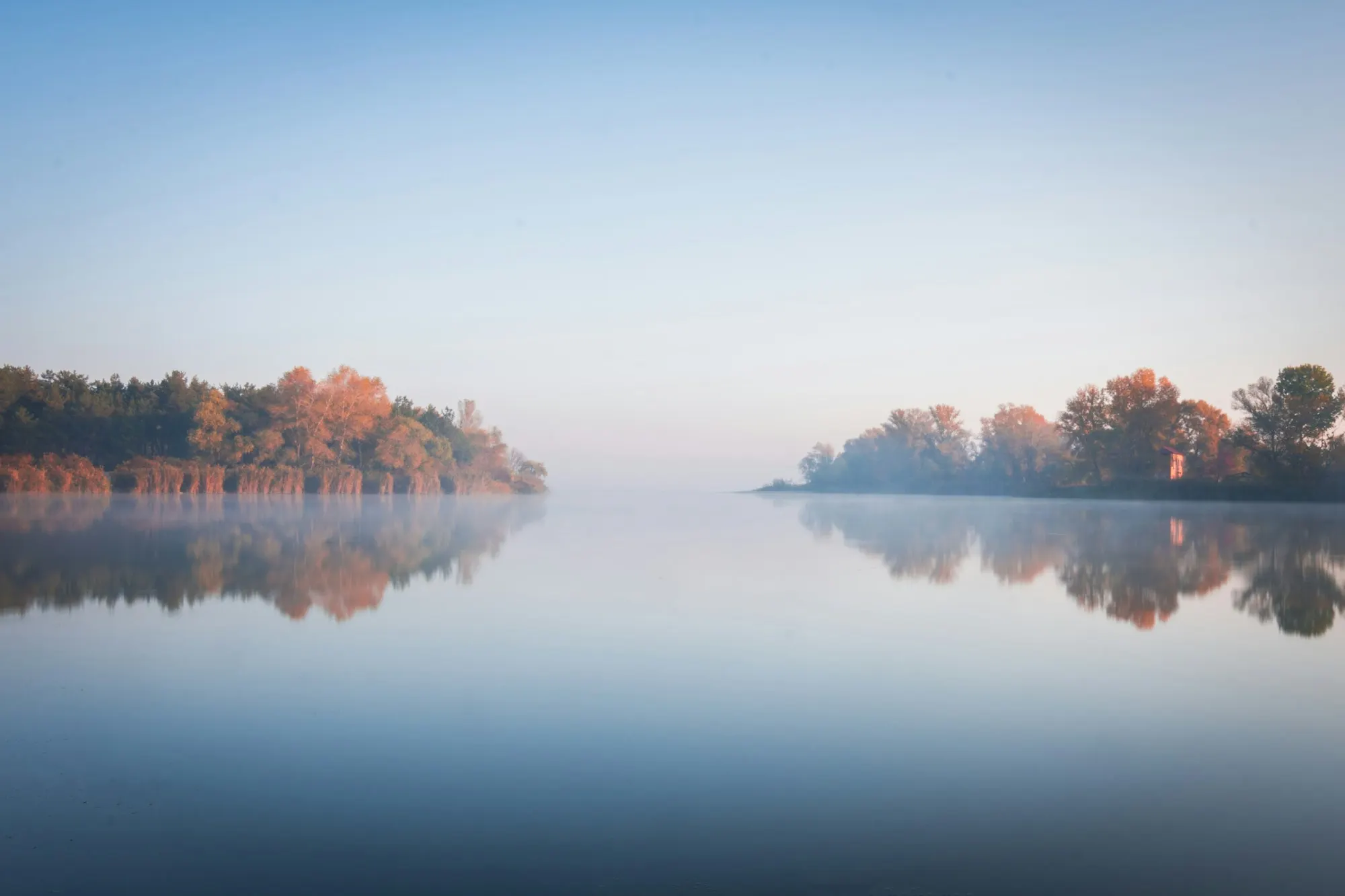
Winter is when most fly anglers take up indoor hobbies, like tying flies they will not use until April. Fair enough. But the rainbow trout in a stocked lake do not know the rivers have closed, and on a still, grey day in January they can be feeding quite happily in eight feet of water while you sit at home. The fishing is slower, the days are short and the fish are deeper, but none of that is a reason to stop. It is a reason to fish differently: slow, deep, patient, and in the middle of the day.
A sinking line, a buzzer, a long pause, and the fishery's tea.
The Water That Stays Open
There comes a Saturday in November when the trout rivers are closed, the salmon rivers are closed or closing, and the big reservoirs are counting down their last weeks. It is tempting to clean the reels and sulk. But a fair number of small stocked fisheries stay open all winter, and a few bigger waters fish on into December before they shut. Rainbow trout on stillwaters can generally be fished year-round where the owner allows it, and plenty of owners do.
I will not pretend this is wild fishing. These are managed waters, the fish came in on a lorry, and the hut has a price list. But the trout pull hard in cold water, the banks are quiet, and there is something to be said for standing on a frosted bank at ten in the morning, watching a sinking line and drinking the fishery's tea. It is still fishing. On some days it is very good fishing.
What Cold Water Does to Trout
Slower fish, shorter feeding, food that lives near the bottom, and the warmest water in a hard frost sitting at the deepest point.
Trout are cold-blooded, so as the water cools their metabolism slows and they need less food. They do not stop eating, but they will not chase much. The flies that work are the ones that come to them slowly, at their depth, looking like something that lives there.
After the autumn turnover a lake has much the same temperature from top to bottom, and the fish can be anywhere. In a hard cold snap it changes again. Fresh water is densest at about four degrees. Once the surface cools below that, the colder water floats and the four-degree water stays at the bottom, so in a hard, still cold snap the deep water is the warm water and the fish go down to it. On a small, shallow lake the wind soon mixes it all again. On a still, sunny afternoon after a mild spell the sheltered shallows can warm a fraction, and fish sometimes move up into them for an hour.
In practice that gives a short list. In a cold spell, fish deep and slow. On a mild day, look at the margins and the shallow end in the warmest part of the day. And whatever the weather, the food is mostly underwater: bloodworm (the larvae of the same midges whose pupae are buzzers), buzzer pupae, corixa, shrimp, snails, the odd damsel nymph, and in some waters fry.
Fresh Stock and Resident Fish
Two kinds of trout in the same lake, behaving like two different species.
A winter fishery holds two populations. The newly stocked fish have spent their lives in a stew pond being fed pellets from above. For a few days they cruise high, travel in groups and take bright, moving things, which is why a blob or a small lure stripped through the top few feet catches them so readily. Fisheries often stock on a schedule, and it is reasonable to ask at the hut when the last fish went in.
The fish that have been in the lake for a while are another matter. They have learned what food looks like here, they have been caught and returned or have seen a hundred blobs, and they behave more like wild trout: deeper, slower, choosier and far more interested in a buzzer or a bloodworm than in anything orange. Those are the fish the rest of this guide is about.
Slow and Deep: The Winter Presentation
Get the fly down, then barely move it. Watch the line, not the fly.
Most winter fishing is about depth and speed, and both point the same way: deeper and slower than you think. An intermediate line covers a lot of small-water fishing. A slow or fast sinker gets a fly down quickly to fish holding deep, and a long leader on a floating line lets a weighted buzzer or bloodworm sink slowly through the layers. Count the fly down, note the count when you get a take, and fish that depth again.
The retrieve is slow: a figure-of-eight, short pulls with long pauses, or nothing at all. A buzzer under an indicator, where the fishery allows indicators, holds a fly at one depth for as long as you like, and on a cold day that can out-fish everything else. A team of buzzers or a bloodworm fished static or barely moving in the deeper water is the other standard method.
Takes in cold water are rarely a bang. More often the line just tightens slowly, or the indicator dips or stops. Do not strike hard at these; lift steadily into the weight and let the hook do its job. Rainbows hooked in winter fight hard and long, so keep the pressure on and bring them in rather than letting them tire themselves out.
Lures earn their place too. A small lure fished slowly on a sinking line, either a dark one such as a black-and-green Viva or a white Cat's Whisker or Minkie for coloured water, takes fish that are ignoring imitations. Buoyant flies such as boobies hold just off the bottom on a sinking line, but they are banned on some fisheries because a static fly can be swallowed deeply. Where they are allowed, fish them on a tight line and never leave one sitting unwatched.
Short Days and the Midday Window
Nobody needs to be at a frozen lake at first light. Arrive when the frost lifts, fish the middle of the day, and go home in time for dinner.
Winter fishing rewards a civilised start. The water is coldest after a clear night, and the warmest hours are usually from late morning to mid-afternoon, which is when the fish are most likely to be feeding. On a mild, grey day after a cold spell you may find them more active, and higher in the water, than you expect.
Walk the water first. On a small lake it takes ten minutes, and in winter a single rise or a fish turning in the margins tells you more than an hour of blind casting. Fish with the wind at your back if you can. If nothing is showing, start deep on the bank with the wind behind you, or in the deepest water near the bank, then work towards the shallows as the day warms.
Ice changes things. A skin of ice in the margins is common on small waters after a hard frost, and fisheries close some or all banks when it is thick. Never stand on ice, take care on frozen staging and wooden platforms, and pack a spare layer, a hat and dry gloves. Cold hands tie bad knots. Don't wade in winter: gravel-pit and reservoir margins shelve steeply, and cold water takes your breath away. On boat waters, keep your lifejacket on.
Keeping Fish, Returning Fish
Cold water is kind to a released trout. Cold air is not.
Many stocked fisheries are catch-and-keep, with a bag limit, and some sell catch-and-release tickets with barbless rules. Follow the fishery's rules on both. Where brown trout share a water with year-round rainbows, the browns may be out of season or catch-and-release only, so check before you fish and return them if they are.
Cold water holds plenty of oxygen, so a trout played quickly and returned quickly usually recovers well. Cold air is another matter: wet your hands, keep the fish in the net in the water while you unhook it, and keep it out of the water for seconds, not minutes, especially when there is frost on the ground. Barbless hooks make all of this easier.
Where to Fish in Winter
Small stocked fisheries in every corner of Britain and Ireland, and a few big waters that hold on into December.
England: Lechlade & Bushyleaze in the Cotswolds is a year-round water that fills the winter gap left when the big Bristol reservoirs close. Rockbourne, on the Hampshire–Wiltshire border, stocks Arctic char alongside its trout in winter. Duncton Mill near Petworth in West Sussex, Exe Valley Fly Fishing near Dulverton on Exmoor, Maran Lakes near Long Marston outside York, Wharncliffe north of Sheffield, Ghyll Head south of Bowness-on-Windermere and New Mills near Brampton in north Cumbria all describe themselves as open through the year.
Wales and Scotland: Llandegla near Wrexham and Bargoed Park in the Taff Bargoed valley keep going through the winter. In Scotland, Markle near East Linton in East Lothian, Orchill near Auchterarder, Raemoir near Banchory and Bowden Springs near Linlithgow all list year-round fishing.
Ireland: Hillsborough Lake in County Down is a year-round stocked rainbow water in a park. In the Republic, Annagh Lake in Cavan sells day tickets all year, Ballin Lough near Leap in West Cork is open all year by boat with fly only, and Carrigavantry in Waterford, a club water, has rainbows year-round while its brown trout season is closed.
Some big reservoirs fish on into late autumn or December before they close for the winter; Rutland is one, so check its current season. A few of the larger waters, Ladybower among them, switch to pike and perch in the colder months. Opening days and hours shrink in winter everywhere, and fisheries close at short notice for ice, flood or repairs, so ring or check the fishery's own page before you set off.