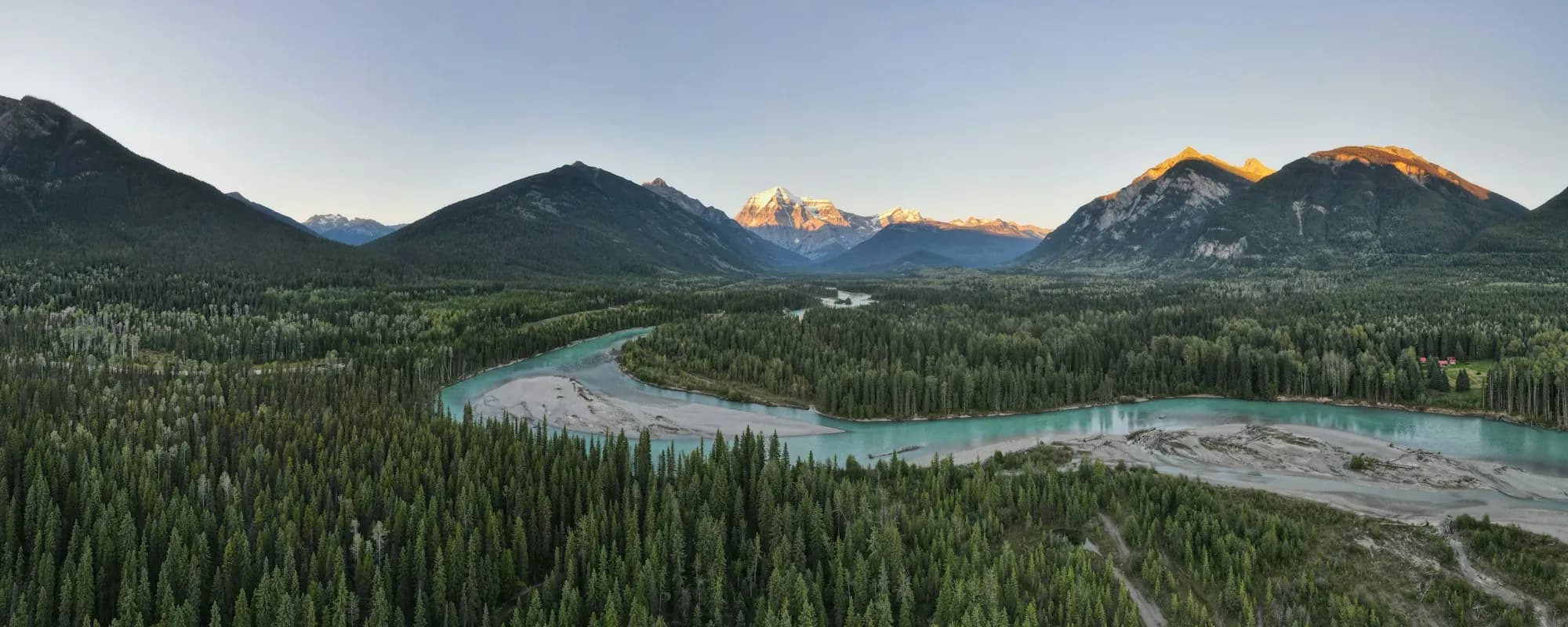
British Columbia is enormous, and the trick to fishing it is to follow the calendar rather than the map. In spring the Interior plateau lakes come off the ice and the chironomid hatches begin. In summer the Rockies rivers open and the dry flies come out. Autumn belongs to the Skeena system and its steelhead. And in winter the coast has the rivers that fish when everything inland is shut. It is one of the few places where you can keep a trout rod rigged all year and never run out of somewhere to go.
Lakes in spring. Cutthroat in summer. Steelhead in autumn. Island rivers in winter.
British Columbia: Follow the Calendar
British Columbia's fishing is scattered across a huge and varied province, and what makes sense is to plan by season rather than by place. The Interior lakes are a spring and early-summer event, the Rockies rivers a summer one, the Skeena system an autumn one, and the Island and Fraser Valley rivers a winter one. A rod kept rigged all year will find work.
This guide is about access and timing. It covers where each kind of water is, what it asks of you, and who to check with before you go. The method sits in the other playbooks. A caution runs through it: many of these fish are wild, native or threatened, and the rules are tight.
The Interior Lakes: Ice-Off Chironomids
Roche, Lac le Jeune, Corbett and Pennask: the plateau lakes that built BC's stillwater tradition.
Roche Lake is a classic Kamloops-country stillwater, a rich plateau lake full of strong Kamloops-strain rainbows that key on chironomids, scuds, leeches and damsel nymphs. It fishes from ice-off in spring through the season, and the famous chironomid hatches draw anglers to anchor over the shoals and drop-offs. Lac le Jeune is one of the most accessible and reliable of the Kamloops trout lakes, with good shoals and the full run of stillwater hatches.
Corbett Lake, south of Merritt, is a small, storied lake with hard, selective rainbows, rewarding careful chironomid work and sedge dries in early summer. Pennask is the high-plateau lake that gave BC its famous free-rising rainbow strain: cold and prolific, with mayfly and sedge hatches that bring fish to the surface. Check each lake's access, gear restrictions (some lakes are fly-only, some are not) and rules, and the ice-off date for the year. Summer turns the Interior lakes slow in the heat, and autumn brings a second season of leech, chironomid and damsel patterns.
The Elk River: Rockies Cutthroat
A dry-fly cutthroat river of the Canadian Rockies, from mid-June to October.
The Elk at Fernie is clear, limestone-rich freestone full of big, willing native westslope cutthroat that smash dries through the summer and into a golden autumn, with bull trout in the river that must be released unharmed and not targeted. It opens in mid-June once the snowmelt drops out and fishes beautifully through October. These are native fish with their own rules, so check the current regulations, handle them gently and release bull trout.
Vancouver Island and the Fraser Valley: Winter Rivers
The Cowichan, the Vedder, the Squamish and the Cheakamus: where winter fishes.
The Cowichan is the jewel of Vancouver Island fly fishing, a lake-headed river with a celebrated wild brown trout fishery (a genuine rarity in BC), plus rainbows, sea-run cutthroat, winter steelhead and salmon. Lake-buffered flows make it unusually fishable, and there is sport through much of the year: dry-fly trout in the warmer months (check flows, and stay off in drought and heat) and winter steelhead, where wild-fish restrictions apply, so check the current rules before you fish for them.
The Vedder, the lower Chilliwack, is the most accessible serious steelhead river in BC, an hour or two from Vancouver, with a hatchery-supported winter run and good autumn salmon. It is busy and roadside, and the winter run is typically under way well before late February, so check the regulations for the season. Retain only marked hatchery fish where the rules allow. The Squamish and Cheakamus in the Sea-to-Sky corridor are glacial coastal rivers best fished in the clear, cold months, with bull trout chasing salmon fry and eggs, winter steelhead and cutthroat, but wild steelhead closures or release rules may apply on both rivers, so check the current regulations. Glacial melt clouds them through summer.
The Skeena System: Autumn Steelhead
The Bulkley, the Kispiox, the Babine and the Skeena itself: big fish, swung flies, October.
The Bulkley is the heart of Skeena steelheading, a wadeable, even-tempered freestone that holds big sea-run fish through the fall and often stays fishable when the glacial rivers around it are out. Fish move in from late August and the fishing builds through September and peaks into October. The Kispiox is a small river with a big steelhead reputation, tea-coloured tributary water near Hazelton that fishes best from mid-September into late October; it is a clarity game, and the art is being there when it is dropping back into shape.
The Babine pours out of its namesake lake and grows big steelhead. The fishable water is a classified stretch reached mostly by lodge and jet boat, with guiding and fly-only rules to check, fished on the swing through October. The Skeena mainstem near Terrace is big, serious glacial water that clears in the fall; as levels drop, gravel-bar fly water opens up. Many of these are classified waters with extra licence and rules, so check the Province's regulations and any guiding or lodge requirements.
A word on the Thompson: once the most famous steelhead river on earth, its Interior Fraser steelhead have crashed to an endangered remnant and the recreational fishery is closed. It is a river to honour, not one to plan a trip around.
The BC Year
Every month has somewhere to fish. The rest is a matter of planning.
Winter (December to February): the Cowichan and the Vancouver Island rivers, winter steelhead on the coast, the Vedder (check the season and the hatchery-fish rules), the Squamish and Cheakamus in the clear, cold months.
Spring (March to May): the Vedder and the coastal steelhead, then ice-off on the Interior lakes with chironomids on Roche, Lac le Jeune and Corbett.
Summer (June to August): the Elk opens in mid-June for dry-fly cutthroat; Pennask and the plateau lakes with mayfly and sedge hatches; dry-fly browns on the Cowichan when flows allow; the Skeena summer runs for those who plan ahead; glacial rivers cloud and are best avoided.
Autumn (September to November): the Skeena system. Fish move in from late August, with the Bulkley and Kispiox peaking into October, the Babine swung through October, and the Elk still fishing well in golden weather.
Gear and Licences
A five-weight for the lakes, a switch or spey rod for steelhead, and the right licence.
A nine-foot five-weight with floating and intermediate lines covers the lakes and the Elk; a switch or spey rod in the seven-to-eight-weight range and sink-tips suit the Skeena system and Vedder. Bring chironomid, leech and damsel patterns for the plateau lakes, dry flies and streamers for the Elk, and swung patterns for steelhead. Bear awareness is part of the kit in the north.
The Province of BC issues freshwater fishing licences and publishes the regulations, including classified waters, steelhead and native-trout rules and closures. Always check the current rules for the water you plan to fish.