

Tailwater · Mixed · New Mexico

San Juan River below Navajo Dam

San Juan River below Navajo Dam terrain map

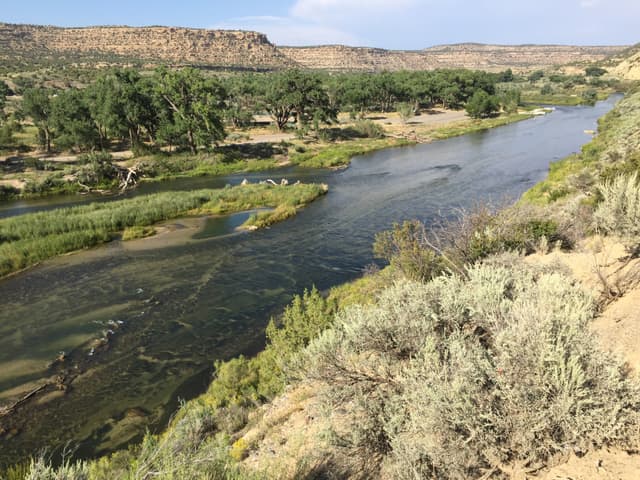
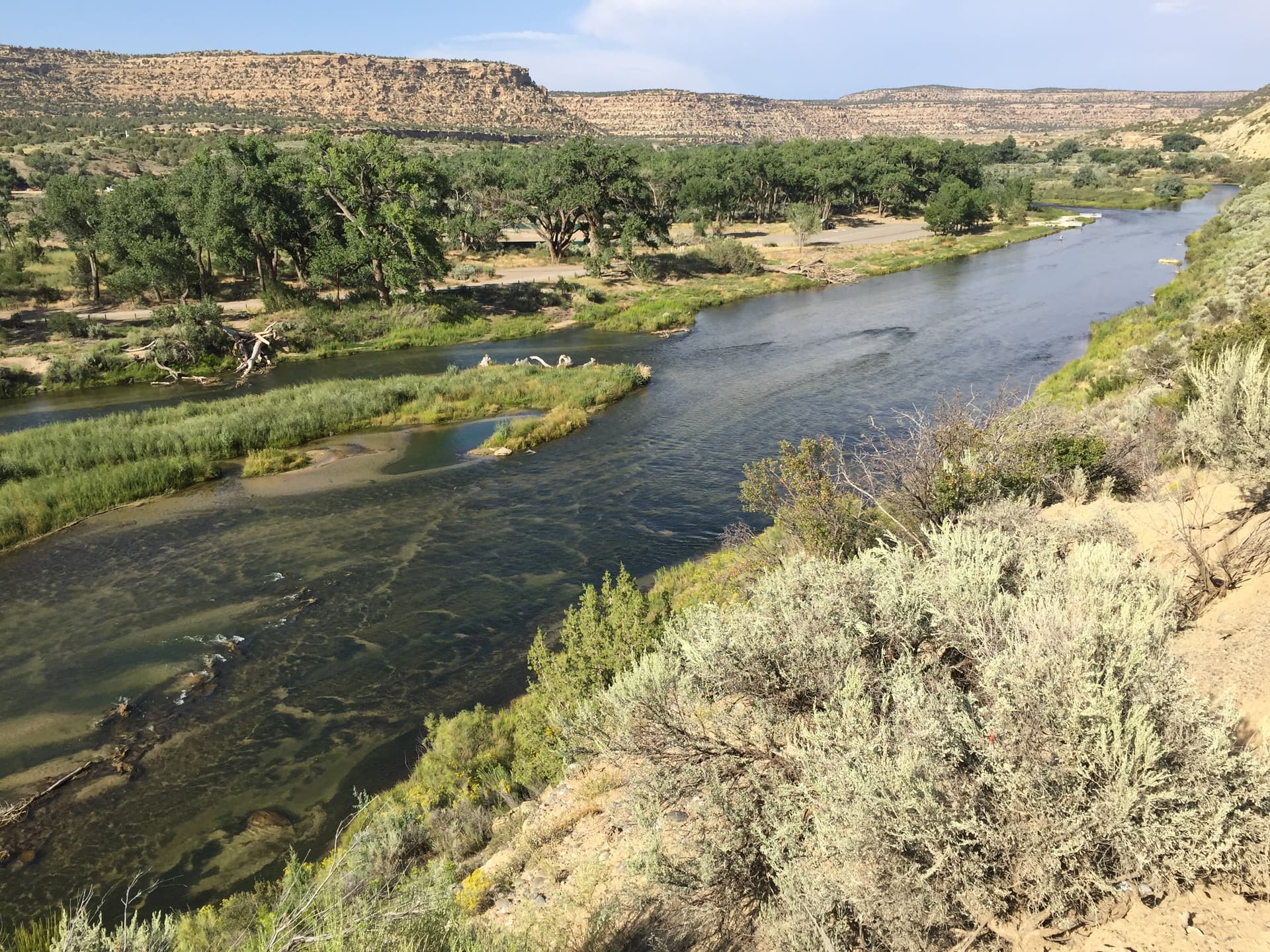
The San Juan below Navajo Dam is one of the great trout tailwaters in North America, and it earns the reputation honestly: a cold, nutrient-rich river in high-desert country that holds an astonishing density of big, well-fed rainbows and browns.

Good · Brown Trout
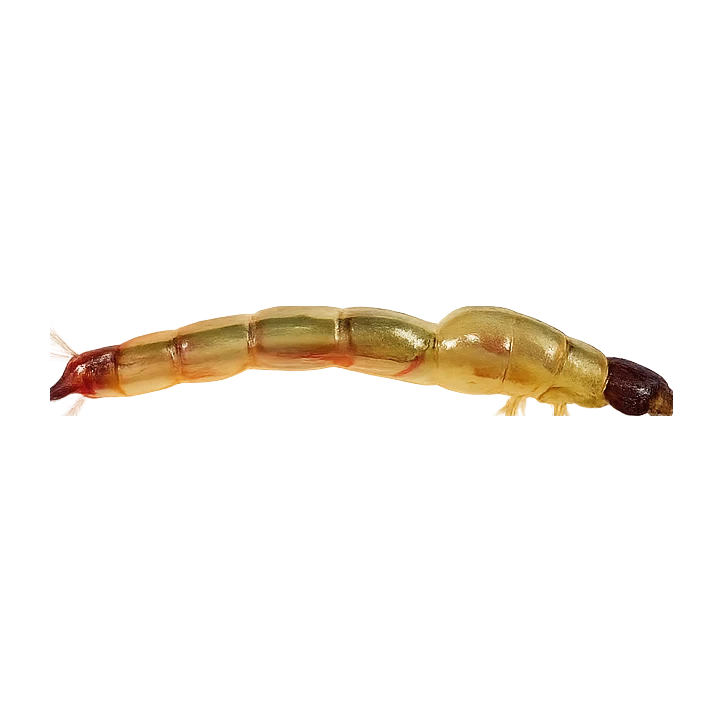
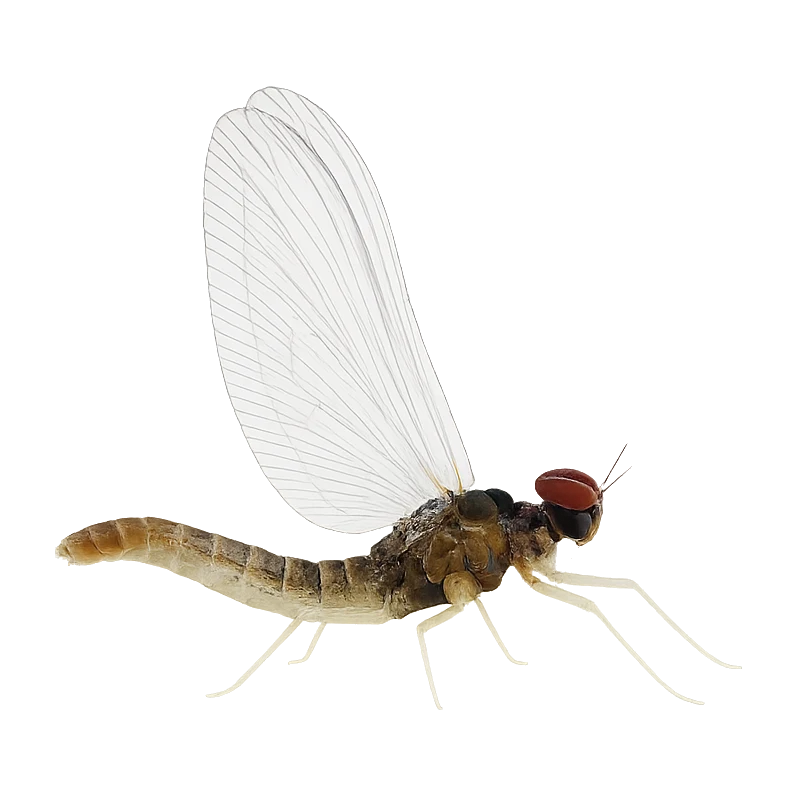
Sparkle Dun · 14-18
Goodlive now
A proper day on the water
River high but settled. Match the colour and fish the seams.
75% confidence
What moved it
  • Level1.40 mLast reading 17h ago
  • Water temp7.6°C
  • ClarityClear
Today's fly
SD
Sparkle Dun14-18
High-confidence seasonal pick
Conditions on the water
Live gauge
Level
Steady
1.40 m
Last reading 17h ago
Water temp7.6°C
ClarityClear
Weather17°C
WindNE 8 km/h
Pressure1018 hPa
Rain · recent1.0 mm
Rain · ahead4.3 mm

Live readings only. Trends shown where the gauge supports them.

Water temperature for Brown Trout
Cool — slow
7.6°Cideal 1016°C
0°14°28°
How to fish it · for Brown Trout
When
Nymphing can work through most of the day.
Where
Cover mixed depths.
Method
Start with tight-line nymphs and adjust if fish rise or drift higher.
Kit
9 ft #4 rod, floating line, 12 ft tapered leader to 4–5 lb fluoro tippet.
Why this works
Good — water clarity is right today, though insect activity could be better.
Hatch timeline · todayQuiet day

Hatch predictions

Today's headline hatch shown — see all 2 active hatches hour by hour with Pro.

Start free trial

14-day free trial. Cancel anytime.

Sub-surface · on the nymphunder the surface

Hatch predictions

Top nymph shown — see all 2 guilds with Pro.

Start free trial

14-day free trial. Cancel anytime.

Beyond the hatch · worth watchingambient prey

Hatch predictions

See what else is on the menu with Pro.

Start free trial

14-day free trial. Cancel anytime.

Evidence
ModelledModerate confidence

Modelled from regional ecology — no survey or occurrence data for this water yet.

Through the year
0–3 scale · July highlighted
J
F
M
A
M
J
J
A
S
O
N
D
Trout seasonSeason
1
2
2
2
2
2
2
2
2
2
2
1
Western Blue-Winged OliveHatch
2
3
3
3
3
3
3
3
2
Pale Morning DunHatch
2
3
3
2
TricoHatch
2
3
2
Black MidgeHatch
2
3
3
3
3
3
3
3
3
3
3
2

Numbers are intensity 0 (none) to 3 (peak) — a guide, not a guarantee.

Ranked for today
Brown Trout fly box
Beats · 5 · 3 reaches

The San Juan below Navajo Dam isn't one uniform fishery — it's zone-led, rule-led, and flow-led, and the single most important thing to get right is which set of rules you're standing in. The famous water is the Quality Water immediately below the dam: special-regulation trout water, catch-and-release, artificial fly or lure on a single barbless hook, and a hard limit of only two flies per line. Downstream of that the rules ease, the species mix widens to catfish and striped bass, and harvest opens up — so don't let the Quality Water reputation bleed into the lower river. It's a controlled tailwater too: the Bureau of Reclamation sets the release at Navajo Dam, and a change can move depth, current speed, and your safe wading lines overnight. The San Juan is genuinely beginner-friendly for catching numbers, but it's technical to do well — depth and drift control matter far more than which size-24 you tie on. Always check current New Mexico Game and Fish regulations, the current Navajo release, and the exact reach you plan to fish.

Navajo Dam outlet & release contextPublic
The system-control point, not a fishing spot first.
Quality Water · 3 beatsDay rods
Quality Water (Special Trout Water), Texas Hole, Crusher Hole & lower Quality Water
The 3 beats
Quality Water (Special Trout Water)Public
New Mexico Department of Game and Fish (public access)
The flagship reach — the special-regulation water immediately below the dam that grows big, well-fed rainbows and browns in faintly unreasonable numbers for high-desert New Mexico. This is technical, crowded, brilliant tailwater fished with tiny midges and Baetis on long, fine leaders, where two anglers in the same run catch very differently because one is a half-foot of drift better. Wade the glassy flats or float it.
Special Trout Water: catch-and-release only, artificial flies or lures with a single barbless hook, and a maximum of TWO flies per line — confirmed in NMDGF rules. Do not rig more than two flies, do not fish bait, do not harvest here. The exact reach boundary and special-water class must be verified against the current New Mexico guidebook before it's treated as canonical.
Texas HolePublic
NMDGF (public access corridor)
The central anchor of the Quality Water — the best-known named reach on the river and the natural hub for both wade and drift-boat anglers. Famously productive and just as famously crowded: in peak season you'll share the water, so etiquette and patience matter as much as presentation. A common put-in for floats down toward Crusher.
Inside the Quality Water, so the same special rules apply: catch-and-release, single barbless artificial fly or lure, two flies per line maximum. High productivity comes with heavy crowding here — give other anglers room and handle fish well in the warm-weather rush.
Crusher Hole & lower Quality WaterPublic
NMDGF (public access corridor)
The lower end of the Quality Water and a common float boundary — Crusher Hole is a key take-out and the practical edge of the special-regulation reach for many anglers running the Texas Hole–to–Crusher float. Quieter than Texas Hole but still excellent technical water, and the place to be sure of exactly where the special rules stop.
Still inside the Quality Water on most readings: catch-and-release, single barbless artificial, two flies per line. But this is the transition edge — the rule and access boundary needs official verification, because the special regulations end somewhere near here and you must not carry them downstream.
Lower public river (below Quality Water)Public
Below the special water the river changes character and rules.
Permits & access
Permit required — see local rules.
  • Special Trout Water immediately below Navajo Dam: maximum TWO flies per line (confirmed)
  • Flow is set by Navajo Dam releases.
What's coming
Plan ahead
5-day outlook
Other water nearby · 1
About this water

The San Juan below Navajo Dam is one of the great trout tailwaters in North America, and it earns the reputation honestly: a cold, nutrient-rich river in high-desert country that holds an astonishing density of big, well-fed rainbows and browns. The famous water is the special-regulation reach immediately below the dam — technical, crowded, and brilliant, fished with tiny midges and Baetis on long leaders and finer tippet than feels reasonable. It's a place where two anglers stand in the same run and one catches everything because they're a size and a half-foot of drift better. Wade or float; nymph the runs, or wait for the Baetis and fish the dries to noses. Below the special water the rules ease and the fishing gets more general. A tailwater through and through — read the release, not the weather.

Under the surface

The San Juan below Navajo Dam is proof that a tailwater can make trout where the desert never intended any. Cold, clear, sediment-free water comes off the bottom of the reservoir at a constant forty-five degrees year-round, and in the four-odd miles of Quality Waters below the dam it grows rainbows and browns in numbers that seem faintly unreasonable for high-desert New Mexico. The river runs through an open valley of sandstone, siltstone and shale — sagebrush country, big sky — the trout holding in braided channels and the famous glassy flats where they sip midges by the thousand. The bed is gravel and cobble, the water low and even because the dam says so. Wading is comfortable on firm footing. The fish are many, large, and have seen every fly in the box twice — bring small.

Wading: Glassy flats over very wary fish

  • Mixed
  • Unconfined
  • Pool riffle
Water quality · US Clean Water Act
  • Aquatic lifeSupporting
What this classification means

EPA ATTAINS assessment unit 'San Juan River (Canon Largo to Navajo Reservoir)' (NM-2405_10), 2024 Integrated Report. Aquatic Life use: Fully Supporting. This is a Clean Water Act assessment-unit classification (the US analogue of WFD), not a live reading.

Status is for the Clean Water Act assessment unit covering this reach.

EPA ATTAINS (Clean Water Act) · NM-2405_10

The full read · show the working · for Brown Trout · confidence 75%
How the 73 is built — score × weight = contribution
Temperature59 × 28%16.5
Flow80 × 22%17.6
Clarity95 × 18%17.1
Feeding Time75 × 13%9.8
Pressure80 × 7%5.6
Insect activity50 × 12%6.0
Conditions total= 73
Can you trust it?
Water temperaturelive gauge readinggauge
Level / flowon-river gaugeobserved
Prey activitymodelled from regional profilemodelled
What would change the calculation
Warmer water — toward the 10–16 °C ideal band — would lift the temperature score.
Directions
Seasons & zones
  • Trout1 January31 December
Related guides
Booking & contacts