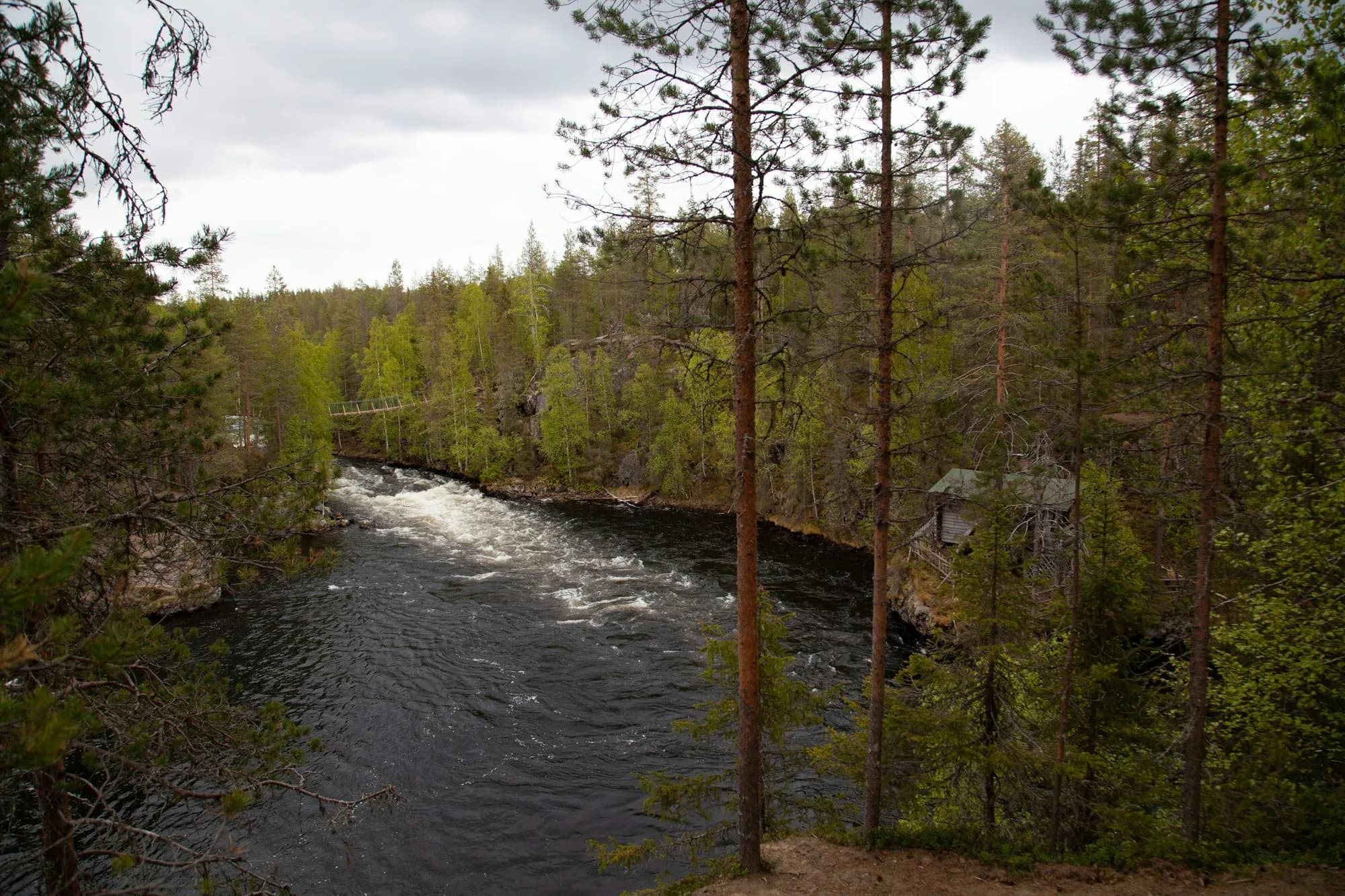
Norway and Finland fish quite differently. Norway is steep, short-run rivers falling from mountains and plateau to the fjord, with Atlantic salmon at the centre of the culture and grayling in the interior for the angler who wants something quieter. Finland is flatter and darker, forest and lake, with clear northern rivers running through national park country and a handful of large border rivers shared with its neighbours. The seasons are short, the days in midsummer barely end, and the rules are real. This guide is a map of the ground, with the permits, quotas and closures left to the people who set them. Sweden has its own guide.
Salmon on the fjord rivers and the Arctic border. Grayling in the Norwegian interior. Forest rivers and long lakes in Finland.
Two Countries, Two Temperaments
It is tempting to treat the north as one place, a pale landscape with salmon in it. In practice Norway and Finland fish quite differently. Norwegian rivers are short and steep, many running from high ground to a fjord in not very many miles, and their salmon culture is deep, organised and rule-bound. Finnish waters are slower and darker, forest and lake and clear rivers through national park country, and the great salmon rivers there are mostly shared with a neighbour.
This guide is about access and timing: where each kind of water lies, what it asks of you, and who to ask before you go. Tactics are in the playbooks. A thread runs through the lot: seasons are short, quotas are strict, and a good deal of the fish are wild and managed with care. Sweden, which sits between and beside them, has a guide of its own.
Trøndelag and Møre og Romsdal: The Salmon Belt
Gaula, Orkla and Namsen in Trøndelag, with Driva just over the county line.
Trøndelag is a core of Norwegian salmon fishing for the visiting fly angler. The Gaula is a well-known name and the Orkla is its neighbour, both with a mix of private beats and public water and a long tradition of fly fishing. The Namsen, north of Trondheim, is a bigger catchment, so it responds more slowly to rain. The Driva, over the county line in Møre og Romsdal, completes the list, and the summer season on all of them runs from about June into August, with the exact opening and closing dates set river by river.
Expect multi-sea-winter fish and a summer grilse run, tubes and larger patterns early and smaller flies when the water drops. Norwegian rivers are managed hard: daily and seasonal quotas, size limits, mandatory catch reporting where it applies, and mid-season evaluations that can tighten or stop the fishing. Arrive with clean, fully dry gear; Norwegian rules on disinfecting and drying equipment are strict. The permit comes from the local rights holder, and the venue page will tell you what we know.
The Arctic Rivers: Alta, Målselva, Tana and Tornio
Short seasons, long light, and rivers that live by the weather.
Finnmark and Troms hold the northern systems: the Altaelva, the Målselva, and the Tana on the Finnish border. Seasons are short and intense, the runoff drives everything, and a week of cold rain can matter more than any fly. Access on the best-known beats may be by allocation rather than by walking up with a rod, so book well ahead and ask what the beat includes.
Rules on salmon rivers often differ by zone, so on the Målselva read the dates and rules for the beat you are fishing and not the river in general. A fish that has spawned is to be put back, which is a good rule to carry to every salmon river. The Tana, or Teno on the Finnish side, is a border river with rules agreed between the two countries. Permits and allowed methods differ by zone and by bank, so confirm what applies to your beat.
The Tornionjoki forms the border with Sweden and is a big, powerful river with salmon, sea trout and grayling. Boats are needed on many sections, the casting is long and the water is heavy, and the productive window is a brief summer one, roughly late June to mid-August. The Muonionjoki is a major tributary and border river in the north-west, with salmon, trout and grayling.
Atlantic salmon here are managed under national and shared cross-border rules, with strict quotas and seasonal limits, and catch-and-release is widely applied. Treat these as conservation fisheries first. Check the rules for the side of the river you are on, because the Finnish and Swedish rules are not the same.
Southern Rivers: Numedalslågen and the Kymijoki
Salmon rivers you can reach without a long northern expedition.
Numedalslågen runs from Numedal down through Vestfold to the sea at Larvik, with a salmon and sea-trout fishery whose identity is built around the falls and pools along the way. Rules often differ by reach, and some rivers have quotas and mid-season reviews that can tighten or stop the fishing. Fish it by the dates and rules for your reach and treat any quota as a ceiling, not a target.
The Kymijoki is a regulated southern river flowing into the Gulf of Finland, with salmon, sea trout and brown trout. It is a working river, shaped by hydropower and fish-passage restoration, and the better for being honest about that. Rules, including how wild and stocked fish are handled, differ, so check the current rules before you go.
Norwegian Interior: Rena, Kvennan and Hemsila
The reason to come to Norway without a salmon rod.
The Rena is the river that makes the argument. Long glides, rich insect life, grayling that run to a good size and brown trout alongside, all over visibly feeding fish. Klinkhåmers, CDC emergers and small dries are the standard answer, and the window is July into September. Check the managing body for the permit and rules. The Kvennan beat of the Glomma is a short stretch of clear glides with rising grayling, usually fished from July into September; check the beat rules before you go.
The Hemsila is technical sight-fishing on glides and riffles, and the Trysilelva in Hedmark is a large regulated river with grayling and trout; check access and rules by reach. Grayling spawn in spring in many northern rivers, and some waters have closures around that time, so check the season for the water you are on, stay off spawning gravel and release fish gently.
Kuusamo: Forest Rivers Near the Russian Border
Clear cold water, spruce, and a season you have to be there for.
The Kuusamo rivers are the reason to put Finland on the list. The Kitkajoki holds brown trout and grayling in clear water over clean gravel, with fish in the current seams and the slower pool tails. The Kuusinkijoki is smaller and easier to wade, with pools a single angler can cover in a morning. The Oulankajoki runs through the national park, with trout and grayling in the accessible stretches.
Permits for the Kuusamo rivers are issued by the managing body for each stretch, often the state or a local fishing-area body, so check who issues the permit for your stretch and read the park and river rules before you go. This is a border area, so check any border-zone rules as well. The season is short: July and early August suit the Kuusinkijoki, and midsummer evenings are the draw on the Oulankajoki, when the light barely goes. Take insect repellent as seriously as you take your tippet.
The Finnish Lakes: Saimaa and the Evening Water
Big lakes for the boat, a small lake for the evening.
Lake Saimaa is Finland's largest lake, a maze of islands and bays fished by trolling and fly. Some of its fish, including the lake-living salmon and char populations, are endangered and protected: release wild fish and follow the local rules. It is also home to the endangered Saimaa ringed seal, so give them room. This is big water that rewards a map and a boat more than a bank rod, and the permit position is something to check locally before you go.
Lake Tuusula, north of Helsinki, is a managed lake with stocked brown trout and wild pike in the weed margins, a sensible answer for a summer evening when you do not have a day to give. Whatever the water, remember that pike and perch have their own spawning seasons and rules, so check before you cast.
The Nordic Year
The fishing is concentrated in a few good months, and honest about the rest.
Winter (December to February): there is little fly fishing to be had. Rivers freeze or run in closed seasons, and the lakes are covered with ice, where ice fishing is the local tradition. Use the dark months to book beats and permits, which on the best-known rivers go early.
Spring (March to May): snowmelt and runoff dominate, and rivers can be high, cold and closed. Many salmon rivers do not open until June. Grayling spawn in spring in many northern waters, so check for closures and stay off spawning gravel before planning anything on the inland rivers.
Summer (June to August): the core of the year. Salmon seasons on the Trøndelag, Finnmark, Troms and Lapland rivers run through the summer, the interior grayling rivers fish from July, and the Kuusamo rivers have their short season. Midsummer light means the best fishing often comes late in the evening.
Autumn (September to November): the Norwegian grayling rivers carry on into September, the Kuusamo autumn arrives quickly, and many salmon seasons are over or ending. Trout, char and salmon spawn in the autumn: stay off gravel and respect closures. Check the closing date for the specific water.
Gear, Permits and Logistics
A double-hander for the salmon, a light five-weight for the grayling, and dry kit for the weather.
For salmon, a double-handed rod or a strong single-hander of seven or eight weight, with floating and sink-tip lines and a selection of tubes and smaller summer flies, covers most of the rivers; the Tana, Tornio and Namsen are big enough to want more. For the grayling and trout rivers a nine-foot four- or five-weight with a handful of Klinkhåmers, emergers and small dries is the right tool. Take waders, a wading staff and proper rain gear.
Permits are sold by a mix of local rights holders, river-owner partnerships, associations and state agencies, and the rules differ by river, zone and sometimes bank. Some beats are allocated or must be booked in advance. Carry any catch report or licence the river requires, clean and fully dry your gear between rivers and countries, and follow the local rules. Check the local fishing-rights holder or managing association and the venue page for the current permit, season and rules before you travel.