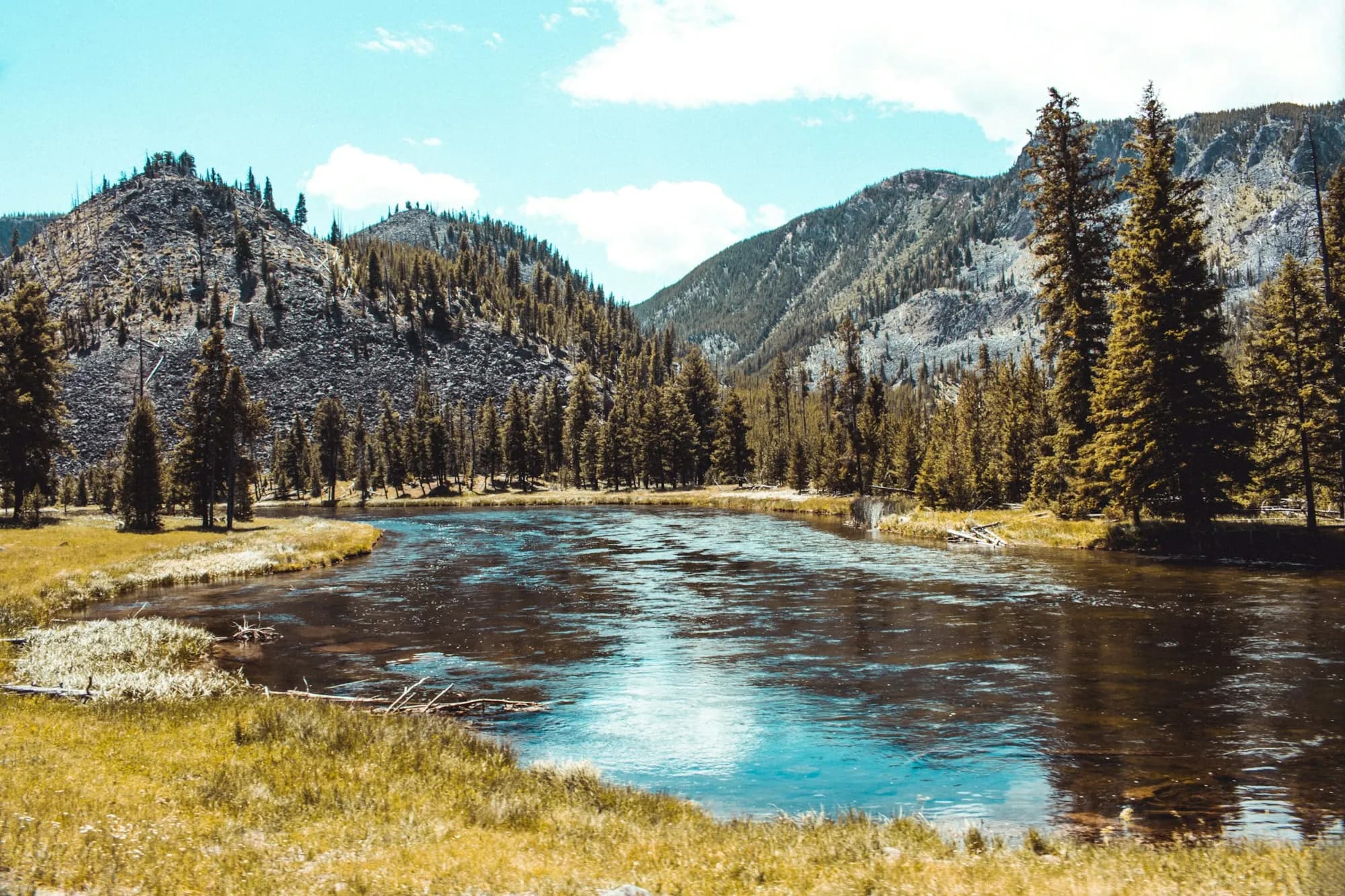
Montana's trout fishing is usually described as a summer event, and for the freestones that is fair: the salmonflies, the crowds, the long evenings. But the state is better understood as a set of waters that peak at different times. The tailwaters are stable and cold year-round, the Bitterroot gives the first dry-fly fishing of the year in March, the spring creeks sit outside the runoff entirely, and the freestones turn the whole summer into a procession of hatches. A year here is long. It is worth planning it in the right order.
Tailwaters for winter. Bitterroot for March. Freestones for the hatches. Spring creeks for the humbling.
Montana Beyond July
People come to Montana for salmonflies, and they are right to. But the state is an unusually good place to fish in the months when most other places are closed or cold or broken by weather. A dam release does not care about January. A spring creek does not care about runoff. A valley freestone with a south-facing bank does not care that it is March, and, in fact, a stonefly has started to walk.
This guide is about access and timing. It covers where each kind of water is, what it asks of you, and who to check with before you go. The method sits in the other playbooks. As anywhere in Montana, a lot of the access question comes down to knowing exactly where you can stand, launch and park, so check the rules for the stretch, not just the river.
The Tailwaters: Fishing on the Dam's Terms
The Missouri, Bighorn, Beaverhead, Ruby and Kootenai: watch the release, not the sky.
The Missouri below Holter Dam at Craig fishes like a spring creek the size of a real river: huge, fertile, stable year-round and stuffed with rainbows and browns. Baetis, PMD, caddis and Trico come in their seasons, often all at once. The flow comes off Holter, not the clouds. The Bighorn below Yellowtail Dam is one of the great tailwaters anywhere, cold, fertile and stable, with sowbugs, scuds and midges for the daily work and serious Baetis and PMD hatches when the season turns.
The Beaverhead below Clark Canyon Dam is narrow, brushy and choked with weed, and it grows browns and rainbows out of all proportion to its size. It is technical and gets a crowd. The Ruby below the reservoir is small, intimate and brushy; it is as famous for access fights as for fishing, so confirm where you can legally stand. The Kootenai below Libby Dam is big, cold tailwater with release-driven flow and heavy rainbows. Flows can change quickly, so check the release schedule. The Bighorn runs through the Crow Reservation, so check land and access rules there.
The Freestones: Madison, Gallatin, Yellowstone, Big Hole
Salmonflies after runoff, caddis in spring, and a stream-access law worth understanding before you wade.
The Madison is the Greater Yellowstone freestone everybody pictures, a long, even-tempered riffle you can wade most of, famous for its summer salmonfly hatch and a steady run of caddis. Below Quake Lake it is the fifty-mile riffle. Montana's stream-access law lets you wade and walk below the ordinary high-water mark, but you have to reach the water from a public access point and cannot cross private land to get there. In a low, warm year check conditions and any FWP restrictions before you commit: hoot-owl (midday fishing) closures and drought closures are the summer trap on this river.
The Gallatin is a walk-and-wade freestone out of Yellowstone, pocket water you fish on foot. The salmonflies show in early summer, but only once the river has dropped and cleared after runoff. The Yellowstone through Paradise Valley is big honest freestone water, with the Mother's Day caddis and the post-runoff salmonfly and golden stone hatches the events people drive for. Late spring runoff is the catch. The Big Hole holds browns, rainbows and brook trout, plus the rare fluvial Arctic grayling, the last remaining native fluvial population in the lower 48, so handle them like relics. The Big Hole sees low-flow and heat closures in dry summers, so check before you drive.
Paradise Valley Spring Creeks: Graduate School
Armstrong's, DePuy's and Nelson's: private, spring-fed, and unaffected by runoff.
The Paradise Valley spring creeks near Livingston are private, gin-clear and weed-lined, with big wild rainbows and browns that get a long, hard look at every fly. You pay a daily rod fee and you book ahead, so check each creek's current arrangements directly. They are stable water, which means they fish when the rivers beside them are muddy, and they are the closest thing to graduate school that dry-fly fishing offers.
West of the Divide: Bitterroot, Rock Creek, Blackfoot, Clark Fork
The river that ends the Montana winter, and a blue-ribbon creek you fish from a gravel road.
The Bitterroot is the river that ends the long Montana winter. While everywhere else is frozen shut, the skwalas start crawling and the trout start looking up, and grown men drive a long way to throw a dry fly in March. It is an easygoing valley freestone with browns, rainbows and westslope cutthroat in long riffles and braided side channels.
Rock Creek, just east of Missoula, is a blue-ribbon freestone with browns, rainbows, cutthroat and bull trout, which you leave strictly alone. The salmonfly hatch in late spring is the headline act and it draws a crowd; the rest of the summer it is quieter. Check the season opening date and the current rules before you plan around the hatch. The Blackfoot and the Clark Fork round out the Missoula-area options.
The Smith River: A Lottery and a Canyon
Fifty-nine miles of limestone canyon, by draw.
The Smith is the one you have to win a lottery to fish. It is a 59-mile limestone canyon float over four or five days, camping on gravel bars under walls that close in around you. Montana hands out the permits by draw because it is the only way to keep it from being loved to death. Browns and rainbows hold in the runs between the cliffs, and the flows have to be right. Check Montana Fish, Wildlife & Parks for the draw and the rules.
The Montana Year
Winter on the tailwaters, March on the Bitterroot, summer on the freestones, and spring creeks whenever the rivers blow out.
Winter (December to February): the Missouri, Bighorn, Beaverhead and Kootenai fish through the winter on steady releases. Midges, sowbugs and scuds.
Early spring (March to April): skwalas on the Bitterroot, the first dry-fly fishing of the year; Baetis on the tailwaters.
Late spring (May to early June): the Mother's Day caddis on the Yellowstone (it can begin in late April and run into May), then a long muddy runoff window on the freestones; the tailwaters and the Paradise Valley spring creeks carry on. Rock Creek's salmonfly hatch arrives in late spring. Rainbows spawn in spring on rivers such as the Missouri and the Bighorn, so stay off the redds.
Summer (late June to August): the Madison, Gallatin, Big Hole and Yellowstone salmonfly and golden stone hatches once the water clears. In a hot, dry summer expect FWP hoot-owl and drought restrictions on the Madison, Big Hole, Gallatin and Yellowstone, so check them before every trip. The Smith River float, for those who win the draw, has its own permit season, so check when your dates fall and what the water is doing.
Autumn (September to November): the tailwaters keep fishing on their steady releases, hoppers and Tricos tail off, Baetis come back, and it is streamer season for the big browns on rivers such as the Madison, Big Hole and Yellowstone. Browns spawn in October and November, so keep off the redds. Check the regulations for each river's seasons and any closures.
Gear and Licenses
A nine-foot five-weight, a wide fly box, and the rules for the specific stretch.
A nine-foot five-weight handles most of this water; a four-weight is nice on the spring creeks and the Bitterroot, a six-weight for streamers and wind on the big rivers. Bring midges, scuds and sowbugs for the tailwaters, big stonefly and attractor dries for the freestones, and fine tippet for the spring creeks.
Montana Fish, Wildlife & Parks issues fishing licenses and publishes the regulations, including river-specific rules and closures. Always check the current rules, the flow and where you can legally launch, park and wade.