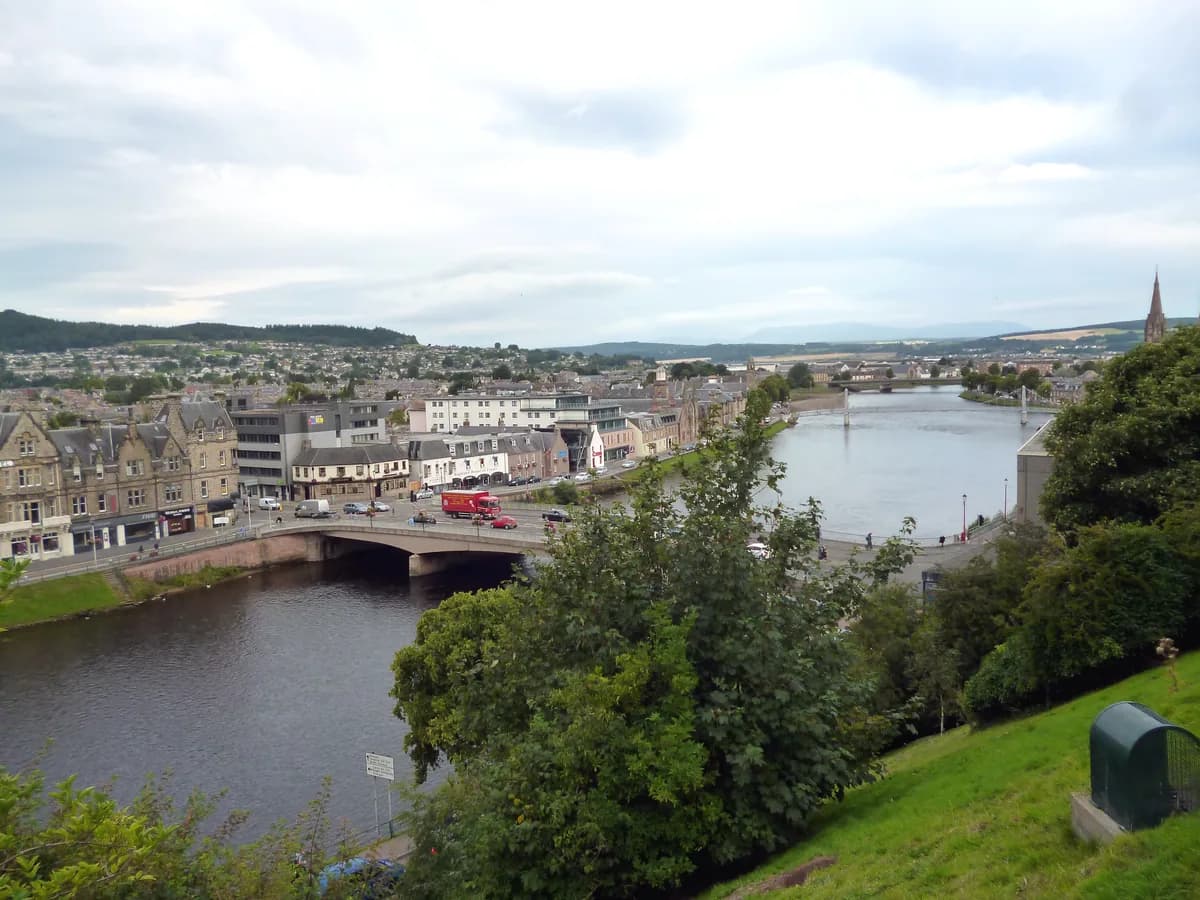
No other city on this list makes quite as strong a claim as Inverness. The River Ness — the short, powerful outflow of Loch Ness itself — runs directly through the city.
The Beauly and Conon are a short drive in one direction; the Findhorn and the legendary Spey in the other. This is one of the great concentrations of salmon rivers on earth within reach of a single city.
The Ness for the in-city start. The Beauly and Conon for accessible club water a short drive further. The Findhorn and Spey when the day calls for one of Scotland's truly great rivers.
Fly Fishing from Inverness: The Capital of the Highland Salmon Rivers
No other city on this list makes quite as strong a claim as Inverness. The River Ness, the short and famously powerful river carrying the entire outflow of Loch Ness to the sea, runs directly through the city — genuinely one of the more remarkable urban salmon rivers anywhere. The Beauly and the Conon are a short drive in one direction; the Findhorn and the legendary Spey in the other.
This is, without much exaggeration, one of the great concentrations of salmon rivers on earth within reach of a single city. Inverness does not have to choose one river to be known for — it can simply point in whichever direction that week's water levels favour.
The Legal Bit, Briefly
Scotland has no state rod licence — permission comes through club membership, day permits, or exchange arrangements between clubs, and it is enforced as a criminal matter for salmon specifically.
As with the rest of Scotland, there is no national rod licence here. What governs access is legal permission to fish a specific stretch — club membership, a day ticket, or an exchange arrangement between clubs — and fishing for salmon without it is a criminal offence, not a civil dispute.
Inverness Angling Club controls around three miles of double-bank fishing on the Ness itself, from just above Holm Mills Weir down to the sea, and sells day tickets to visitors through local tackle shops and FishPal. Beauly Angling Club offers similarly accessible day, week and season tickets on the Beauly river and firth. Dingwall Angling Club holds around two miles of tidal and estuary fly-only water on the Conon, good for both salmon and sea trout. Club exchange arrangements can open up further water to members — worth asking once you have joined one of these clubs.
The River Ness: Start in the City
Around three miles of double-bank fishing through Inverness Angling Club, from Holm Mills Weir to the sea, with day tickets sold through Graham's Tackle Shop and FishPal.
The Ness is short — barely six miles from Loch Ness to the sea — but it carries the entire outflow of one of the largest bodies of fresh water in Britain, which makes for a powerful, fast-flowing river that demands respect even on what looks like a manageable day. Inverness Angling Club's water, roughly three miles of double bank from Holm Mills Weir down to the sea, is the obvious place to start, with day tickets available from Graham's Tackle Shop on Castle Street or booked through FishPal.
Wading here should not be taken lightly — the Ness's flow and depth change quickly, and local knowledge of a specific beat's safe water matters more than confidence carried over from a gentler river.
The Beauly and Conon: A Short Drive Further
Beauly Angling Club sells day, week and season tickets on the river and firth. Dingwall Angling Club holds tidal and estuary fly-only water on the Conon, productive for salmon and sea trout alike.
The Beauly, a short drive west of Inverness, is managed by Beauly Angling Club, which sells day, week and season tickets covering both the river and firth — a genuinely accessible salmon river rather than one locked behind a long-standing private syndicate.
The Conon, reached in a similar time, is held in part by Dingwall Angling Club across around two miles of tidal and estuary fly-only water — good salmon fishing, and sea trout fishing that holds up well too.
The Findhorn and the Spey: Worth the Longer Drive
The Findhorn for a wilder Highland character, and the Spey — Scotland's most storied salmon river — both within about 45 minutes for the day an angler wants to fish somewhere with real weight behind the name.
For a longer day, the Findhorn holds a genuinely wild Highland character running through some dramatic gorge scenery, while the Spey — arguably the single most famous salmon river in Scotland, the river the Spey cast is named after — sits within about 45 minutes. Both are worth the extra drive time on a day when the destination is meant to feel like an occasion rather than a routine outing; access on both runs through a mix of beats, hotels and clubs, worth researching for the specific stretch and season in mind.
The Inverness Year
Spring for early Ness and Beauly springers. Summer for the Conon's sea trout and grilse arriving across the system. Autumn for the Highland back-end run, the Spey included.
Spring brings early salmon into the Ness and Beauly systems, cold-water fish fresh from the sea, typically fished with sink-tip lines and larger flies.
Summer sees grilse and sea trout moving through the Conon and the wider system, with fly sizes coming down as the water warms.
Autumn is the Highland back-end at its best — a pattern shared across the Ness, Beauly, Conon, Findhorn and Spey alike, as fish continue running upstream into cooling water through into October.
What to Carry
A 13'–15' double-hander with floating and sink-tip lines for the Ness, Beauly and Spey. A shorter single-hander for the Conon's tidal fly-only water.
For the Ness, Beauly and Spey: a 13' to 15' double-handed rod with both floating and sink-tip lines covers most spring and back-end conditions. Traditional Highland patterns — Willie Gunn, Cascade, Ally's Shrimp — in a range of sizes to match water height and temperature.
For the Conon's tidal fly-only water: a shorter single- or double-handed rod suits the more confined casting the estuary section demands.
Confirm current club permit arrangements, exchange-water access and season dates before travelling — several of these clubs' best water depends on membership status, not just a day-ticket purchase.
The Final Verdict
The Ness for the in-city start. The Beauly and Conon for accessible club water a short drive further. The Findhorn and Spey when the day calls for one of Scotland's truly great salmon rivers.
Few places anywhere hand an angler this concentration of genuinely serious salmon rivers within reach of one city. Start on the Ness to understand what a short, powerful Highland river feels like. Move to the Beauly or Conon when you want accessible club water without the drive getting longer than the fishing. And when the day calls for it, the Findhorn and the Spey are both close enough to fish properly — not just visit.