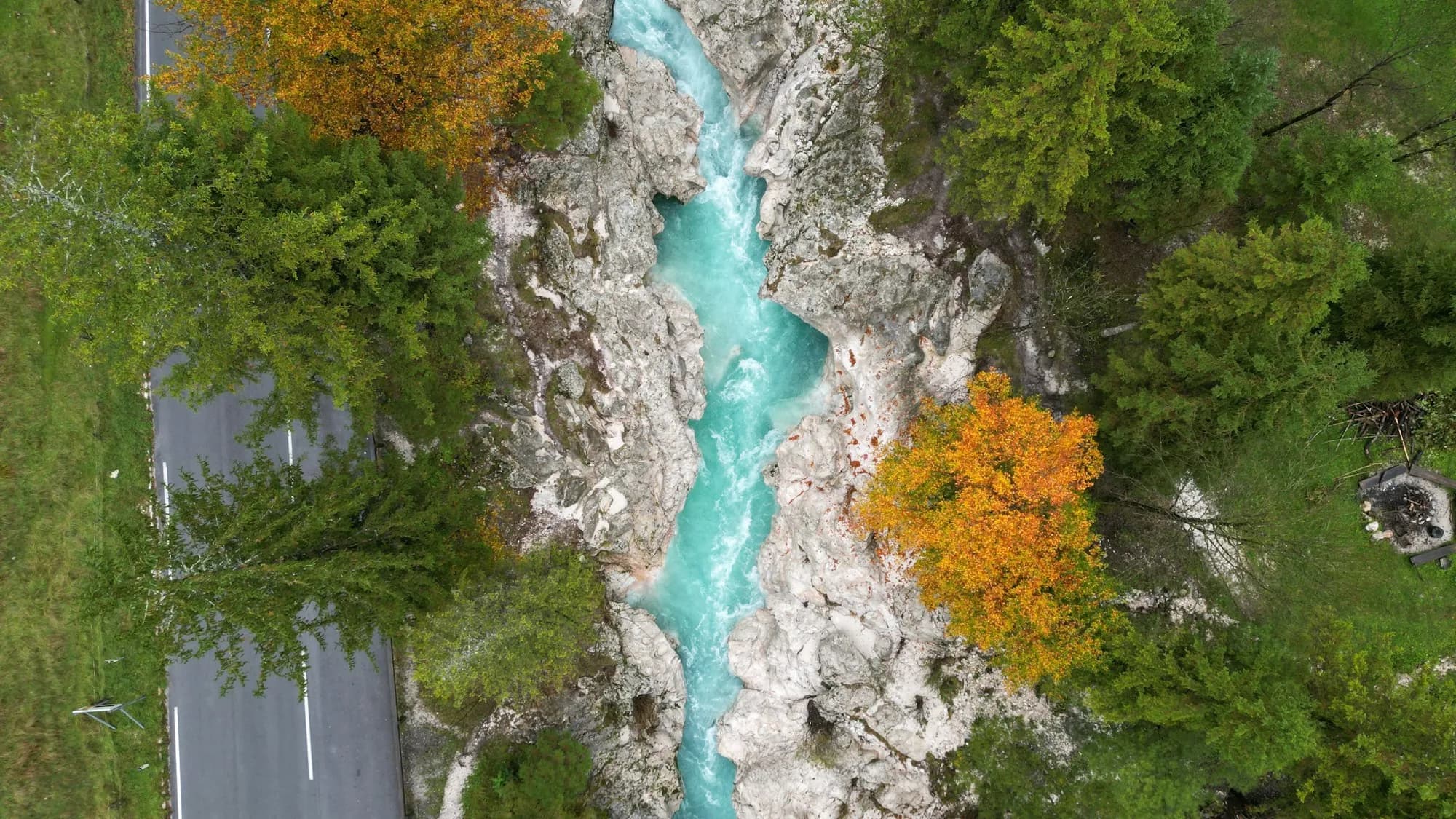
Slovenia is small enough to cross in an afternoon and varied enough that you could fish a different kind of water every day for a fortnight. The west belongs to the limestone rivers of the Julian Alps, so clear that the fish look like they have been placed there for inspection. Around Ljubljana the karst throws up spring-fed streams and the slow, gin-clear Ljubljanica, home of the huchen. Up in Bohinj there is a glacial lake and a river that does not slow down. This guide is a map of it with the capital as the base, season by season, and the permits left to the clubs that issue them.
Marble trout in the west. Karst streams near the capital. Huchen when winter comes.
Slovenia: Small Country, Several Kinds of Water
Slovenia is the sort of country that makes a fishing map look dishonest. Everything is close, and nothing is the same. The western rivers run off the Julian Alps over limestone, so clear that the first day is mostly spent learning how visible you are. The streams around Ljubljana come out of the karst already cold and already suspicious. Up north there is a lake, and a river leaving it with intent. East and south the water broadens, warms and grows other fish altogether.
This guide takes Ljubljana as the base and works outward by direction: west to the Soča country, north-west to Bohinj, close to the capital for the karst streams and the Ljubljanica, then the Sava and Sora corridor, and finally the southern and eastern rivers where huchen are the draw. Huchen are a threatened fish, so wherever they are mentioned here, ask the club what applies and handle every fish with care. It is about where to go, what each water is, and who to ask. Tactics live in the playbooks.
The Soča Country: Marble Trout and Their Tributaries
Western Slovenia, a couple of hours from the capital, and the water everyone talks about for a reason.
The Soča is the reason many anglers come at all. The water is so clear you see every stone and every marble-patterned trout hanging in the flow, and they are particular fish that study a fly the way a craftsman studies work he has never quite trusted. That study is the whole point, and the Soča will not hurry it. Come in with a plan for the spring olives and a willingness to be refused.
There are really two Soča fisheries. Most people who say they have fished the Soča mean the Tolmin water. The upper river, twenty-five kilometres from the bridge at Trenta to the bridge at Čezsoča, is managed by the national Fisheries Research Institute, runs as a research water as much as a fishery, and is run for marble trout. Know which of the two your permit covers before you drive out.
The tributaries are where the quiet fishing is. The Tolminka runs 10.2 km from the Julian Alps to the Soča at Tolmin, past the club's own Faronika hatchery, which is much of the reason pure marble trout are again the dominant fish in the watershed. Part of the Tolminka, the Tolmin Gorge reach, is reported closed to fishing and the remainder catch-and-release, so confirm with the club before you go. The Bača is a small limestone gorge river, clear and fly-only, carrying marble and rainbow trout. The Idrijca does what the Soča does with a fraction of the traffic, split between RD Idrija above Stopnik and RD Tolmin from there down to the Soča, so check which club's water you are standing in.
The Karst Springs: Hubelj, Bistra and Unica
Rivers that start fully formed, constant in temperature and clarity, and unimpressed by your reputation.
Karst country makes a different kind of river. The Hubelj boils out of the limestone at Ajdovščina and runs a short, cold, fly-only course. It is the closest thing in the Soča and Vipava basin to a true spring creek: constant temperature, constant clarity, with marble, hybrid and brown trout and some rainbow. The fish have seen every angler who worked the water that week and behave accordingly.
Closer to Ljubljana, the Bistra runs gin-clear past Bistra Castle near Vrhnika. It is a short karst spring stream that holds brown trout, grayling, rainbow and pike, with huchen running in from the Ljubljanica. RD Vrhnika manages it as a separately permitted water, small enough to fish in an afternoon, and half the challenge is staying out of the fishes' sightline.
The Unica comes out of the Planina cave system in Inner Carniola, spring-fed and limestone-clear, and goes underground and comes back up again somewhere else. It holds wild brown trout, and the hatches on a warm evening can be exceptional. Fish it for the trout; the geology is a bonus.
Bohinj: A Lake, a Short Link and a Fast River
North-west of Ljubljana, inside Triglav National Park, with water that makes the fishing feel secondary and then isn't.
Lake Bohinj is Slovenia's biggest glacial lake, at the head of the Bohinjka valley inside Triglav National Park. It is crystal clear and ringed by peaks, and the fishing is real: Arctic char, brown trout and lake-run trout are all present, fished from the south shore or by boat with a park licence. The char rules are strict and mean it, so read the venue page and the park rules before you wet a line.
The Savica is a short, cold link between the Savica waterfall and the head of the lake. Lake-run fish and char spawn in streams like it in autumn, so it may be closed or protected: check before you consider fishing it, and otherwise leave it alone.
Out of the lake, the Sava Bohinjka comes away already moving. Genuine speed and clarity, brown and marble trout in the lower sections, grayling in the faster water, and some rainbows left over from historical stocking. You fish the seams rather than the whole run.
Near Ljubljana: The Ljubljanica and the Sava Corridor
Huchen on the capital's doorstep, a mountain reservoir, and the Kamnik Alps' own river.
The Ljubljanica is the huchen river nearest the capital: a thermally stable, karst-fed lowland river, slow and gin-clear through the Ljubljana marshes, holding huchen, grayling, brown and rainbow trout alongside nase, barbel, chub, pike and catfish. RD Vrhnika, RD Barje and RD Vevče manage it between them, so identify the club for your stretch.
North of the capital the Kamniška Bistrica drains the Kamnik Alps south through Kamnik. It is fly-only and split by district: brown trout and grayling only in the upper water, rainbows lower down. RD Bistrica Domžale manages it.
On the Sava headwaters, the Moste Reservoir is RD Jesenice's trophy water: sixty hectares of the Sava Dolinka held back by the Moste dam. It fishes as a stillwater, off the bank where the level allows or from a belly boat, which the club will hire out. Fly only, catch and release. The level is controlled by the dam and can change, and you should keep well clear of the last hundred metres above the barrier.
The Sora, formed at Škofja Loka where the Poljanska and Selška branches meet, is grayling water grading into a huchen reach lower down, run by RD Sora and RD Medvode. The bag limit is explicit, so read it before you go. The Selška Sora, fly-only with a catch-and-release sector, has a season that runs to 30 November.
The Kolpa: Southern Water and the Winter Fish
A warm limestone border river with a double life.
The Kolpa runs the Slovenia–Croatia border through warm limestone karst, noticeably different from the colder water further north. Huchen, grayling and brown trout share it. It is trout and grayling water for most of the year, then a winter huchen water once the trout season closes and the sulec become the point of the trip. As it is a border river, confirm which side's permit applies to the bank you intend to fish.
Slovenia reaches further than this. The Drava, Mura and Savinja, and the Pohorje streams in the north-east, are a different Slovenia again, with broader, warmer water and a coarse-fish supporting cast; they are on Rise Daisy if you travel that way.
The Slovenian Year
Something is fishing in most months. The skill is choosing the water.
Winter: the huchen months, and little else. The Sora and the Kolpa are the winter huchen waters, and the Ljubljanica holds the fish close to the capital. Trout seasons are closed on many rivers, so check the season for each water first. Huchen spawn in spring and are tightly regulated, so many waters are catch-and-release or limited by tag; ask what applies.
Spring: March can be thin, with the trout seasons only just reopening on some waters and snowmelt in the alpine rivers. Then the Soča's spring olives, and the Tolminka, Idrijca and Bača coming back to life as the alpine rivers warm. The karst streams, the Hubelj and the Bistra, are spring-fed and clear, which makes them the steadier choice if an alpine river is not behaving.
Summer: the karst springs keep their temperature, which is their whole value. The Hubelj is constant in temperature, and the Unica's warm evenings can bring exceptional hatches. The cold, deep lake at Bohinj and the Moste Reservoir give you other options when the lower rivers run warm.
Autumn: the Selška Sora keeps its season open to 30 November, later than almost any other Slovenian salmonid water. As the trout seasons end, look south and east to the huchen rivers. Marble trout spawn in late autumn and winter, which is why their waters close, so check the closing date for the water you want.
Getting Around, Permits and Gear
Ljubljana is the hub. The clubs hold the keys.
Ljubljana is the natural base. The Ljubljanica, Bistra and Kamniška Bistrica are close to it; Bohinj, the Sava and the Sora lie to the north-west, and the Soča country is west towards the Italian border. Several waters near that border (the Nadiža, Učja and the Idrija or Judrio) are in Rise Daisy too if you want somewhere quieter.
Almost every water here is run by a local angling club (RD, for ribiška družina), with a few exceptions: the upper Soča is managed by the national Fisheries Research Institute, and Lake Bohinj is fished with a park licence. Rules, reaches and seasons differ even on one river, so check the managing club and the venue page for the stretch you plan to fish, and confirm before you travel. Several rivers share a name, so be sure the permit matches the water.
A nine-foot four- to five-weight and fine tippet suit most of the trout and grayling water, and quiet wading matters more than any fly on clear water. Many waters are fly-only, some are catch-and-release, and breeding reaches are closed outright. Release marble trout gently.