If you fish with a long leader and a heavy nymph, you are standing on borrowed ground. Czech nymphing came out of the Central European competition circuit of the 1980s, and the countries around it kept the habit. This guide is the other half of that story: not how to fish the method, which our Euro nymphing playbook covers, but where in Poland and the Czech Republic the trout and grayling are, what each region is like, and when it is worth going. Both countries have a great many rules and a great deal of local control, so treat this as a map and let the people who manage each water tell you the rest.
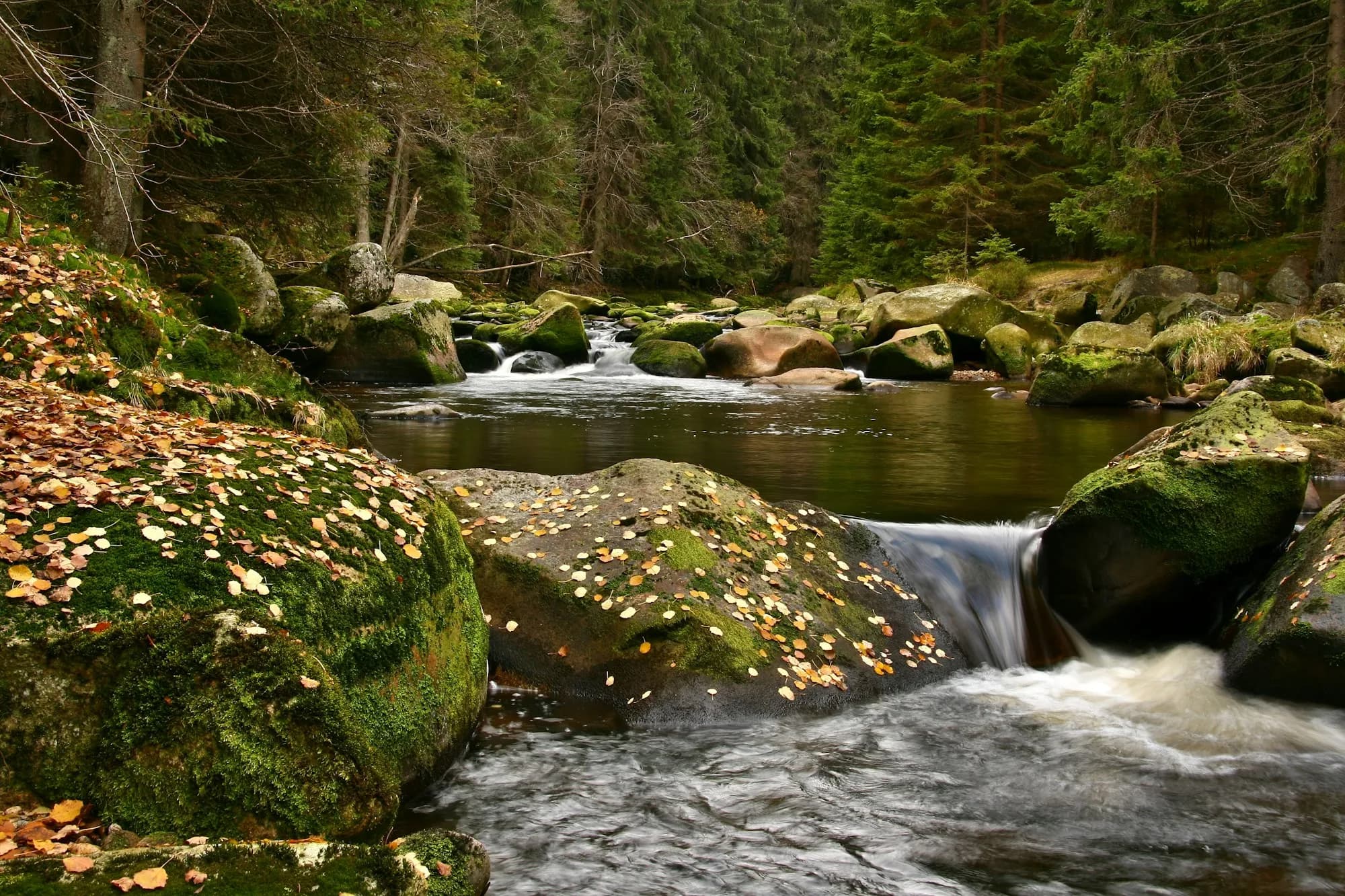
Nymphing country, and autumn grayling on the Šumava.
Poland and the Czech Republic: Nymphing Country
It is a funny thing to arrive at the source of a method you have been practising for years. The long leader, the weighted nymph, the rod held out over the water with every nerve in the fingertips: this is the style that came out of the Central European competition circuit in the 1980s, and it sits easily on these rivers. Boulder pockets, gravel runs and clear, cold water are what this style was made for.
But the region is not one thing. In the south of Bohemia the Šumava forests feed rivers that suit grayling and wild brown trout. Further north and east, larger Bohemian and Moravian rivers hold managed trout and grayling water. In southern Poland the Tatra and Carpathian streams run from the mountains, and across the north the lowland rivers of Pomerania drain towards the Baltic, clear and steady, with grayling and in places sea trout.
Our Euro nymphing playbook covers the method. This guide is the map: which rivers, what each is like, and when to go.
The Šumava and South Bohemia
Forest rivers, wild trout and autumn grayling water.
The Otava is one of the major trout and grayling rivers of the Šumava, with something like 30 km of fishable salmonid water. The lower salmonid stretches are mostly grayling with some brown trout; the upper sections hold more trout. The pools and riffles change character from one stretch to the next, and methods range from dry fly and wet fly to nymphs and streamers. Some beats have their own permit systems and rules, so read the rules for the exact section rather than assuming it follows the main river.
The Teplá Vltava, the warm upper branch of the Vltava, is a well-known autumn grayling river. Wild brown trout and grayling live in lovely mountain-fringe water, and autumn is the usual window for grayling, with fish rising to tiny flies. Trout and grayling seasons differ, so check which species are open on the dates you travel. Think size 18 to 20 CDC dries and emergers. It is spate water, so a river that has just been rained on is a different proposition to one at base flow.
The Vydra and Křemelná are wild mountain streams in the heart of the Šumava National Park, with brown trout in boulder-strewn water. Be careful here: some sections in the national park core zone are catch-and-release or closed, and you must not fish a closed reach. Check exactly which section you are on, and what applies there, before you rig up.
The Blanice is a smaller South Bohemian river with trout and grayling. More than one Czech river carries that name, so check which one you are looking at. It is the sort of water that rewards fine dry-fly fishing and nymphing with a light touch, and it is less famous than the Otava or the Vltava.
Bohemia and Moravia: Managed Beats and Bigger Rivers
Fly-only beats, bigger water and a mixed bag of species.
Vltava 28 is a Central Bohemian fishery with brown trout, rainbow trout and grayling. Parts of it are managed as fly-only, barbless water; check the current beat rules and permit arrangements before planning a trip.
The Ohře runs through West Bohemia near Karlovy Vary, with brown trout and grayling and some rainbows. It has the scale and variety of a proper river, with riffles, pools and longer glides, so you can fish it in more than one way in a day.
The Jizera in North Bohemia offers more than 50 km of trout and grayling fishing over granite bedrock, with brown trout and introduced rainbows in fast water. It is pocket-water, Czech-nymphing country and fishes best in spring and autumn. In Moravia, the Morava upstream of Olomouc holds brown trout and grayling; check with the rights holder which reaches are salmonid water.
Be honest with yourself about the Berounka. It is a broad Bohemian river where chub and barbel matter at least as much as trout, and it is best treated as a mixed-bag river, not a dedicated trout water. Fly fishing is allowed throughout, and the noted water is below Beroun and around the weir at Hýskov. The large Czech reservoirs are mostly predator and coarse-fish water, so they are not trout destinations.
The Tatra and the Pieniny: Dunajec Country
A gorge river with a reputation, and three mountain streams that spend most of the year behaving.
The Dunajec runs through the Pieniny gorge, and it is the river most anglers think of first in Poland. It holds brown trout and grayling in clear water, with good hatches, and tight-line nymphing works well here. It is the best-known river in southern Poland, so expect other anglers. The Pieniny gorge sits in a national park and on the Slovak border, so check where fishing is allowed and how permits work before you travel.
The Czarny Dunajec comes off the Western Tatras, with brown trout and grayling in spate-type water that responds fast to mountain rain. It has good caddis and stonefly hatches, and it is two rivers in one: unruly in flood, clear and selective at low flow. The Biały Dunajec, near Zakopane, is a cold, snowmelt-shaped brown trout stream, best from late spring when flows settle, with short drifts and pocket water.
The Poprad rises in the Slovak Tatras and runs into Poland near Muszyna, with brown trout and grayling in clear mountain water. The Polish sections get less tourist pressure than the Dunajec, which is a good reason to include it.
Carpathian Rivers: Skawa and San
Mid-sized rivers for steady fishing, and a remote one for the adventurous.
The Skawa rises in the Beskids and joins the Vistula near Zator, with trout and grayling in its upper and middle reaches. It is a river for anglers who want clear water and tight-line nymphing without the Dunajec crowds.
The San in the Bieszczady mountains is a bigger, remoter proposition. Brown trout and grayling live there, and huchen are present in places. They are a threatened fish, so ask the local rights holder what applies, handle any you meet with great care, and do not target them without clear permission. The upper river is where the character of the place is strongest.
Pomerania: The Northern Grayling Rivers
Flat country, forest and clear gravel rivers that run towards the Baltic.
The north of Poland is not the first place people picture when you say mountain trout, and that is part of its interest. The rivers of the Pomeranian lake district are clear, steady and gravelly, and grayling live in them alongside brown trout and, in some, sea trout.
The Drawa flows through Drawieński National Park, with grayling, brown trout and sea trout in clear water through mixed woodland. National park sections have special regulations and limited access, so allow for that in your planning. The Reda, near the Tri-City of Gdańsk, Gdynia and Sopot, holds brown trout and sea trout in forest-backed water and is unusual for being close to a big city.
Sea trout run in late summer and autumn to spawn on gravel. Any salmon or sea trout you meet should be released quickly unless the rules clearly say otherwise, so check the rules for the river before you fish for them. In the lowland rivers, the bottom is often gravel that grayling and trout use for spawning, so wade carefully.
The Poland and Czech Fishing Year
Spring and autumn are the best times for most of this country, with summer and winter more modest.
Winter: open waters are limited. Cold, short days and ice or snow in the mountains limit the fishing, and some rivers have closed seasons. Where grayling are in season, winter nymphing is a specialist game. Check closed seasons and ice before you plan anything.
Spring: as snow melts and rivers settle, mountain streams such as the Biały Dunajec fish best from late spring once flows have steadied. Spring is a good time for Jizera-type pocket water. Grayling spawn in spring in many rivers, so keep out of spawning gravel, avoid wading redds, and check closed seasons, which are there to protect fish that are about to spawn.
Summer: low water and warm days make the fishing harder in the lowland rivers and the bigger Bohemian rivers, so fish early or late. The mountain streams stay cooler, and the Berounka is a river where chub and barbel can fish well through summer; leave grayling alone in warm water. Keep fish in the water and rest them after a fight in warm weather.
Autumn: this is the best-known season. On the Teplá Vltava, autumn is the usual window for grayling taking tiny flies, and autumn is also one of the better times for the Jizera. Trout spawn in autumn, so avoid redds and check the closed seasons on your river before you go.
Planning a Trip: Rules, Permits and Gear
Rights holders, permits and care for the water decide the trip.
Both countries are controlled at river level. Most good water has a rights holder or managing club, with its own permits, limits and hook rules. Some beats are fly-only and barbless, some are catch-and-release, some sit in national parks, and some are private. The venue pages on Rise Daisy tell you what we know about each; the rights holder tells you what applies this year.
Pack for the water. A long, light rod suits the nymphing rivers, and the playbook covers the leaders. The flies in this guide are simple and general: emergers and dry flies for the Teplá Vltava, a hare's ear or diawl bach for the nymphing, and a caddis for evening rises. Take a wading staff for the Tatra and Carpathian streams, where the bottom is rocky.
Look after the rivers on the way. Clean and dry your waders, boots and nets between rivers, particularly if you are moving between catchments, and follow local biosecurity rules, so that you do not carry disease or invasive species from one to the next. Release grayling and trout gently, keep them wet, and leave closed reaches alone.