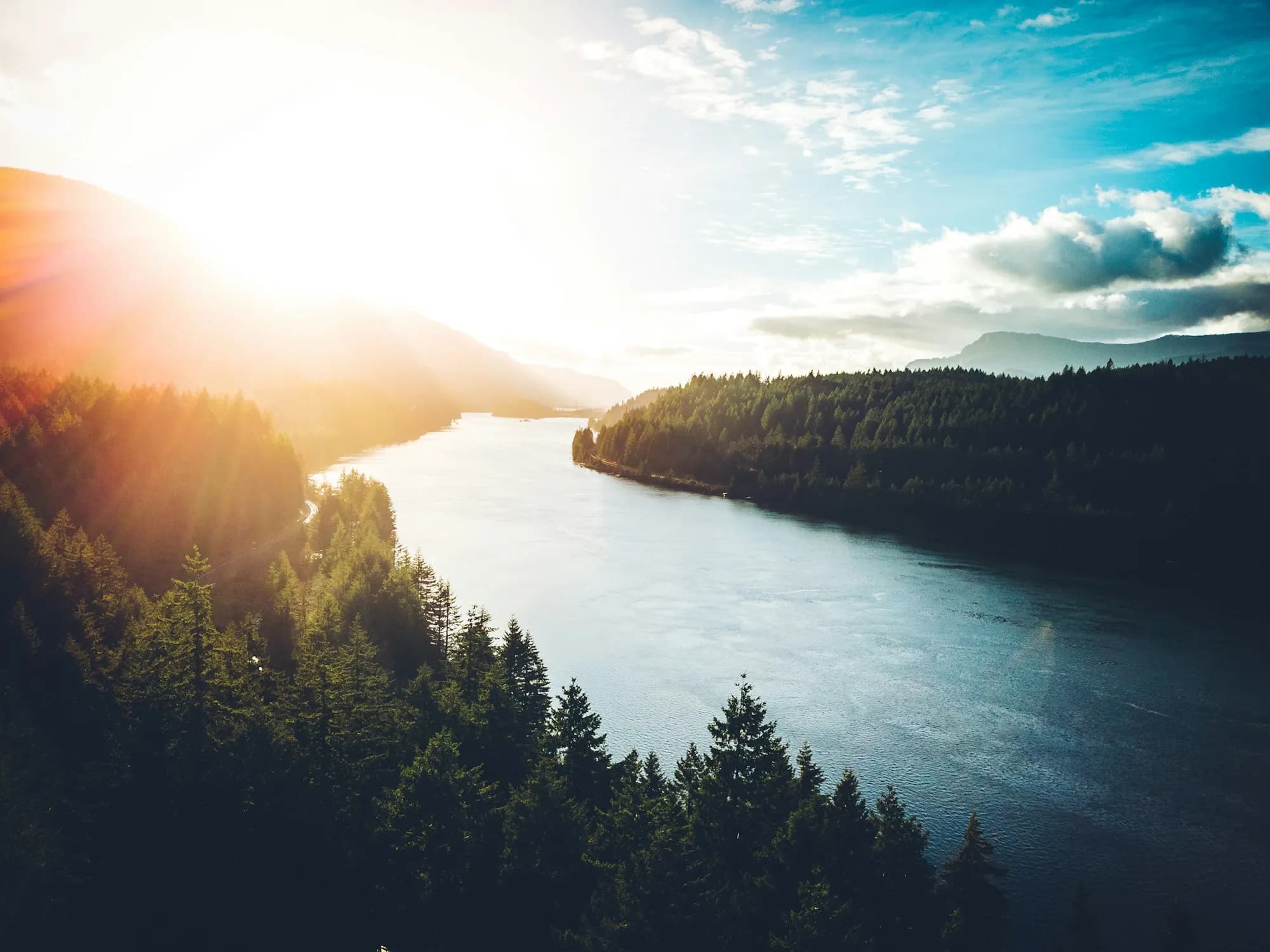
Washington and Oregon are steelhead country first, and trout country second, though the trout fishing is worth a trip in its own right. The steelhead rivers run on rain, snowmelt and regulation in roughly equal parts, and on several of them the honest first question is whether the water is open at all. The trout rivers are the opposite: a dam release, a spring or a basalt canyon keeps them steady, and they will fish on days when the coast is blown out. Bases vary with the river, so plan drive times, and it helps to decide which sort of fishing you came for before you book anything.
Steelhead by the calendar and the gauge. Trout by the release. Rules before either.
Two States, Two Kinds of Fishing
Anyone planning a fly-fishing trip to Washington or Oregon has to decide early whether they are chasing steelhead or trout, because the two trips look nothing alike. A steelhead trip is built around a gauge, a forecast and a regulation sheet, and it may end with nothing in the net and no regrets. A trout trip is built around a release schedule and a hatch chart, and it is generally kinder to the person who has only a few days.
This guide covers both. It sticks to what the rivers are like and what they ask of you, and it leaves the methods to the playbooks. Seattle and Portland are the two obvious cities, but treat them loosely as bases: the Owyhee, Rogue and Metolius are a long way from either, distances are long and mountain passes close, so look at a map and a road report before you promise yourself a dawn start on a distant river.
The Olympic Peninsula: Rain, Rainforest and a Falling Gauge
The Hoh, Bogachiel, Sol Duc and Queets: wait for the river to drop and then check whether it is open.
The rivers of the Olympic Peninsula are rain-fed and run out of the mountains through some of the wettest forest in the country. They are wild winter-steelhead water, and they blow out on every serious storm. The fishing happens on the drop, when the river stops rising, the color clears and the flow settles into something you can wade and swing a fly through. Too high and it is unsafe; too low and clear and the fish see everything.
The Hoh is glacial, so it clears slowly into a milky gray before it turns fishable green. Its rules change often, so check for closures, and treaty tribes have fishing rights on these rivers. The honest order of questions is: is it open, then is it green. The Queets is the remote one, with long drives, gravel roads and few people. Parts of it run through national park land and Quinault Reservation land, so confirm where you may fish and who to ask.
The Bogachiel, known as the Bogey, is the accessible and busy one, with an early hatchery winter run that spreads the pressure and a later wild run when the crowds thin. The Sol Duc is rain-fed rather than glacial, so it rises hard and then clears faster than its gray neighbors. It carries wild summer steelhead as well as winter fish. Gauges can lag, so read the stage trend and the color of the water with your own eyes. Wherever you fish here, check the regulations, including hatchery-versus-wild rules and any closures, before you leave the car.
The Skagit, the Sauk and the Klickitat
Wild steelhead water, and some of the most tightly managed in the state.
The Skagit is a big glacial North Cascades river, partly held back by dams on its upper reaches. It is also one of the most carefully handled rivers in the region. Puget Sound steelhead are ESA-listed, and the spring wild-steelhead fishery has been closed for long periods under the listing. Do not plan a trip around it unless the current Washington Department of Fish and Wildlife (WDFW) rules show a season open. The river clears slowly, which rewards patience on a long drop.
The Sauk is the Skagit's wilder tributary, an undammed glacial river and a National Wild and Scenic river. Everything that is true of the Skagit is truer here. Any spring wild-steelhead fishery has been closed for long periods, so do not count on it: check the current WDFW rules. If there is no season, there is nothing to plan; if there is, treat every wild fish as the rare and protected creature it is.
The Klickitat is the Columbia Gorge's summer-steelhead river, a glacial stream off Mount Adams running through a basalt canyon to the Columbia near Lyle. On warm summer days the melt can cloud the water by afternoon, so the early, clean light is the time to be there. Parts of the river are on or beside Yakama Nation land, so confirm access and rules, and respect them. Mid-Columbia steelhead there are ESA-listed, so check the current regulations for what may be retained and what must be released.
Portland's Rivers: The Sandy and the Clackamas
Metro steelhead water you can fish between other commitments, with the same rules and the same respect.
The Sandy is Portland's home steelhead river: glacial off Mount Hood, free-flowing since Marmot Dam came out in 2007, and carrying winter and summer steelhead in a hatchery-and-wild mix, with salmon through the season. It bumps up fast on rain and can run milky gray in summer when the high snow melts. The best of it is the falling water as it clears back to a fishable green. Keep the hatchery-versus-wild distinction clear, because the wild fish are ESA-listed and belong back in the water.
The Clackamas is the quieter sibling on the south side of Portland, with winter and summer runs and salmon in season. Fish counts at the dams on the river are published by the state; check the source and pair the trend with the flow and the clarity for a read on whether the drive is worth it. The river is part-managed by upstream dams, so it runs a touch steadier than a wild freestone. Lower Columbia steelhead are ESA-listed, so wild-fish handling matters here, and the rules shift by run and reach.
The Deschutes, North Umpqua and Rogue
Summer steelhead on a wet line and a sparse fly, and the sense to put the rod down when the water is too warm.
The Lower Deschutes is a big, muscular desert river running through a basalt canyon, and it carries two fisheries that barely speak to each other. There are wild redband trout, which take the salmonfly and golden stone hatch in late spring and caddis through summer evenings, and there are summer steelhead. Fish begin arriving from the Columbia in June and the run builds through August and September over Sherars Falls. Much of the canyon is remote, fished from the bank or out of a drift boat, and the wind can stand you up. Lower Deschutes wild steelhead are ESA-listed, so release wild fish unhurt under ODFW rules, and confirm where you may land or fish, as the east bank is Warm Springs tribal land. In hot summers regulators can restrict or close fishing, so check ODFW for closures on the day, fish the cool of the morning and leave the fish alone when the water gets warm.
The North Umpqua is thirty-odd miles of fly-only water cut through bedrock and old-growth, and the wading is bouldery and treacherous. Summer steelhead arrive from early summer and the run builds through late summer and autumn. Sometimes the right move is to put the rod down: in warm, low water the kind thing is to stop, so check for temperature or low-return closures. Treat every wild steelhead like it is the last one.
The Rogue is big and varied. Summer steelhead push in from July, the half-pounder run follows from September, immature steelhead back from a short ocean stay that take the swung fly with enthusiasm, and winter fish follow from late December into spring. The upper river below Lost Creek Dam is cold and clear and carries hatchery influence; the lower river toward Agness is coastal and rain-driven. The rules are a moving target, changing by reach, run and year, and wild-fish release rules apply on much of the river, so check by reach and season. Read the gauge that matches your reach and check the regulations the morning you go.
The Trout Rivers: McKenzie, Metolius, Yakima, Crooked and Owyhee
Steady water for the days when the steelhead rivers are blown out, closed or too hot to be fair.
The McKenzie is the friendly face of Oregon trout fishing, a cold, fast, drift-boat river running clear out of the Cascades toward the Willamette Valley. Its redside rainbows and cutthroat are willing to a swung soft-hackle or a dry fly through the green tunnel of the lower river. There is a summer steelhead lane too, but these are hatchery fish, so fish the McKenzie for what it is and read the flow for stability rather than reading a run. Bull trout and wild salmon are present and protected, so release them unharmed.
The Metolius is a different matter. It rises whole from the ground at the foot of Black Butte, a full-grown spring-fed river, and runs cold, clear and impossibly blue through the pines. The redband trout are wild and educated. Long leaders, small flies and drag-free drifts are the price of admission. Because the flow hardly changes, the game is reading the hatch and the light, with green drakes, PMDs, caddis, blue-winged olives and midges through the year. It also holds bull trout, a protected char that deserves to be left alone, and stretches of it close in the colder months to protect spawning fish.
The Yakima Canyon, between Ellensburg and Roza Dam, is a tailwater trout river and unapologetically not a steelhead stop. Wild rainbows hold on the seams under the basalt walls, with mountain whitefish keeping a nymph honest through winter. It is a working river first: flows are run for irrigation and the seasonal flip-flop can swing it from a wadeable stream to a pushy float almost overnight. Stable flow is your friend and a sudden ramp is the warning. Skwala stones in early spring, March browns, caddis, PMDs and BWOs, terrestrials in summer and streamers when the water colors all feature.
In the Oregon high desert, the Crooked below Bowman Dam is a modest, accessible tailwater with small eager redband rainbows and the occasional better fish. It is the river for a winter afternoon when everything else is blown out, with tiny mayfly and midge patterns on light tippet and short drifts. The Owyhee below Owyhee Dam near Adrian is a small tailwater through ranchland that grows brown trout out of all proportion to its size. Both are read by the release, not the sky, and the Owyhee can run warm and off-color when the irrigation season works it hard, so watch the flow and the clarity. On the Crooked, Owyhee and Yakima, flows can change with releases: check the operator's release information, wade with a staff and always have an exit.
The Season in Washington and Oregon
Winter on the coast, summer on the desert rivers, and something worth fishing in between if you choose the water well.
Winter: this is the rain-fed steelhead season on the Olympic Peninsula, fished on the drop after each storm, and winter fish reach the Rogue from late December. For trout, the Crooked is the river a winter afternoon calls for, and the Yakima keeps mountain whitefish available for the nymph. Winter is also when some spring-fed stretches close to protect spawning fish, so check closures before you go.
Spring: rainbows and redbands spawn in spring on these rivers, so stay off gravel redds and do not target fish that are visibly spawning. The Skagit and Sauk spring wild-steelhead fishery has been closed for long periods, so do not plan around it unless current WDFW rules show a season open. Skwala stones are an early-spring event on the Yakima, and the Lower Deschutes salmonfly and golden stone hatch comes in late spring. Spring runoff and storms can put the glacial rivers out of shape for long stretches.
Summer: summer steelhead arrive on the Deschutes from June and on the North Umpqua from late June, with the Rogue following from July. This is also the season of cool-morning fishing, and regulators can restrict or close fishing in hot spells, so check current closures and flow and temperature restrictions. The Metolius, Yakima and McKenzie are the reliable alternatives when the steelhead rivers are too warm.
Autumn: the Deschutes run builds through August and September, the Rogue half-pounders show from September, and October on the North Umpqua is the reward if the rains come. Winter steelhead season returns to the coastal rivers as the rains arrive. Timing shifts from year to year with water, returns and regulation, so treat every date here as a guide and check locally.
Gear, Licenses and Looking After the Fish
Two-handers for the big rivers, a nine-foot five-weight for the rest, and a clean, dry kit.
For the swung-fly steelhead rivers, a two-handed rod, a tip system suited to the flow, and a selection of intruders, tubes and sparse summer flies cover most situations. Bring a wading staff for the Deschutes and the North Umpqua, where the wading is hard. For the trout rivers, a nine-foot five-weight handles most of the water, with a lighter line for the Metolius, midge and mayfly patterns for the tailwaters, and a few caddis and terrestrial dries for summer.
The Washington Department of Fish and Wildlife and the Oregon Department of Fish and Wildlife issue licenses and publish regulations for their states. Check the rules for the exact water, including wild-fish release and special-regulation rules, closures, and flow and temperature restrictions. Where tribes co-manage a river or the water runs through national park land, confirm what the managers ask of visitors.
Look after what you fish for. Do not wade or fish over redds, never snag, release wild fish quickly and in the water, and leave protected species like bull trout strictly alone. Clean, drain and dry your waders, boots and boats between rivers so you do not carry invasive species or disease from one watershed to the next.