North and Mid Wales gets thought of as a summer-evening, sewin-in-the-dark sort of country, and the rivers certainly ask for that. But the map is far kinder than the calendar suggests. There is a regulated Dee with winter grayling, reservoirs that fish from the first buzzers of April, mountain llyns tucked into the cwms, and a handful of small stillwaters that stay open when the rivers do not. Rain is the weather, and rain is the engine: the spate rivers move fast, the moorland waters clear fast, and the whole region rewards the angler who learns to read both. This guide is a map of it, with the licences and the rules left to the people who write them.
Rivers for the rain. Reservoirs for the hatches. Small stillwaters for the months in between.
North and Mid Wales: A Country of Water
There are two ways to arrive at the water in this part of the world. You can drive to a reservoir car park with a visitor centre and a boat jetty, or you can park at the end of a track, shoulder a pack and walk up into a cwm to a llyn that exists mostly on the map and in the memory of a local club. Both are Welsh fishing, and the happy fact is that the region holds an uncommon number of each.
This guide is about access and timing: what kind of water each place is, which direction to head for it, who runs it and where to check before you go. The method lives in the playbooks. The one thing worth saying up front is that rain does most of the work here. The spate rivers answer it in hours, the moorland waters clear quickly afterwards, and anyone planning a trip should be watching the sky as closely as the calendar.
The Dee, the Clwyd and the Border Country
A regulated Dee with spring salmon and winter grayling, a limestone Clwyd, and the Vyrnwy running out of its dam.
The Welsh Dee rises in Snowdonia and is regulated by Bala Lake. Spring salmon fishing is listed as opening on 20 March (confirm against the current NRW byelaw) with grilse from July, there is a wild brown trout stretch in the upper reaches, and the middle and lower river fishes well for grayling from late summer, with most beats and clubs concentrating on them from October until the close in March; check the club. The Llangollen stretch is the iconic one: freestone with good hatches, steadier than the true spate rivers thanks to the lake regulation. NRW requires every salmon on Welsh rivers to be returned, so go for the fishing and not the fish.
The Clwyd runs through the Vale of Clwyd, a limestone-influenced river with spring salmon and summer and autumn sea trout and club water, with day tickets reported on some beats. It is less severe than the slate rivers, with the alkaline conditions you would hope for. Check which club holds the beat before you travel.
The Vyrnwy, which is a different water from Lake Vyrnwy at its head, runs out of the dam at Llanwddyn through the Vyrnwy Gorge, Dolanog and Meifod to the Severn. A compensation flow keeps it fishing when its unregulated neighbours are low, and the grayling population is reported to be good and growing since restoration work began, with large wild brown trout on the upper beats.
Snowdonia and the Cambrian Coast: The Spate Rivers
The Conwy, the Glaslyn and the Dovey: fast response, dark water and a narrow window.
The Conwy drains Snowdonia to Conwy Bay and answers rain in about four hours. It is a salmon and sea trout river, best on the rise and the fall, running dark and peaty in spate. The Glaslyn comes out of Llyn Dinas under Yr Wyddfa and through the Aberglaslyn pass to Tremadog Bay at Porthmadog, a true spate stream and a recognised North Wales sewin river. NRW data on its salmon is sobering, so treat the fish with every consideration.
The Dovey (Dyfi) in Mid Wales runs to Cardigan Bay, with spring salmon, strong late-season runs in October and November and sea trout from June. Responsive in about five hours, it is the same game: wait for rain, be on the water when it drops. The estuary is a Special Area of Conservation.
These are migratory-fish rivers first, and the advice in each description is much the same: be patient, plan around the rain and respect the closed seasons. Permits come from clubs and associations along each river, so find the beat before you drive.
The Big Reservoirs: Brenig, Vyrnwy, Clywedog, Elan and Alwen
Five upland waters you can plan a week around, and one you can plan a morning around.
Llyn Brenig is a 919-acre upland reservoir on the Hiraethog moors above Cerrigydrudion, one of Wales's premier stillwater trout fisheries, fished from boat and bank. Stocked brown and rainbow trout share it with wild browns breeding in the feeder streams, and the description singles out buzzer, Diawl Bach and damsel fishing. There is a visitor centre, and boats go out from the sailing-club end.
Lake Vyrnwy, built in 1889, has a long place in fly-fishing history. It fishes from bank and boat, with buzzers from April, damsels from June and sedges through late summer. Llyn Clywedog, 615 acres near Llanidloes in the upper Severn headwaters, is deep upland water with wild browns and stocked rainbows, boat and bank, with good buzzer and sedge hatches.
The Elan Valley is a cascade of lakes (Caban Coch, Garreg-ddu, Pen-y-garreg and Claerwen) overseen by the Rhayader and Elan Valley Angling Association, fishing April to October in a spectacular moorland valley. Alwen, on the Hiraethog moorland near Cerrigydrudion and managed by Welsh Water for public fishing, is the workhorse of the group: smaller, bank-fished, with rainbows and browns on buzzers and nymphs from spring to autumn. For each of them, check the current permit arrangements, season dates and boat rules with the operator.
The Mountain Llyns: Ogwen, Trawsfynydd and the Cwms
The road-side lake that fishes into November, the wind-blown reservoir on the moor, and the cwm waters that shut early.
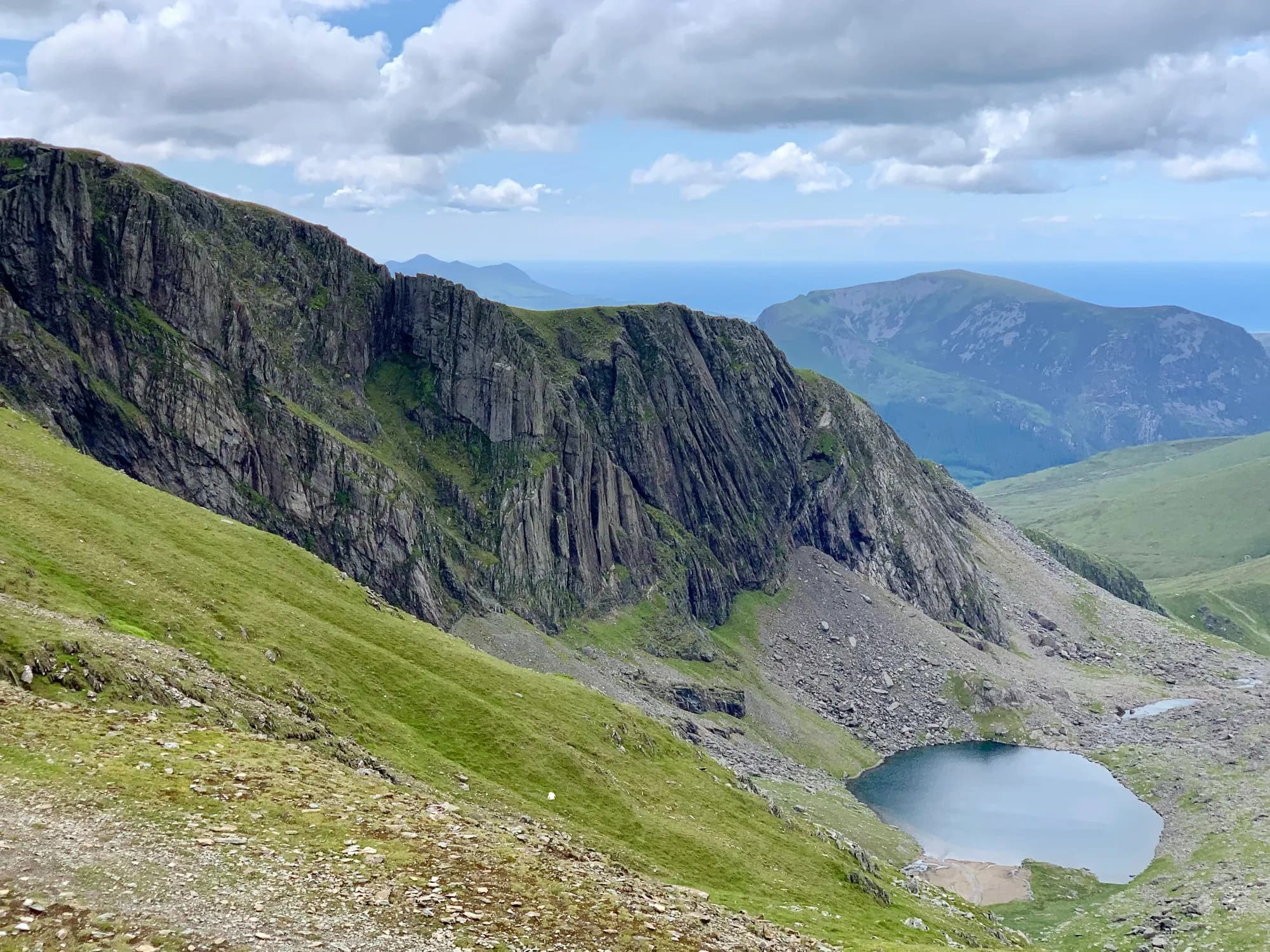
Llyn Ogwen is the big one among the Ogwen Valley Angling Association's waters, and the only one you can practically fish straight off the road, since the A5 runs along its shore. Wild browns and stocked rainbows share it, and the season runs into late November, a full two months after the club's high-cwm waters close at the end of September. Tryfan looms on the far bank, and that is reason enough.
Llyn Trawsfynydd is a wind-blown upland reservoir, with wild and stocked trout (ask the fishery whether boats are on offer), and the best hatches of small olives and early buzzers in April and May. Soft, slightly acidic granite water clears fast after rain.
Beyond those two there is a long list of small natural llyns in Snowdonia, the Ardudwy hills, the Carneddau and the Cambrian Mountains, many of them hill-walk-in waters where the question is less how to fish than who controls the fishing. Treat each as its own enquiry, with the club or landowner, and expect high ones to close early in the autumn. Bala Lake (Llyn Tegid), Wales's largest natural lake in the upper Dee valley, is a controlled fishery for pike, perch and wild brown trout, shared with boat traffic and watersports; the protected gwyniad must never be targeted.
Small Stillwaters: The Months the Rivers Rest
Spring-fed pools and commercial lakes that keep fishing when the weather turns.
Llandegla, near Wrexham in the Clwydian countryside, is a small spring-fed stillwater fishery stocked with rainbow and brown trout. The description gives it as a day ticket water with year-round access and clear water that suits buzzers and nymphs, which is exactly what a January outing wants.
Tan-y-Mynydd at Moelfre near Abergele runs several pools with rainbow, brown, blue and tiger trout, and is a Troutmasters venue, barbless only throughout. Slender midge imitations on fine tippet are the working method. Check opening arrangements with the fishery before you go.
These waters are the answer to the question this region sometimes asks in the middle of the year: what do you do when the spate rivers are blown out or shut? You go to a pool where the weather has a smaller vote.
The North Wales Year
Rivers wait for rain and runs, reservoirs wake with the buzzers, and the small stillwaters never quite stop.
Winter (December to February): grayling on the middle and lower Dee and on the Vyrnwy, where the population is reported to be growing, and year-round small stillwaters such as Llandegla. Salmon and trout are spawning on the shallow gravels now, so wade only where you must and stay off the redds. The salmon and sea trout rivers are otherwise resting and the high mountain llyns have closed for the winter, so confirm any water before you drive.
Spring (March to May): spring salmon on the Dee from the spring opening (check the date in the byelaw), and the first buzzers and small olives on the upland reservoirs from April, with Brenig, Vyrnwy, Alwen and Trawsfynydd all at their best in spring and early summer. The Elan lakes fish from April.
Summer (June to August): sea trout on the Dovey from June and on the Conwy as the rain allows, damsels on Lake Vyrnwy from June, sedges from June at Alwen and clouding the Vyrnwy evenings into late summer, and grilse on the Dee from July.
Autumn (September to November): strong late salmon runs on the Dovey in October and November, the Elan Valley productive after a build-up of cold nights, Llyn Ogwen fishing into late November while the high cwm waters close at the end of September, and the Dee grayling fishing getting into its stride from October.
Gear, Licences and Getting About
A nine-foot five-weight, a wading staff for the rivers, and a warm hat for everything.
A nine-foot five-weight handles most of it: buzzers and nymphs on the reservoirs and the small stillwaters, a dry fly on the limestone Dee and the Vyrnwy, a lighter rod for the llyns. The spate rivers want sinking tips and tubes for salmon and smaller wets for sea trout, as local advice has it. A wading staff pays for itself on slate and schist, and moorland weather means a proper waterproof and a spare layer at any time of year.
Natural Resources Wales issues the rod licence for Wales and publishes the byelaws, including the salmon and sea trout rules. Permits for individual waters come from the clubs, associations and owners named in each venue description. Rhayader, Llanidloes, Bala and Porthmadog are the towns the descriptions point to for the Elan lakes, Clywedog, the Dee and Tegid, and the Glaslyn. Check permits, boat availability and any closures before you travel.