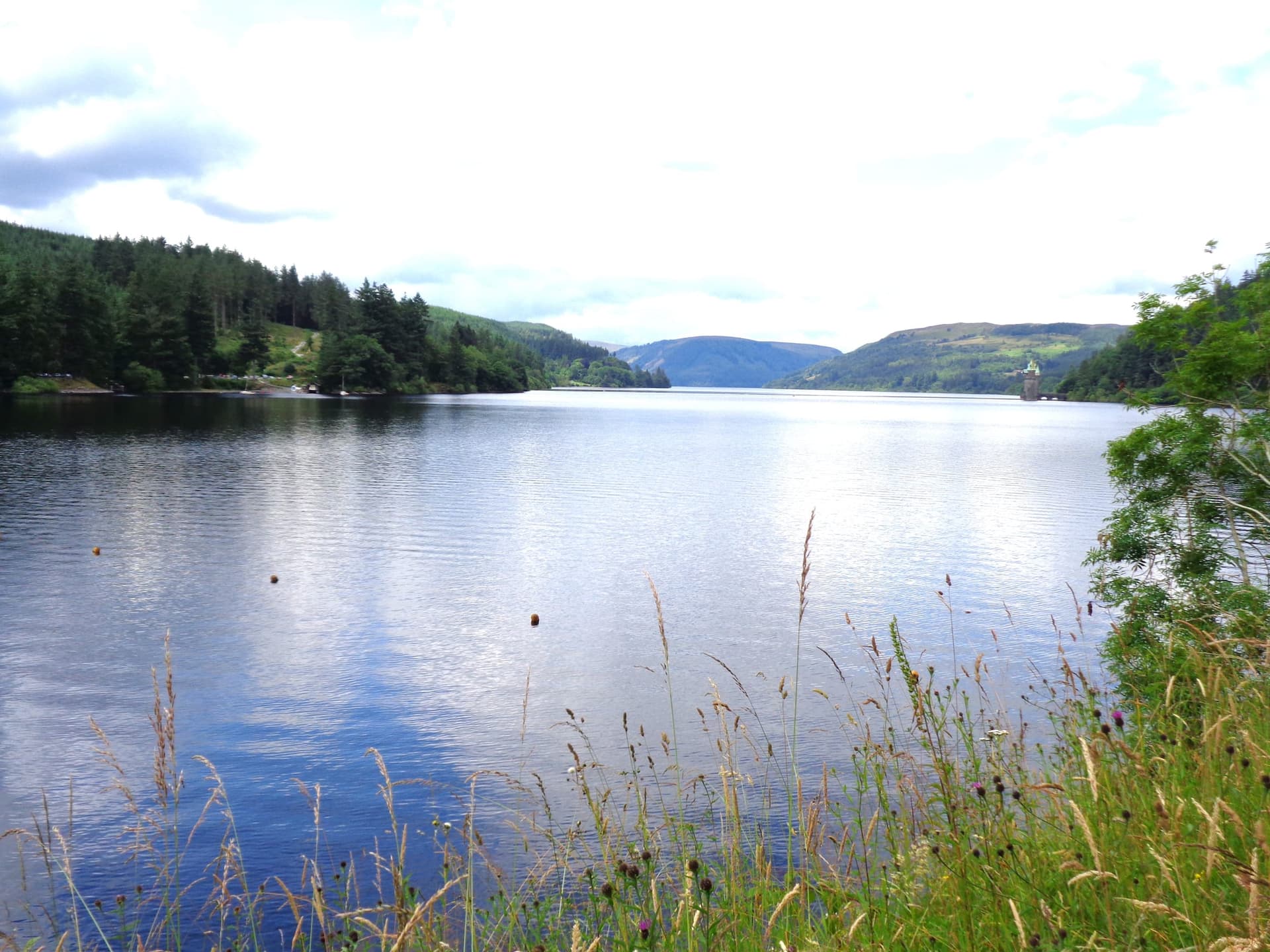

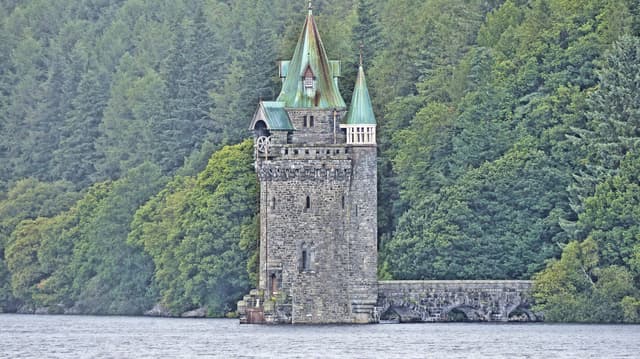
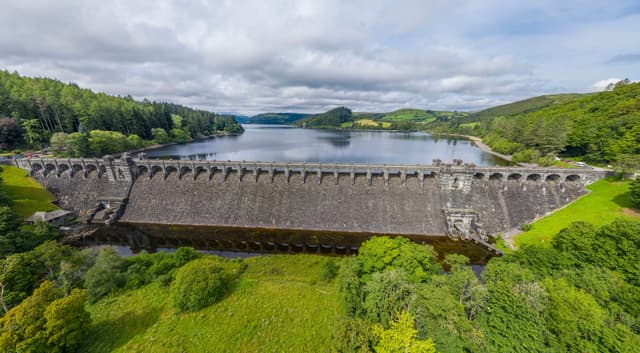
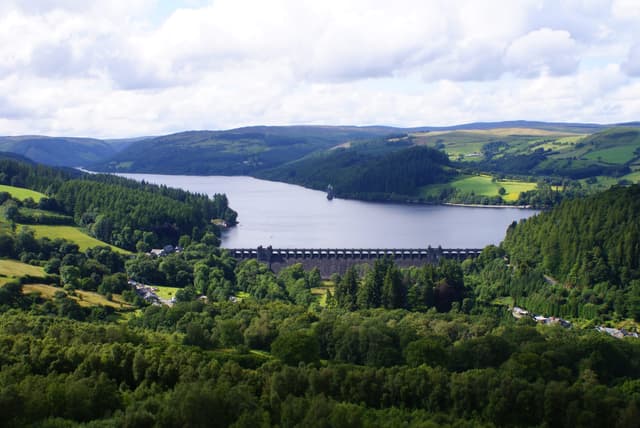
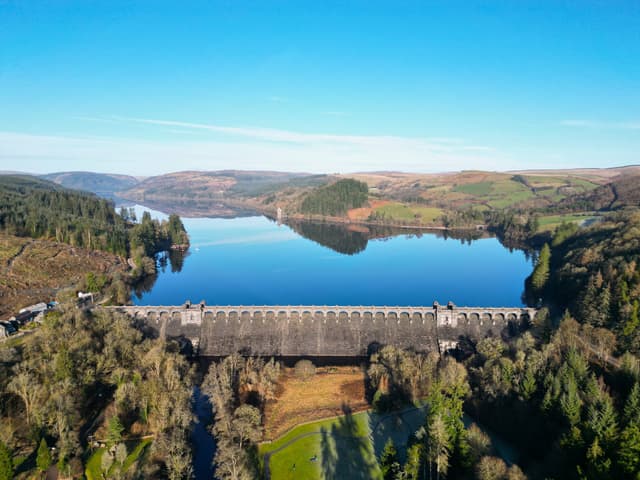
Lake Vyrnwy is the reservoir that made fly fishing accessible to the ordinary angler. Built in 1889 and now managed by Scottish Water, Vyrnwy holds a special place in British fly-fishing history — it was here that the dry-fly revolution began on still water, where Sutherland and his peers proved that a trout rising on a reservoir could be taken with the same delicate tactics used on chalk streams. The water is fished from bank and boat, and the limestone geology produces reliable food patterns. Buzzers hatch from April, damsels from June, and sedges cloud the evening air through late summer. The valley setting and native woodland give it a wild, unhurried feel despite the managed access. This is a pilgrimage water — worth scheduling your life around.
Good late spring conditions for Lake Vyrnwy
Good wave on — drift country. Drift fishing weather — three flies on a long leader.
Conditions are not ideal but fishable at Lake Vyrnwy. The ripple should help fish move and feed more confidently.
Conditions on the water
Some readings unavailable — check directly before fishing.
The brief
The plan
Start with Buzzer (14-16) on a slow figure-of-eight or hang under indicator. If that does not produce, switch depth or speed before changing the pattern entirely. In the ripple, a bushy searching dry (Hopper, Shipman's, Elk Hair Caddis) outperforms flush emergers — it stays visible and holds the surface tension.
If fish refuse on top, drop to a buzzer under an indicator at different depths.
Keep an eye on changing conditions — wind shifts and cloud breaks can trigger short feeding spells.
Good ripple suits both bank and boat. Bank: work inflows, dam walls, and points. Boat: broadside drift covering wind lanes.
What's on, when
Numbers are intensity 0 (none) to 3 (peak) — a guide, not a guarantee.
Top pattern + the box
Why today scores what it does
- Hawthorn Fly is in its seasonal window, boosting the chance of targeted feeding.
Precipitation
Who this water suits
Lake Vyrnwy, on the water
Field guide · contributor-editedWhat this water is
Lake Vyrnwy is the reservoir that made fly fishing accessible to the ordinary angler. Built in 1889 and now managed by Scottish Water, Vyrnwy holds a special place in British fly-fishing history — it was here that the dry-fly revolution began on still water, where Sutherland and his peers proved that a trout rising on a reservoir could be taken with the same delicate tactics used on chalk streams. The water is fished from bank and boat, and the limestone geology produces reliable food patterns. Buzzers hatch from April, damsels from June, and sedges cloud the evening air through late summer. The valley setting and native woodland give it a wild, unhurried feel despite the managed access. This is a pilgrimage water — worth scheduling your life around.
- Reservoir
- Limestone
How to get to the water
Where the rules change
- Trout15 March → 5 October
Lake Vyrnwy
Lake Vyrnwy is the reservoir that made fly fishing accessible to the ordinary angler.
Good late spring conditions for Lake Vyrnwy
Good wave on — drift country. Drift fishing weather — three flies on a long leader.
Conditions are not ideal but fishable at Lake Vyrnwy. The ripple should help fish move and feed more confidently.
Some readings unavailable — check directly before fishing.
A reasonable day here, though temperature isn't quite in the sweet spot.
Start with Buzzer (14-16) on a slow figure-of-eight or hang under indicator. If that does not produce, switch depth or speed before changing the pattern entirely. In the ripple, a bushy searching dry (Hopper, Shipman's, Elk Hair Caddis) outperforms flush emergers — it stays visible and holds the surface tension.
If fish refuse on top, drop to a buzzer under an indicator at different depths.
Keep an eye on changing conditions — wind shifts and cloud breaks can trigger short feeding spells.
Good ripple suits both bank and boat. Bank: work inflows, dam walls, and points. Boat: broadside drift covering wind lanes.
- Hawthorn Fly is in its seasonal window, boosting the chance of targeted feeding.
Numbers are intensity 0 (none) to 3 (peak) — a guide, not a guarantee.
Terrain map
Lake Vyrnwy is the reservoir that made fly fishing accessible to the ordinary angler. Built in 1889 and now managed by Scottish Water, Vyrnwy holds a special place in British fly-fishing history — it was here that the dry-fly revolution began on still water, where Sutherland and his peers proved that a trout rising on a reservoir could be taken with the same delicate tactics used on chalk streams. The water is fished from bank and boat, and the limestone geology produces reliable food patterns. Buzzers hatch from April, damsels from June, and sedges cloud the evening air through late summer. The valley setting and native woodland give it a wild, unhurried feel despite the managed access. This is a pilgrimage water — worth scheduling your life around.
- Reservoir
- Limestone
- Trout15 March → 5 October
Lake Vyrnwy is the reservoir that made fly fishing accessible to the ordinary angler. Built in 1889 and now managed by Scottish Water, Vyrnwy holds a special place in British fly-fishing history — it was here that the dry-fly revolution began on still water, where Sutherland and his peers proved that a trout rising on a reservoir could be taken with the same delicate tactics used on chalk streams. The water is fished from bank and boat, and the limestone geology produces reliable food patterns. Buzzers hatch from April, damsels from June, and sedges cloud the evening air through late summer. The valley setting and native woodland give it a wild, unhurried feel despite the managed access. This is a pilgrimage water — worth scheduling your life around.