
Spate · Slate · North West Wales / Gwynedd / Eryri, GB-WLS

Glaslyn

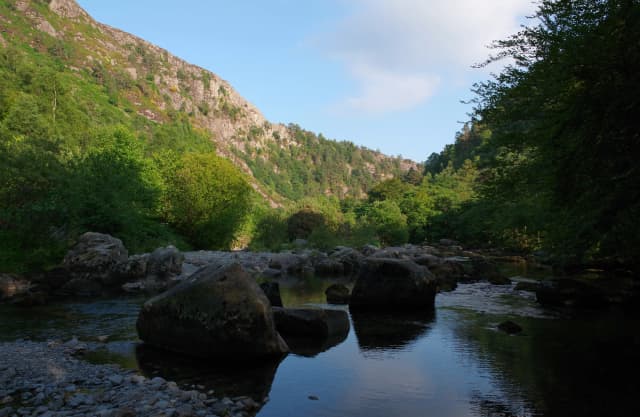
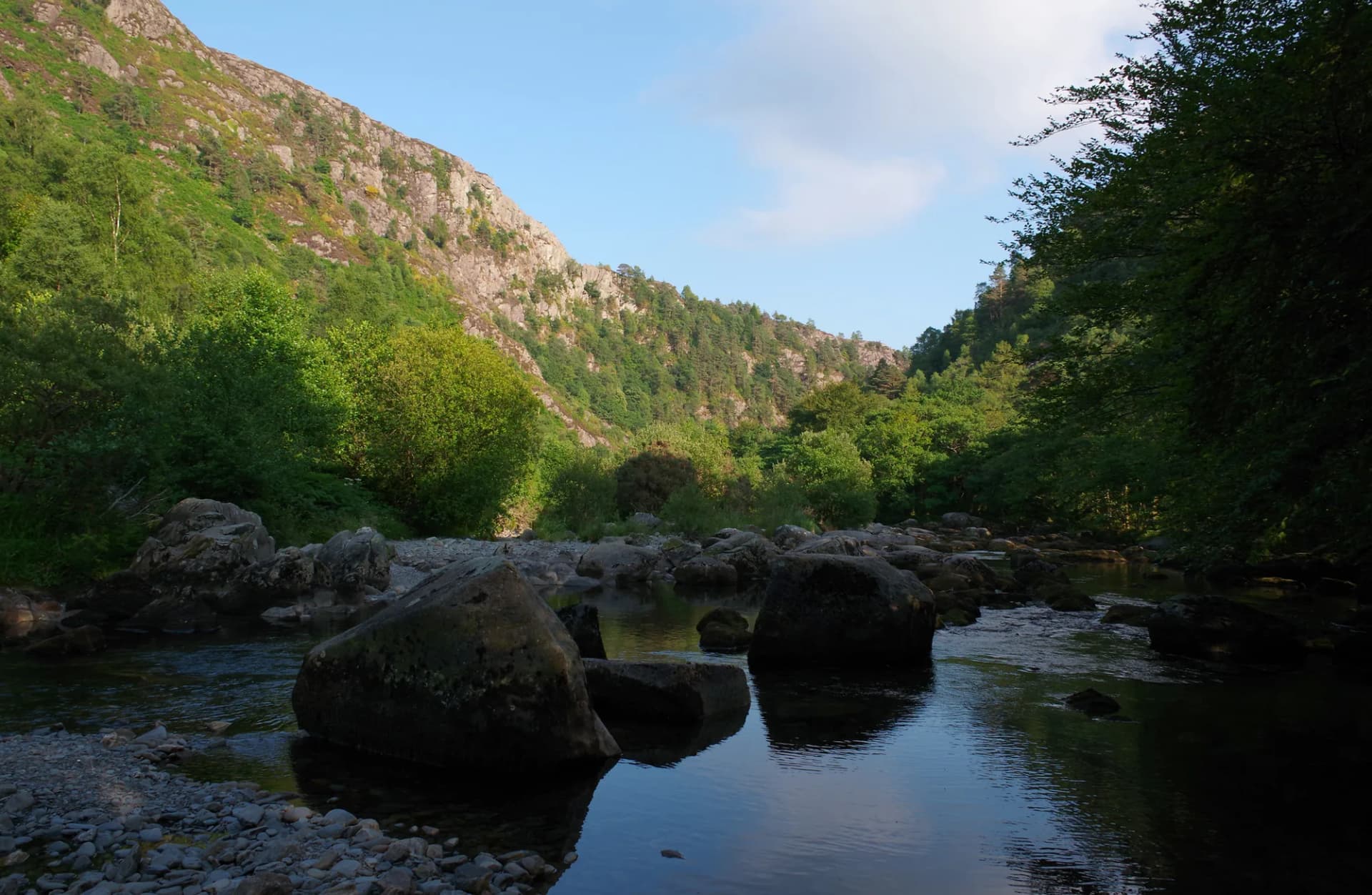
A rocky river gorge with large boulders in low, clear water, flanked by wooded hillsides, on the Afon Glaslyn near Aberglaslyn.

Eryri water of the proper romantic kind — out of Llyn Dinas under Yr Wyddfa, through the Aberglaslyn pass, and down to Tremadog Bay at Porthmadog.

Today · Closed season
Hare's Ear Nymph
Forecast · Today
Closed season
Out of season. File this water for the right month.
45% projected
Today's fly
Hare's Ear Nymph
Hare's Ear Nymph
Conditions on the water · Today
Live gauge
Level
Rising
0.68 m
Lifting fast
Water temp7.4°C
ClarityUnfishable
Weather4°C
WindN 16 km/h
Pressure1023 hPa
Rain · recent0.0 mm
Rain · ahead7.9 mm

The nearest gauge doesn't record temperatures, so we've estimated it — defer to the river keeper's advice.

Water temperature for Sea Trout
Cool — slow
7°C est.ideal 8–15°C
0°14°28°
How to fish it · for Sea Trout
When
May through September; July prime. Night work from full dark once water reaches 13°C; daytime sport on a falling, coloured spate. NRW At Risk — catch-and-release as default.
Where
Lower Glaslyn pool tails through the meadows above Porthmadog; the deeper pots below the Aberglaslyn pass on higher water. Walk the beat in daylight; the boulders are unforgiving in the dark.
Method
Small wets — size 10 to 12 Medicine, Peter Ross, Teal Blue and Silver — across-and-down on a floating line. On falling water carry a sink-tip for the deeper pots. Fish methodically from the tail of each pool; the take comes on the swing.
Kit
9 to 10 ft #6/7, floating line plus a light sink-tip in the bag. 8 to 10 lb fluoro. The river is small enough to wade carefully between casting positions.
Likely species
Hatch timeline · todayPeak at 11am

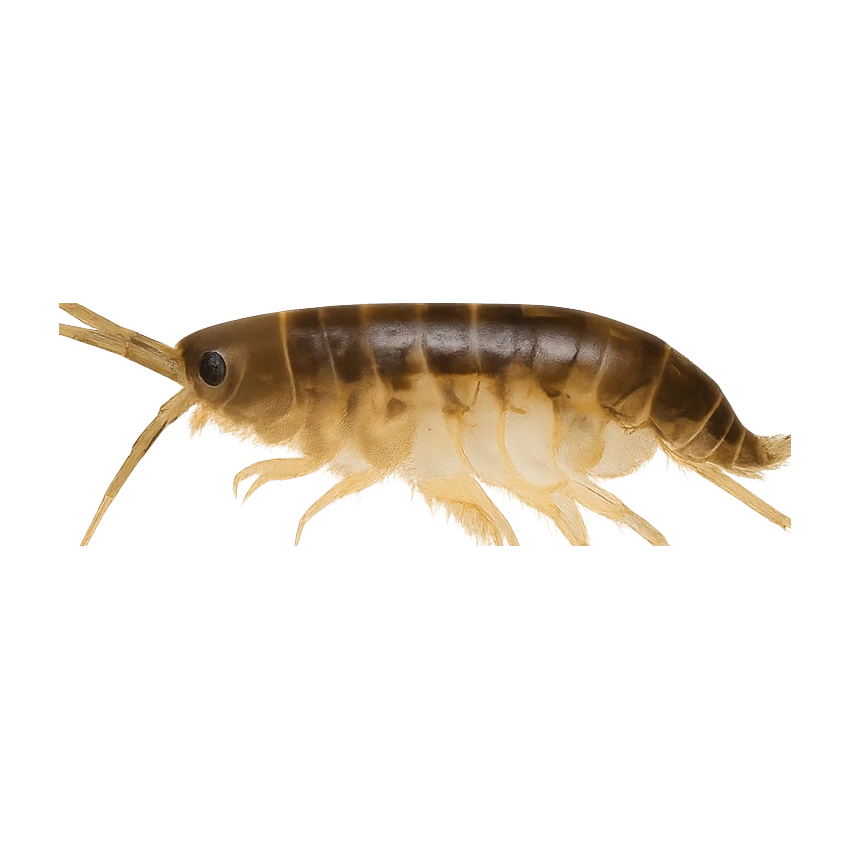
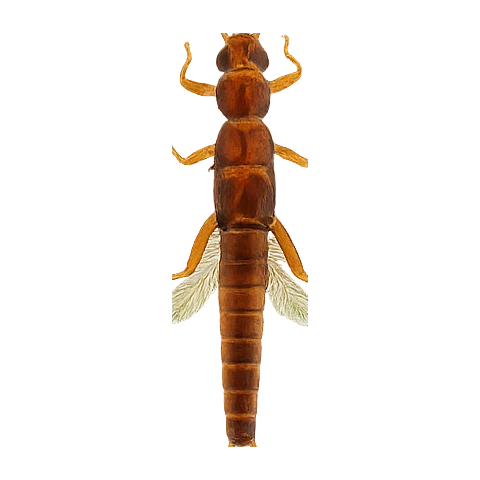
12pm(now) — Autumn Needle Fly

Stage: Creeping nymphsApproach: Heavy nymphActivity: 28%
Peak emergence window

Peak activity at 11am — Autumn Needle Fly (Autumn Needle Fly, Peak emergence window)

Sub-surface · on the nymphunder the surface

Hatch predictions

Top nymph shown — see all 3 guilds as a supporter.

Start free trial

14-day free trial. Cancel anytime.

Beyond the hatch · worth watchingambient prey(1)

Hatch predictions

Supporters see what else is on the menu.

Start free trial

14-day free trial. Cancel anytime.

Evidence
Survey-backed · regionalHigh confidence

Backed by regional invertebrate surveys; no sampling on this exact reach yet.

Through the year
0–3 scale · November highlighted
J
F
M
A
M
J
J
A
S
O
N
D
Salmon runRun
1
2
2
2
2
2
1
Sea trout runRun
1
2
2
2
2
2
2
1
Trout seasonSeason
1
2
2
2
2
2
1
March BrownHatch
2
3
2
CapererHatch
2
3
3
2
Heather FlyHatch
2
2
Autumn DunHatch
2
3
2

Numbers are intensity 0 (none) to 3 (peak) — a guide, not a guarantee.

Ranked for today
Sea Trout fly box

Wild-river first principles. Early-season nymphs and practical searching, then dry flies, emergers and spiders as hatches and surface activity improve.

BS
Black & Silver TubeTop
1–2 inch · Tube
In deep pools and dark water, silhouette and contrast do the work colour cannot. A fly that reads as black against depth is enough. Fish it broadside, hold the swing, let it hang at the dangle — that is when the best fish take.
Medicine Fly
Medicine Fly
8–12 · Streamer
Slim and mobile — fished sunk through the pool when surface work is not producing. Consistently takes fish that will not come to the surface.
What's coming
Plan ahead
Week ahead
Gallery · 2
  1. A rocky river gorge with large boulders in low, clear water, flanked by wooded hillsides, on the Afon Glaslyn near Aberglaslyn.
    IMGP8547
  2. Terrain map of the venue
    Terrain map
About this water

The Glaslyn is one of the recognised North Wales sewin rivers and a true spate stream — response time around three hours, levels swinging hard with the Snowdonia weather. NRW data is sobering: salmon at risk with a downward trend. Treat the river accordingly — the fish need every consideration. Slate and schist bedrock underlie this river. Atlantic salmon are under serious conservation pressure — Natural Resources Wales mandates catch-and-release for salmon on all rivers, so all fish must be returned.

Sea trout here

Summer-autumn runs (June–September), primarily nocturnal

  • Slate
Water quality (WFD)
  • Ecology: Moderate
  • Chemical: Unknown

NRW (Wales) · UKGB110065053960

Why this score · for Sea Trout
  • Temperature8828% weight
  • Flow8022% weight
  • Clarity8518% weight
  • Feeding Time8013% weight
  • Pressure857% weight
  • Insect activity2812% weight
Seasons & zones
  • Salmon 1 April → 17 October
  • Sea trout 3 March → 17 October
  • Trout 3 March → 30 September

Sea trout: Variable seasonal (2026) — Recognised North Wales sewin river but condition-sensitive rather than guaranteed. NRW 2024 classification: sea trout at risk. Acid flushes, mining legacy and slate spoil shape the water; fast 3-hour spate response makes timing critical.

Salmon: Negligible (2026) — NRW 2024 Glaslyn catchment summary classifies salmon as at risk with a downward trend; sea trout also at risk. Acid-vulnerable soils, mineral workings, slate and quarry legacy, conifer forestry are the documented pressures. All-Wales catch-and-release applies under the 2020–2030 byelaws.

Related guides
Casting instructors near here
Booking & contacts
Boards & regulators
At a glance

Glaslyn is a spate river in North West Wales / Gwynedd / Eryri. Its recorded elevation is about 35 m above sea level and the catchment geology is slate. The river is described as roughly 25 km long. Our data lists brown trout, salmon and sea trout here. It is classed as a salmon river. The salmon season is recorded as running from 1 April to 17 October. The trout season is recorded as running from 3 March to 30 September. Best window recorded for anglers: June to September. Core methods listed: small double (salmon); small wet fly (sea trout); upstream nymph (trout). Level and flow data for this water is linked from 1 gauge. Its Water Framework Directive ecological status is recorded as moderate. Nearby waters in our listings include Dwyryd at 9.0 km, Dwyfor / Dwyfach at 14 km and Afon Prysor at 14 km.