
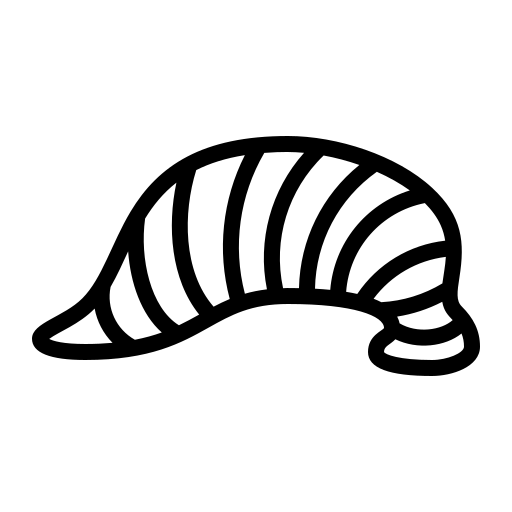
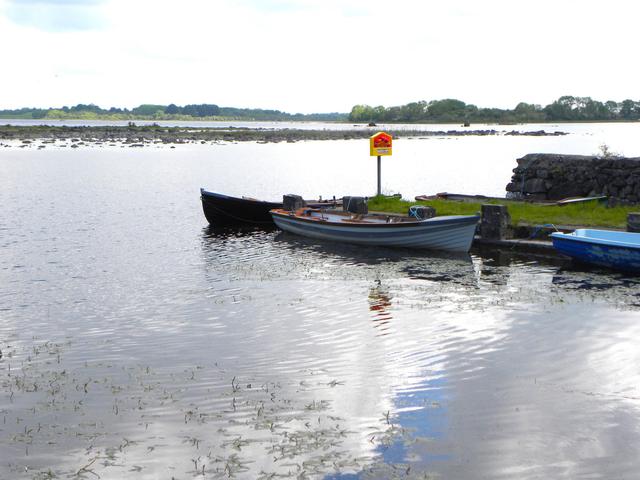
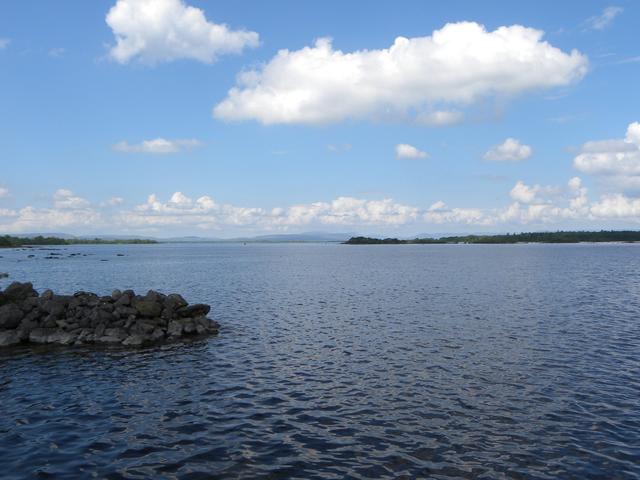
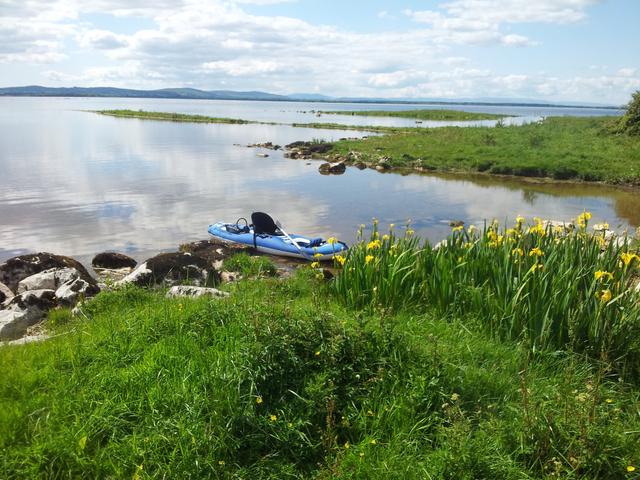
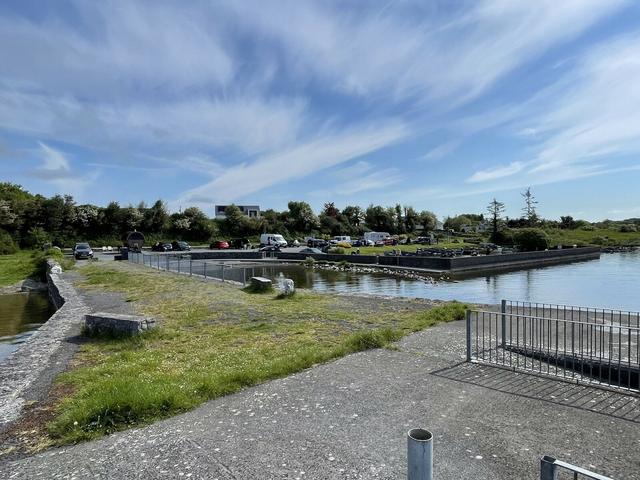
The lower lough is shallow limestone water — under four metres deep on average, floored with marl and carpeted with one of the most extensive stonewort beds in Ireland — and its trout grow quickly and run to around two pounds on average, with some very big perch for company. Trolling is the reliable method early in the year. The duckfly and olives come off in great numbers, best of all around the old river mouth by the Friars' Cut, and the chironomids carry on into early June; the mayfly, when it comes, is sparser and a week or ten days behind the upper lough. From July into September the dapped daddy and grasshopper do the work. It's rocky in places — Ower Bay especially — and the water off the Friars' Cut chokes with weed from June. Boats go out from Annaghdown Pier and Steamers Quay in Galway. Trout season runs 15 February to 30 September, four fish a day over 33 cm, with no permit needed. For the deep upper lough, see Lough Corrib (Upper).
IFI's 2021 survey of the lower lough found fast trout growth (a mean 35.5 cm at the end of year four), roach and perch the most numerous species, and the lake in Good status. Stonewort (Chara) beds with pondweeds cover much of the southern basin.
- Lough system
- Limestone