Loch Style Wet Fly
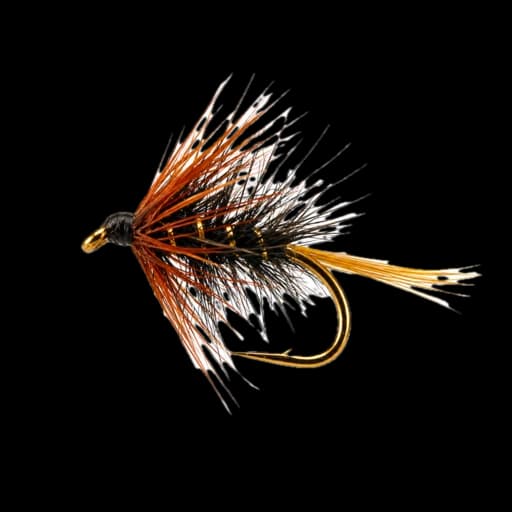
The wind does half the work and the wave does the rest. Loch-style fishing is a team of wet flies drifted across the surface on a floating line, the bob fly dibbling in the wave, the middle dropper working mid-water, the point fishing deeper. It looks relaxed. It is relaxed. But the decisions about fly choice, where to drift, how fast to retrieve, and when to change — those are where the fish are won and lost.
When & Where
Loch style is the traditional method for any large stillwater with wind: Scottish lochs, Irish loughs, English reservoirs, Welsh lakes. The wind creates a drift that carries the boat and the flies at the right speed. It works from a drifting boat — traditionally broadside to the wind — or from the bank on a windward shore. Best when there is a good wave, a chop on the surface, and some insect activity to bring fish up.
Essential Gear
A 10 to 11-foot rod in 6 or 7 weight. Floating line for most conditions, with an intermediate in reserve for calmer days or deeper fish. Leader of 12 to 15 feet carrying three flies: the bob or top dropper (bushy, buoyant — a Bibio, Claret Bumble, or Loch Ordie), a slim middle dropper (Mallard and Claret, Sooty Olive), and a darker point fly (Black Pennel, Connemara Black, or a small nymph). The bob fly is the star — it should sit in the surface and create a visible wake. Safety afloat: wear a lifejacket at all times, tell someone your plan and when you expect to be back, and come ashore before the wind rises. Cold-water shock is a real risk even in summer.
How It Works
Set the boat to drift broadside to the wind, with a drogue to control speed if necessary. Cast downwind at roughly forty-five degrees and retrieve in a steady figure-of-eight or slow hand-twist, keeping the bob fly working in the surface. The bob should dimple and dibble through the wave. At the end of the retrieve, hold the rod high and let the bob fly hang and dance on the surface for several seconds — this is the hang, and it provokes savage takes. If fish swirl at the bob without connecting, slow your retrieve.
Common Mistakes
Adjusting the Method
By season
Early season (March–April), fish the team deeper with a midge tip and subdued patterns. As the water warms and hatches develop through May and June, move to a floating line and livelier bob flies. High summer can be tricky on bright, calm days — fish the evenings. Autumn brings the best loch-style fishing of the year, with daddylonglegs, sedges, and fry-feeding fish responding to bigger, bolder patterns.
By species
Wild brown trout are the traditional quarry on Scottish and Irish waters. Stocked rainbows in English reservoirs respond to the same method but often prefer a faster retrieve. On Irish loughs during the mayfly season, the loch-style team with a spent mayfly on the bob is one of the great fishing experiences.
By water
This is the method of the Scottish Highlands, the Western Isles, and the Irish loughs — Corrib, Mask, Conn, Sheelin, Melvin. English reservoirs like Grafham, Rutland, Chew, and Blagdon fish the same way with slightly different fly choices. Welsh lakes and the lochs of Sutherland, Caithness, and Orkney are classic loch-style waters.
More in Wet Fly
The river is the hero, not the app. · © 2026 Rise Daisy