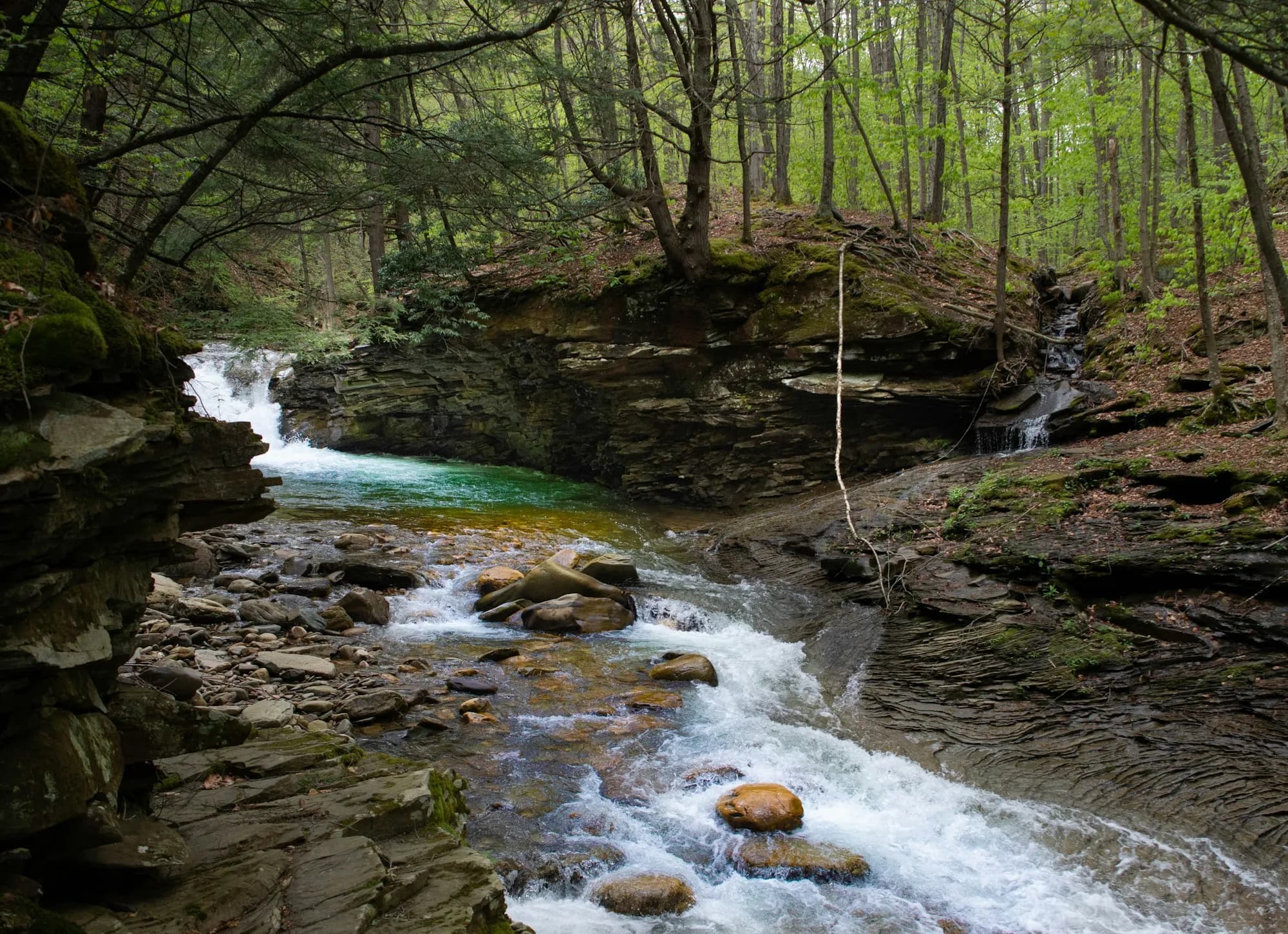
The eastern trout fisherman learns early that big water is not the point. A creek you can step across, a spring boiling out of a field, a dam that decides the temperature for seven miles: this is the country where American dry-fly fishing grew up thinking hard about small flies and the length of a leader. Pennsylvania's limestone creeks, the tailwaters of Maryland and Virginia, and the brook trout streams of the Blue Ridge and the West Virginia highlands share a temperament. The fish have seen everything, the water is clear, and the rewards go to those who approach slowly. We also look further afield to Connecticut and Maine, which are New England rather than Mid-Atlantic but fish in the same spirit.
Limestone for the hatches. Tailwaters for the cold. Brook trout for the walking. Fish small, fish slow.
Small Water, Sharp Eyes
The great western rivers make you feel small. The creeks of the Mid-Atlantic do the opposite: they make you feel clumsy. The water is clear and often thin, the trout have had a lifetime to study every shadow, and the tippet that would be sensible in Montana is simply too heavy here. An hour spent crouched behind a streamside bush watching a single feeding fish is not wasted time. It is the entire method.
The country splits into a few kinds of water. Limestone and spring creeks in Pennsylvania and Virginia, fed from springs, stable and rich in insects. Tailwaters in Maryland and Virginia, where a dam holds the temperature steady. And small mountain freestones in the Blue Ridge and West Virginia highlands, where the fish are brook trout and the walk is half the day. This page covers all three, then looks north to Connecticut and Maine, which are not Mid-Atlantic at all but are close enough in spirit to earn a section. The Catskills and the rest of New York have their own guide at /learn/new-york-trout.
A word on scope. Pennsylvania also has a Lake Erie steelhead fishery on creeks such as Elk and Walnut. That is a different sport, with stocked fish running from the lake, and it is not what this page is about.
Pennsylvania Limestone: The Cumberland Valley and Centre County
The Letort, Falling Spring, Big Spring and Spring Creek: four small waters with a long reputation.
Limestone water is alkaline, stable and fertile, which is why a creek you could jump across can hold wild trout of real size. In the Cumberland Valley the names are Letort Spring Run, Big Spring Creek and Falling Spring Branch. The Letort is a slow, weed-trailing, clear creek that is known as the cradle of American terrestrial fishing: tiny ants, beetles and crickets, a careful crawl and a long leader. Big Spring Creek boils out of one of the valley's largest springs. It is a large spring-fed creek that holds brown trout and some brook trout near the source, weedy and clear. Falling Spring Branch is known for its trico hatch, clouds of tiny spinners on August mornings over wild browns sipping in flat water. It has been through development pressure and restoration, so go with modest expectations and good manners.
Spring Creek, up in Centre County, is one of the best-known of the group: alkaline, stable and clear, with sulfurs, tricos and blue-winged olives on glassy water and educated wild browns. Parts of Spring Creek are managed as catch-and-release or other special-regulation water, so check the section you plan to fish, and move quietly. These fish do not forgive a wading splash.
Dry flies suit the hatch, but patience matters more than fly choice. Fine tippet, a leader longer than you think, and the willingness to leave a fish alone and come back are worth more than any pattern.
Penns Creek, the Little Juniata and the Yellow Breeches
Bigger water, famous hatches, and one dusk in late summer when the river turns white.
Penns Creek is one of Pennsylvania's best-known wild-trout rivers, a big, walk-in freestone with limestone influence and real streamer water. It is best known for the Green Drake hatch, which comes for a week or two at the turn of May into June: duns on the water, big browns suddenly reckless, and the Coffin Fly spinner fall to follow. Timing is unpredictable and the river is crowded when it happens, so check local reports before committing days. The rest of the year offers sulfurs, slate drakes and streamers.
The Little Juniata, the Little J, is a recovered industrial river that has become a limestone-influenced water with wild browns. It is fertile and hatch-rich, with heavy sulfur evenings and big fish in the deep, limestone-fed runs. Access is mixed, so confirm where you may park and wade.
The Yellow Breeches at Boiling Springs is half spring creek and half freestone, with a busy catch-and-release stretch at Allenberry that fishes all year. Its great event is the White Fly spinner fall in late August into September, the dusk swarm of egg-laying Ephoron leukon spinners, a blizzard so thick that it turns the river white and makes the trout silly. It runs warmer than the pure limestone creeks, so mind the thermometer in high summer.
Maryland: Gunpowder, Big Hunting Creek and the Savage
A tailwater half an hour from Baltimore, a creek with a history, and a gorge river in the far west.
The Gunpowder below Prettyboy Dam is a seven-mile tailwater of wild brown trout within half an hour of downtown Baltimore. Maryland's DNR and Trout Unlimited secured a guaranteed minimum cold release in the eighties, and the browns have done the rest; the main wild-trout reach holds a self-sustaining brown trout population (check Maryland DNR for which reaches are stocked or special-regulation). It is tight, technical, tree-lined water with sulfurs and caddis in season, and midges and scuds the rest of the year. Read the release out of Prettyboy and fish small.
Big Hunting Creek, on Catoctin Mountain by Cunningham Falls near Thurmont, is a creek you can step across in places. It holds wild browns and native brook trout and has a history as one of the early fly-fishing-only waters in the state. It is a small freestone that responds quickly to dry spells and storms. Check conditions, and handle the brook trout with the care wild natives deserve.
The Savage River runs out of a dam in Garrett County in the west of the state and falls hard toward the Potomac. It is pocket water and plunge pools with wild browns and brook trout. The release can turn a wadeable trickle into a torrent within an afternoon, so know the schedule and never wade a river that is rising. A special-regulation reach asks you to pinch barbs and release your fish; confirm the current rules.
Virginia and West Virginia: Brook Trout, a Limestone Creek and a Cold Tailwater
Specks in tannic plunge pools, a meandering spring creek in the Shenandoah Valley, and a tailwater that grows wild browns in the Piedmont.
The Rapidan, tumbling off the Blue Ridge through protected Shenandoah National Park forest, is one of the best-known brook trout streams in Shenandoah National Park. Read the park's current rules on hooks, bait and harvest before you go. The brook trout are small, the plunge pools tannic, and the long terrestrial season is the right moment for it. Wild brook trout are the most vulnerable fish in this guide: they live in cold, thin water, so the honest summer answer is to fish high up or let them rest, and to avoid fishing for them when streams are low and warm.
Mossy Creek in the Shenandoah Valley is the opposite temperament: a meandering limestone spring creek with stable, clear water and big, wary, well-fed browns that demand a long leader and humility. Hoppers and sulfurs are the natural flies, and a slow, careful approach is the only one that works. Much of this creek crosses private land, so confirm access before you travel.
The Smith River below Philpott Dam is a Corps of Engineers tailwater so cold that it grows wild browns in the Piedmont. There is a special-regulation trophy section and technical, small-fly fishing. The release schedule and any rise in flow are not negotiable, so check before you wade.
In West Virginia, Cranberry River in the Monongahela backcountry is a walk-in freestone, where access can involve gated roads, with native brook trout in the Dogway Fork and stocked trout in the main river, a stream clawed back from acid rain by liming. Seneca Creek falls off Spruce Knob, high, cold and acidic, with small native brook trout in step-pool water under spruce and rhododendron. Both are walk-in, quiet fishing; check access and conditions locally.
Beyond the Mid-Atlantic: Connecticut and Maine
Not the Mid-Atlantic, but the same sort of fishing: a famous tailwater, a brawling river that warms, and big woods.
The West Branch of the Farmington at Riverton is a cold, fertile tailwater with a permanent Trout Management Area. Its bottom-release water stays cold through a New England summer and holds wild browns alongside stocked fish, and it fishes year-round. Hendricksons, a long sulfur season, caddis, then midges and olives make a full calendar. There is a published flow plan, so watch the release. Below it, the Lower Farmington at Collinsville and Tariffville is a different animal: broader and warmer, with holdover browns and rainbows and plenty of smallmouth, and streamers through the deeper water. In summer, trout there seek cool water and should be left alone when it is warm.
The Housatonic, in the Litchfield hills, is a wide freestone that is part trout water and part smallmouth water, depending on the month. The Trout Management Area from Falls Village down past West Cornwall holds wild and stocked browns and rainbows, with a fly-only catch-and-release stretch; the hatches include Hendricksons, tan caddis, sulfurs and isos. It is a low-elevation river that warms hard in summer, so be honest about when to leave it.
Maine is farther and wilder. The East Outlet of the Kennebec carries Moosehead Lake water to Indian Pond, fly-fishing only, with landlocked salmon and brook trout; check the current bag and size limits. The West Branch of the Penobscot below Ripogenus is a big, cold, dam-controlled river through the Golden Road country, with landlocked salmon and native brook trout; the dam schedule is a safety matter as much as a fishing one. Grand Lake Stream in Washington County is a short, intimate landlocked salmon water with educated fish, finesse tippets and pressure for its size. The Magalloway below Aziscohos Dam and the Rapid River and Rangeley country hold wild brook trout and landlocked salmon in remote, dam-influenced water. Treat those brook trout with restraint. Sea-run Atlantic salmon are protected in Maine, so release any you meet at once, and check each water's rules, access and release flows before you travel.
The Mid-Atlantic Year
Spring and early summer for the hatches, a thin middle for warm water, and fall for quiet and care.
Winter (December to February): the tailwaters and spring-fed limestone creeks hold steadier temperatures than freestones, so fishing continues in the cold with small flies, midges and scuds. Access, ice and snow limit the freestones and walk-in streams. Fish the warmer part of the day and check release schedules.
Spring (March to May): the season opens up with Hendricksons and sulfurs on the limestone and tailwater creeks, and the Green Drake hatch on Penns Creek arrives at the turn of May into June. Freestones such as Big Hunting Creek run higher with rain and snowmelt, so check conditions.
Summer (June to August): the thinnest part of the year for many waters. Low-elevation rivers, including the lower Farmington and the Housatonic, can run warm enough to stress trout, and the small mountain streams run low and clear. Fish early, check temperatures, and leave fish alone when the water is warm; many agencies advise stopping at around 68°F (20°C). The limestone and spring creeks fish on through the heat, with terrestrials such as ants, beetles and hoppers, tricos on August mornings, and the White Fly spinner fall on the Yellow Breeches in late August into September.
Fall (September to November): cooler water brings fish back on the feed, but brown trout and brook trout spawn in the fall. Keep out of the gravel, never wade across redds, and give spawning fish room. Check local rules for any seasonal closures or changes to regulations, and rest the small native brook trout streams.
Gear, Licenses and Manners
A short light rod, long fine leaders, and tidy habits on small streams.
A three- to five-weight rod between seven and a half and nine feet suits most of this water; shorter rods help on the tight, tree-lined creeks and the small mountain streams, while a longer rod helps with long leaders on the open limestone. Carry leaders to 6X or 7X for the spring creeks and tailwaters, a handful of small midge and olive patterns, caddis, and ants, beetles and hoppers for summer. For the Maine and Housatonic waters, bring streamers and a heavier rod.
Each state's fish and boat or wildlife agency issues licenses and publishes the regulations. Check whether a trout permit, stamp or special license applies in the state you are fishing. Special sections can have their own tackle and release rules, so read the rules for the exact water, and check them again before each trip. Many of these streams cross private land, so confirm where you may park and wade, and respect posted signs.
Always clean and dry your boots and gear between waters to avoid spreading didymo and other invasive organisms, and follow local biosecurity rules. Release wild fish quickly, keep them wet, and take care to avoid spawning gravel in the fall. Wear a wading belt, and treat a dam release as a safety warning: leave the river as soon as it starts to rise.