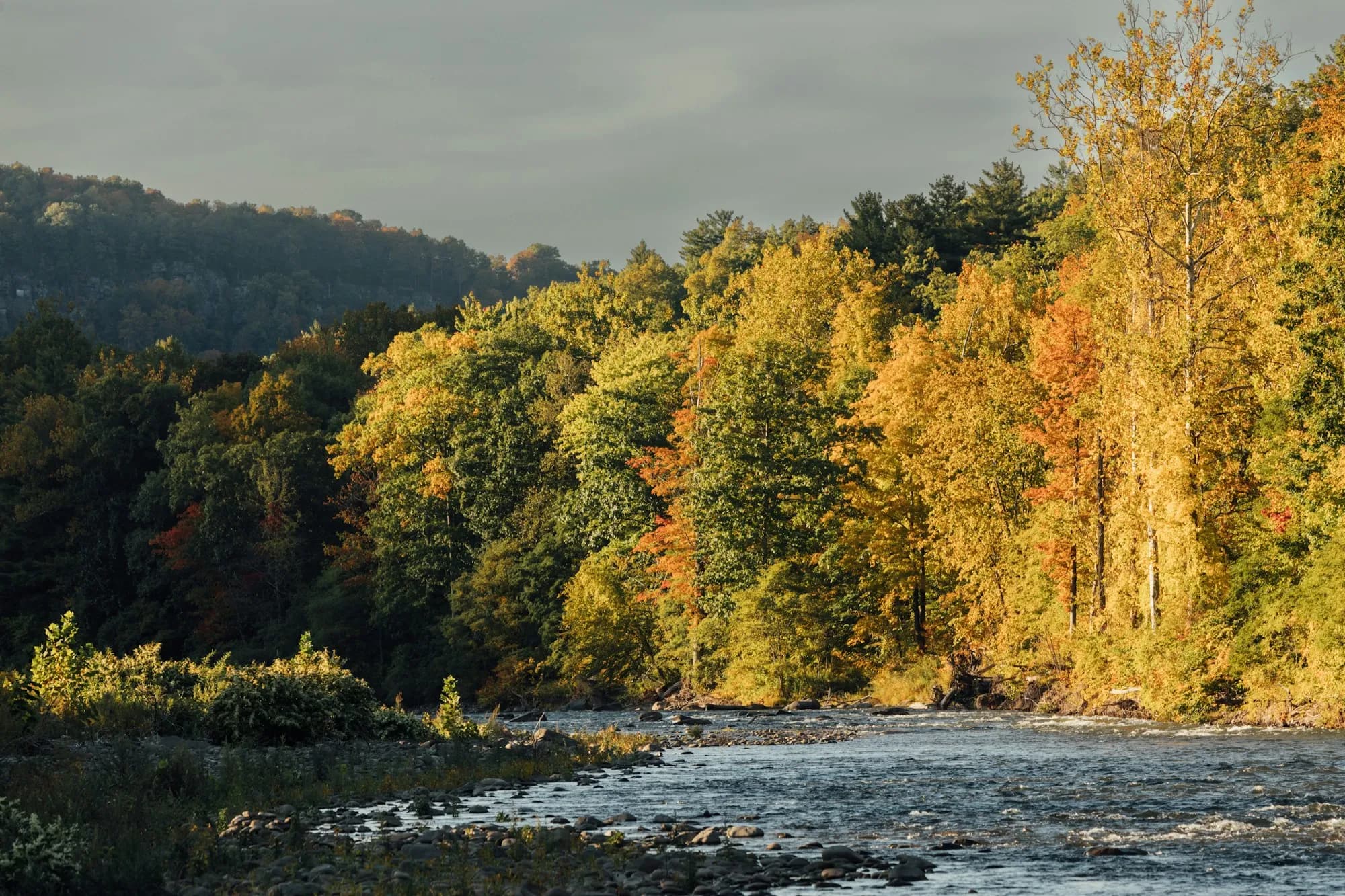
New York City is not where anyone expects to be told about trout, and yet the city's own water supply is built on a cluster of small reservoir streams that hold them, Long Island has a handful of spring creeks that have nothing to do with the Catskills, and a good part of New Jersey's trout water is one to two hours from Midtown. None of it is wilderness. Most of it is small, a little crowded and governed by more rules than a card game. But a person with a rod, a license and a free Tuesday afternoon has a lot more options than the Catskills-or-nothing story suggests.
Croton for the short session. Long Island for the strange spring creeks. The Catskills when you can spare the day.
Fly Fishing from New York: More Water Than You Would Think
The usual New York answer is the Catskills, and the Catskills are worth every mile. But they are a long day, and most of the trout fishing a New Yorker will actually do in a season happens somewhere closer, on water that never makes the magazines: a tailwater below a reservoir, a stocked-and-holdover creek in the Hudson Valley, a state-park spring creek on Long Island with a reservation system and a very long list of rules.
This guide is about access: where to look, what kind of water each place is, and who to check with before you go. The method lives in the other playbooks. What is useful here is an honest map, because the honest version is that these are close, small and sometimes crowded waters, and a day on them goes better when you know which kind of day you have bought.
The Croton Watershed: The Short Session
Small reservoir tailwaters and tributaries in Westchester and Putnam, close enough for an evening and complicated enough to need homework.
The Croton system is a cluster rather than a single river: the East and West Branches, the streams that feed and leave the reservoirs, and a scatter of public-access fragments across Westchester and Putnam. Browns and rainbows are the main fish, with brook-trout context on some reaches. The streams are small, technical and a short drive from the city, which is the whole appeal.
The catch is routing. Which branch, which public access point, which special regulation, and whether the release and the temperature make the day worthwhile are all questions with real answers that change. Much of this land is part of the New York City water supply system, so check the rules from NYC Environmental Protection (DEP) on watershed-land access, including whether an access permit is required, and the DEC regulations for the specific stream category, before you plan around a particular pull-off.
Treat it as a flow-aware day-trip water, not a destination river. Check the live venue pages below for the current picture, then go small: light rod, fine tippet, a careful approach.
Long Island: Spring Creeks in the Suburbs
The Connetquot, the Nissequogue and the Carmans: cold, clear and nothing like the Catskills.
It is a strange sentence to write, but Long Island has spring creeks. The Connetquot River is the best known, a preserve fishery in a state park, more beat-and-park-rules than wild public stream. It is a genuine salmonid day trip east of the city, and the honest advice is to check park rules, reservation requirements and the current Region 1 regulations before you plan a trip around it.
The Nissequogue and the Carmans are quieter and more fragile. They carry park-water, lower-river and brook-trout conservation context, and the lower, tidal reaches are not the same thing as a stocked inland stream. Brook trout rules are conservative and park rules apply in places. These are conservation-first waters: find out which reach is legal and which species rules apply, and fish them lightly.
The Hudson Valley and the Ramapo: Cool-Season Streams
Wappinger Creek, Fishkill Creek and the Ramapo: practical, close, and best when the water is cool.
Wappinger Creek in Dutchess County is a practical Hudson Valley freestone for anglers who want something closer than the Catskills but more river-like than a suburban pond. It carries stocked trout and some holdover or wild fish where the habitat allows. Fishkill Creek is a cool-season stocked and holdover stream rather than a summer wild-trout destination, and access is patchy.
The New York Ramapo, in Rockland and Orange Counties, is a near-city option for a short session, especially in spring. Stocked fish and some holdover possibility define it, and it runs warm enough in summer that the fishing falls away. All three are spring and autumn waters: when the creeks run low and warm in summer, the fish and the fishing both suffer, so let the thermometer decide: many anglers stop fishing for trout once the water passes about 68 F (20 C).
Across the Line: Northern New Jersey
The Musconetcong and Big Flat Brook, both within roughly one to two hours of the city and both worth knowing.
Northern New Jersey is the overlooked part of the metro trout map. The Musconetcong, the "Musky", runs through Hunterdon and Warren Counties with special-regulation conservation reaches (check New Jersey Fish and Wildlife for which stretches and what rules), holding stocked browns and a good number of wild and holdover fish. It is fertile, decently hatchy and rewards fishing across the whole year, but like all New Jersey trout water it warms in summer.
Big Flat Brook in Sussex County is the jewel of the state, a clear freestone in the Delaware Water Gap country, with a managed fly-fishing-only, catch-and-release section (confirm the reach and the current rule before you go). Spring and fall are the good water; tread lightly. New Jersey licensing is separate from New York, so check New Jersey Fish and Wildlife for license and trout requirements, and the special-regulation rules for each reach.
The Catskills: When You Can Spare the Day
The Esopus for wild rainbows, the Neversink for the history. A long day, and worth it.
Esopus Creek is the Catskills' rainbow river, a tumbling freestone with a hydrology quirk of its own: the Shandaken Portal pipes water through the mountain from the Schoharie watershed and can color the upper river with no rain in the sky. Read the portal, not just the weather, when you judge the water here.
The Neversink is Theodore Gordon's home water, where the dry fly was first seriously fished in America: an upper-Catskill river that is freestone in its headwaters and cold, release-fed water below the reservoir, quieter and more remote than the Beaverkill. Plan these as full days, check the DEC stream-category rules.
Fishing Beyond Summer
The better water is often September to April. Know the winter rules and the trout stay catchable.
Most people put the rod away in autumn, but much of this water fishes best when the leaves turn. Freestones thin and warm by midsummer, so the cool months are when the Hudson Valley creeks, the New Jersey streams and the Croton tributaries are at their most honest. Release-fed and spring-fed water holds its temperature when the freestones cannot.
Spring brings the first serious hatches, and the Catskill classics of the mayfly calendar start to matter; summer is for the cold, release-fed water. Many New York streams carry a catch-and-release season outside the regular season (typically late autumn through winter, artificial lures only on listed waters), so winter fishing is often possible if you read the rules. Slow nymphs, small midge patterns and a patient approach are the standard approach. Check the DEC guide for the specific water, and keep an eye on the live conditions below.
Gear and Licenses
A nine-foot four- or five-weight, a thermometer, and the right paperwork for the state you are in.
A nine-foot four- or five-weight rod with a weight-forward floating line handles almost everything on this list. Add fine tippet for the Croton and the Long Island creeks, and a pocket thermometer for the warm months. A small selection of midge pupa and nymph patterns, a few caddis and a few terrestrials cover the year.
Licenses: New York trout fishing needs a New York State fishing license from the Department of Environmental Conservation; New Jersey waters need a New Jersey license from Fish and Wildlife. Special regulations apply to many reaches, and some watershed or park waters carry their own access rules. Always check the current regulations for the water you plan to fish.