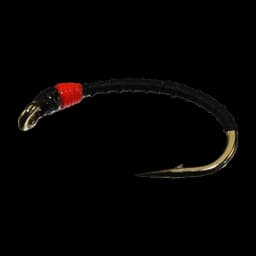
Buzzer
The stillwater fly. Reservoir trout eat thousands of buzzers. Fish on a long leader from an anchored boat or a slow figure-eight retrieve.
Spring and autumn are the peaks, but chironomids hatch in every month of the year — including the cold ones. Look for a flat calm or a light ripple over soft silt, fish head-and-tailing in the film, and a wind lane quietly doing the collecting for you.
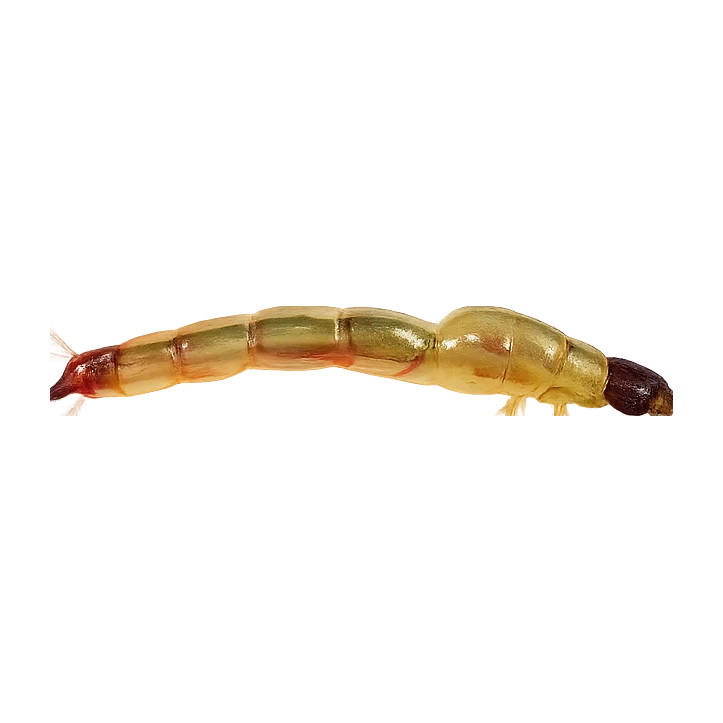
The pupa's climb to the surface is slow and defenceless, and a cruising trout has all day to intercept it. A team hung at the right depth imitates that ascent better than any retrieve — which is why doing very little catches so well.
Starting points, not rules — depth, presentation and size usually matter more.
Colour follows the season and the water. Red and black early in the year, green and olive in clear summer water, claret and orange joining black in autumn, small and dark in winter. Bigger and darker in cold water, smaller and paler as it warms. Depth and leader length usually matter more than colour, so get those right first.
| black | The default: any month, any water. Start here unless something tells you otherwise; strongest in low light, when silhouette matters more than colour. |
| olive | Clear water over weed, alkaline lochs and limestone loughs. A darker olive is the one for peat-stained water. |
| green | Clear reservoirs from June to August, when the smaller green midges hatch. Often the point fly of a summer team, with a black kept alongside it. |
| claret | The loch colour: the middle dropper on Scottish and Irish waters, and dull, low-pressure days on reservoirs. |
| orange | Autumn and peaty water. A whole orange or amber body, or just a hot-orange thorax tag on a black buzzer, when black and green have stopped working. |
| flashback | Bright sun. A pearl or tinsel strip down the back copies the light flashing off a rising pupa's back. |
| red | Usually means the bloodworm, the larva, fished deep and slow early in the season and in coloured water. See the Bloodworm → |
- Early season, deep on a slow sinkerDeepMarch and April, water at 5–10°C. Pupae hatch deeper and the fish stay down with them. Count a team down over silt, work the marginal drop-off, and retrieve barely at all.intermediate or Di-3long leadercount-down retrieve
- Team of three under an indicatorSubsurfaceThe April-to-June peak, and again through September. Set depth to match where fish are feeding — often 3–10ft — and change depth before you change fly.floating lineyarn indicatorfluorocarbon
- High summer, dawn and dusk in the filmFilmJuly and August, when fish sit deep through the middle of the day and come up at either end of it. Greased leader, static, first and last hour.floating linegreased leaderstatic in the film
| default range | 10–16 |
| cold water | 10–12 |
| warm water | 12–16 |
| film feeders | 14–18 |


