

 Mayflies
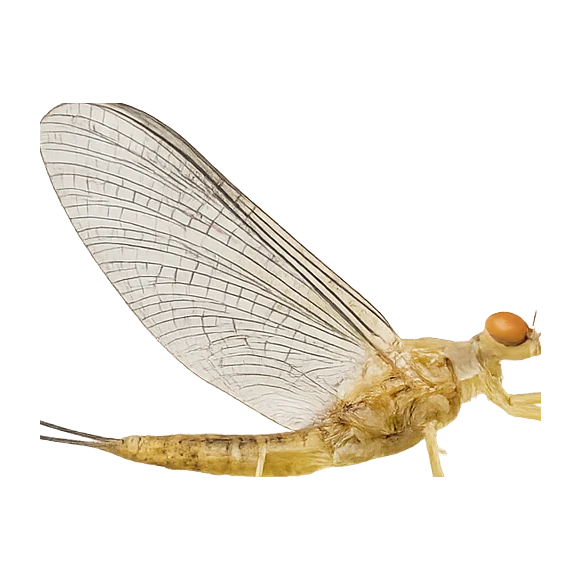
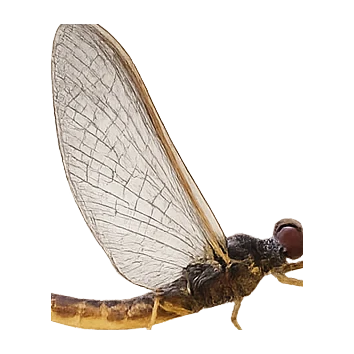
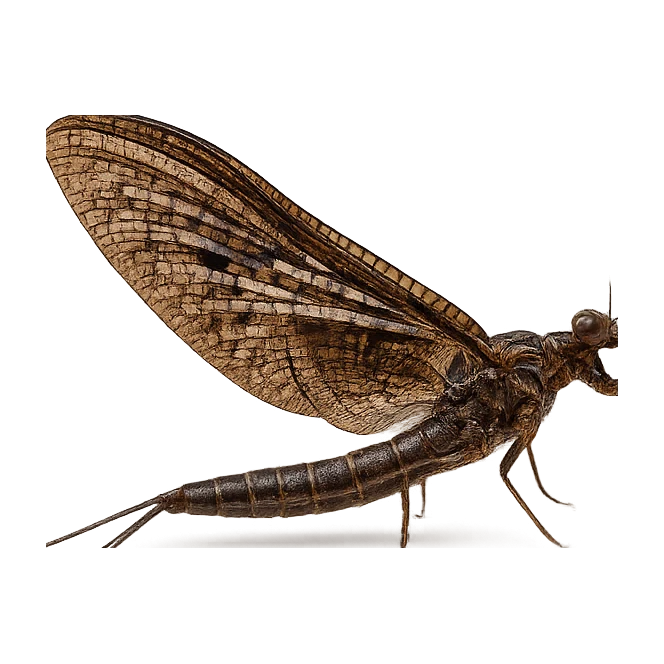
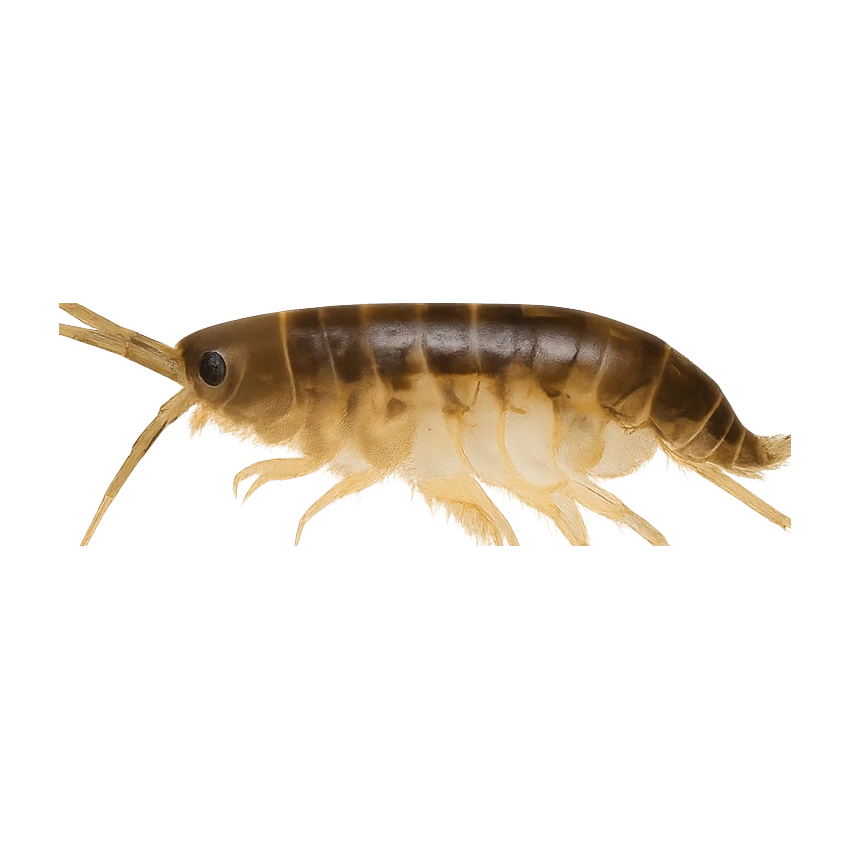
 Gammarids

5 km of main river in five beats, Lord Louis and Rookery, Lee Park, Longbridge, Moorcourt and Grove, down to the M27. Bigger, deeper water than the middle river, stocked with native brown trout and holding wild fish, fished upstream dry fly and nymph. Read from the Environment Agency gauge on the Longbridge beat.
The Test rises as a winterbourne near Ashe above Overton at roughly 90 m and drops only that much over 64 km to Southampton Water — an average gradient near 0.14%, about as gentle as an English trout river gets. Upper reaches above Whitchurch are seasonal: the spring line migrates downstream through the summer as the chalk aquifer draws down. From Whitchurch through Longparish, Chilbolton, Stockbridge, Mottisfont, Romsey and Broadlands the river runs as a classic low-gradient pool-riffle and glide sequence on clean, well-sorted flint gravel over Cretaceous chalk, threaded through a network of hand-cut carriers and side channels. Baseflow index at Broadlands is around 0.94, which is why the hydrograph is so flat and the bed so stable: Ranunculus anchors in the same gravel for years, and winter spates rarely shift it. Wading hazards are soft marl pockets and silty slacks at the margins, not anything mobile.
Wading: Soft marl pockets and silty margin slacks
- Chalk
- Unconfined
- Glide
- Pool riffle