Spate · Granite · Honshū

Miomote River

Miomotegawa river

The Miomote falls out of the snow country of northern Niigata, a powerful river famed for the sea-run cherry salmon — sakuramasu — that climb it in spring, and for resident yamame and iwana above.

Poor · White-spotted Char
Tenkara kebari (reverse-hackle) · 12–16
Poorlive now
Not the day for it
River lifting fast on the rain. Not much stacked in your favour today. Worth an hour if you are nearby, not worth the special trip.
90% confidence
What moved it
  • LevelVery heavy rain recentlyNo gauge reading
  • Water temp21.7°C
  • ClarityUnfishable
Today's fly
TK
Tenkara kebari (reverse-hackle)12–16
A dependable searching pattern for these waters.
Conditions on the water
Estimate
Level
Very heavy rain recently
No gauge reading
Water temp21.7°C
ClarityUnfishable
Weather25°C
WindS 17 km/h
Pressure1004 hPa
Rain · recent136.3 mm
Rain · ahead7.9 mm

No gauge on this water — readings are regional estimates from weather, not a live gauge.

Water temperature for White-spotted Char
Welfare risk
22°C est.ideal 714°C
0°14°28°
How to fish it · for White-spotted Char
When
Late spring after the thaw, into autumn
Where
The Miomote falls out of the snow country of northern Niigata, a powerful river famed for the sea-run cherry salmon — sakuramasu — that climb it in spring,…
Why this works
Water at 21.7°C. This is the line where catch-and-release kills white-spotted char. Do not fish for them today.
Likely species
Mayflies
  • Iron blue mayflyMost likely
    #16–18 · Dun
    Cold, grey day — the dun sits long. Good dry-fly water.
  • Green drakeAlso possible
    #8–10 · Spinner
    Spinners on the water now — the big fish move for these.
  • Blue-winged oliveAlso possible
    #16–18 · Dun
    Duns are up; a sherry spinner fall may follow.
  • Large dark oliveAlso possible
    #14–16 · Emerger
    Dead-drift the emerger — it's sitting in the film.
Caddisflies
  • GrannomMost likely
    #14–16 · Pupa
    Pupa first, then dries as the adults come off.
  • Satin sedgeAlso possible
    #12–14 · Egg-laying
    Skitter it at dusk — this one's fished, not dead-drifted.
Evidence
ModelledModerate confidence

Modelled from regional ecology — no survey or occurrence data for this water yet.

Updated 3 hours ago

Through the year
0–3 scale · August highlighted
J
F
M
A
M
J
J
A
S
O
N
D
Cicada (Semi)Hatch
2
2
Stenopsyche CaddisHatch
2
3
3
2
March BrownHatch
2
3
2
GrannomHatch
2
2

Numbers are intensity 0 (none) to 3 (peak) — a guide, not a guarantee.

Ranked for today
White-spotted Char fly box
EH
Elk Hair / Stenopsyche caddis
12–14 · Sedge
Evening sedge — twitch or dead-drift it as the light goes.
CB
Cicada & beetle terrestrials (midsummer)
10–12 · Terrestrial
Fish it tight to the bank on warm, breezy days.
Permits & access
Permit required — see local rules.
  • Co-operative yugyoken required; sakuramasu are often specially regulated or restricted — verify before targeting
  • Spawning closure in autumn.
What's coming
Plan ahead
5-day outlook
Water here around 22°C. Nothing cooler within range — carry a thermometer.
Gallery · 2
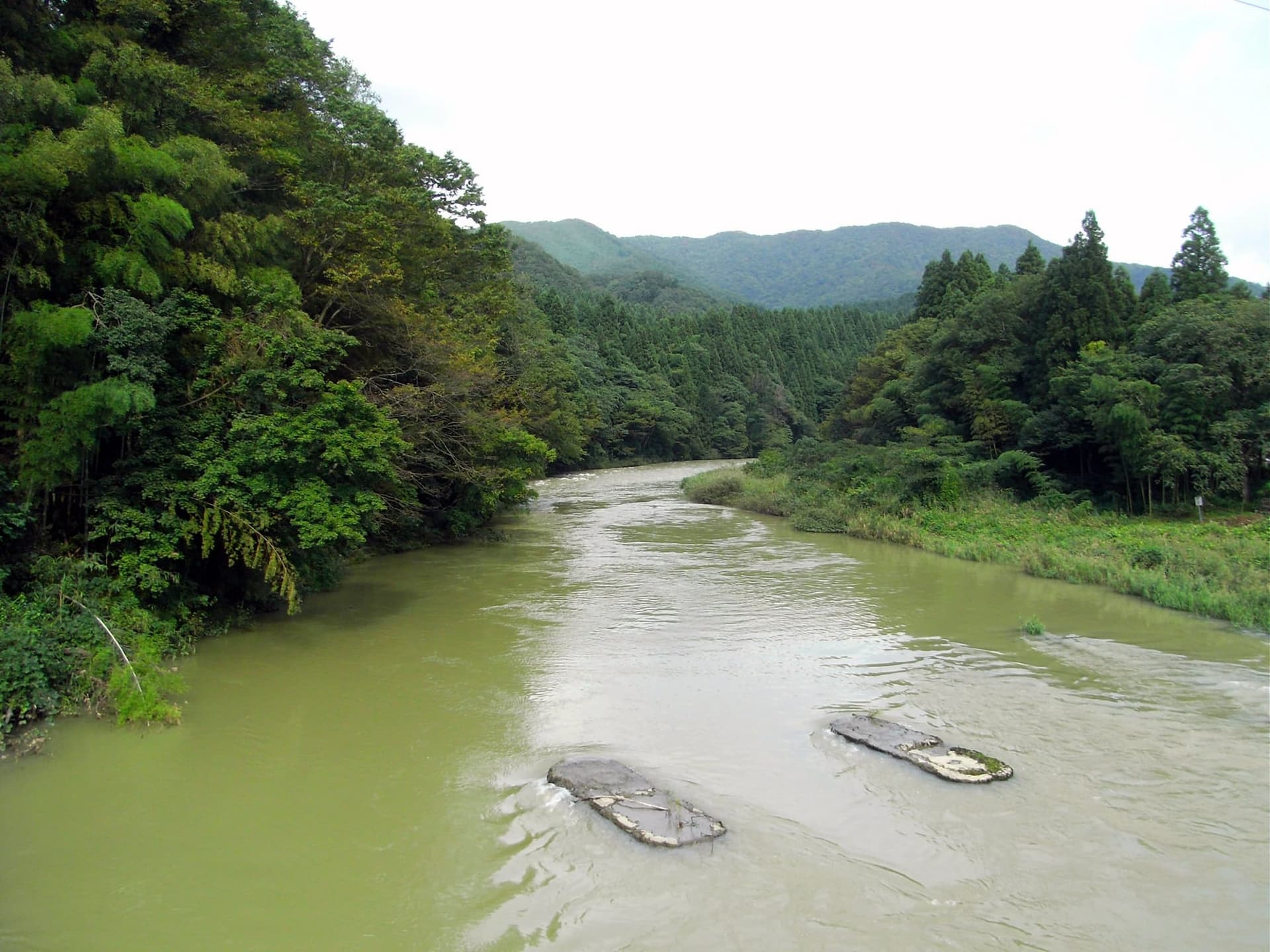
  1. Miomotegawa river
    River in Niigata Prefecture.
  2. Terrain map of the venue
    Terrain map
About this water

The Miomote falls out of the snow country of northern Niigata, a powerful river famed for the sea-run cherry salmon — sakuramasu — that climb it in spring, and for resident yamame and iwana above. Big snowmelt water, heavy in the thaw and clearing into summer, with a strong fishing culture in the valley towns below.

Under the surface

A strong snow-country river off the northern Niigata mountains, running heavy with the spring thaw and clearing through summer. Sea-run sakuramasu ascend in spring; yamame and iwana hold in the resident water above. Big, serious keiryu in deep-snow country.

Wading: Heavy snowmelt flows, powerful water

  • River
  • Granite
  • Partly confined
  • Pool riffle
  • Large river
Conservation note

White-spotted char (iwana), yamame, and the sea-run cherry salmon sakuramasu (the migratory form of yamame); sakuramasu are conservation-sensitive and often restricted.

The full read · show the working · for White-spotted Char · confidence 90%
How the 0 is built — score × weight = contribution
Temperature0 × 28%0.0
Flow15 × 22%3.3
Clarity0 × 18%0.0
Feeding Time60 × 13%7.8
Pressure75 × 7%5.3
Insect activity50 × 12%6.0
Limiting factor: Water temperature (21.7°C) is outside White-spotted Char's preferred range (7–14°C)= 22
Can you trust it?
Water temperatureair-to-water estimateestimated
Level / flowon-river gaugeobserved
Prey activitymodelled from regional profilemodelled
What would change the calculation
Cooler water — back toward the 7–14 °C ideal band — would lift the score and ease welfare.
A drop and clear would lift the flow and clarity scores.
The dawn and dusk windows score higher than the midday lull.
Directions
Seasons & zones
  • Char late February to Aprillate September to mid-October

    Honshu/Shikoku/Kyushu keiryu are managed by local fishery co-operatives — a yugyoken (day/annual ticket) is required, and most streams close around 30 September / mid-October for spawning. Species are surfaced in prose only (no engine slugs for yamame, amago or iwana). Legal status: guidance_not_permission.

Related guides
Booking & contacts