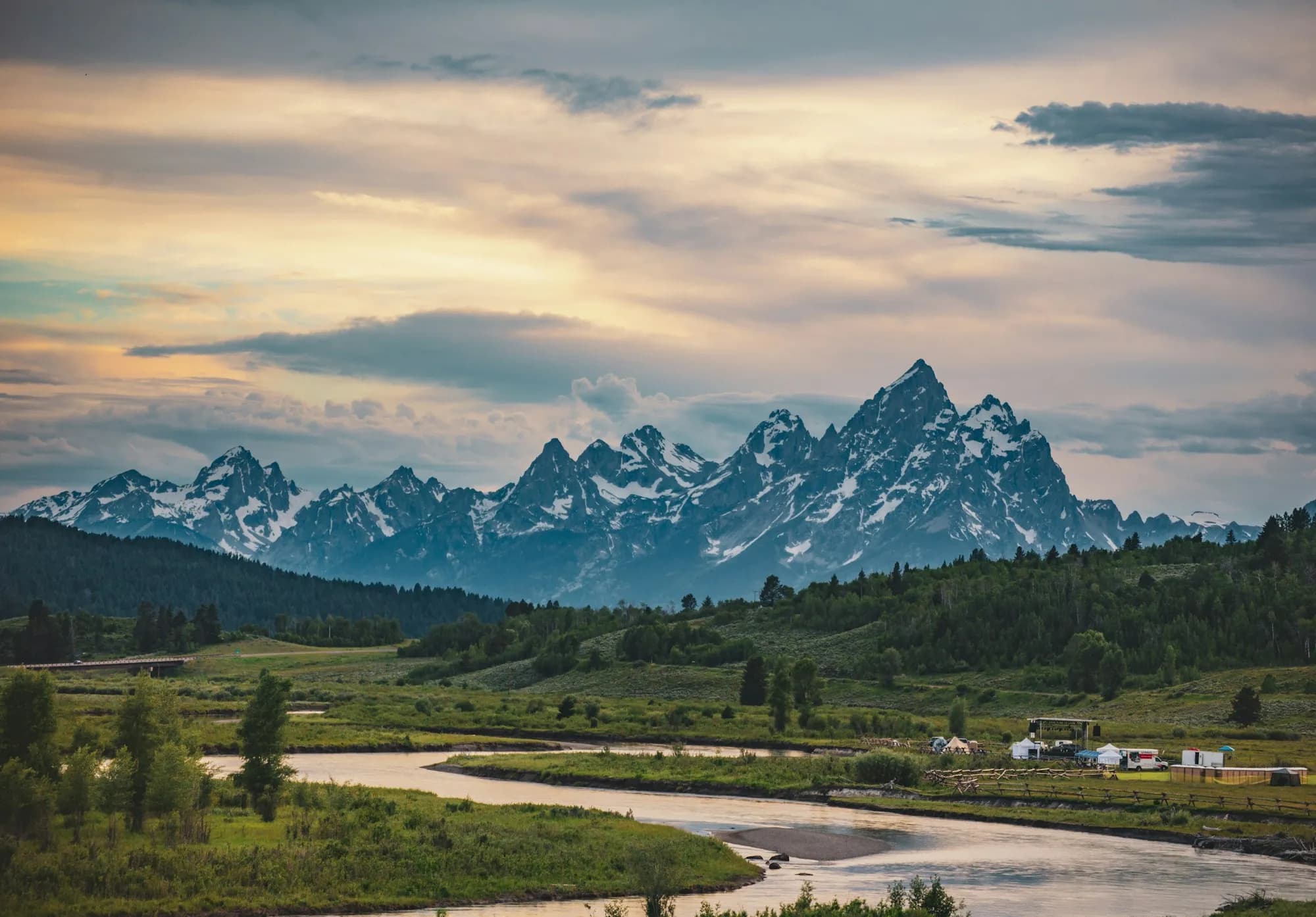
Montana gets the postcards, but Greater Yellowstone does not stop at the state line. South and west of the park, Wyoming and Idaho hold a different set of waters: a braided tailwater under the Tetons, a drift-boat river of native cutthroat, a famous flat that humbles good casters, a desert spring creek, and, in the park itself, rivers and lakes fished under their own rules. They are less about one great hatch than about different kinds of difficulty. Read this alongside the Montana guide; the two halves of the region complement each other.
Native cutthroat for the floating. Flats for the humbling. Wyoming sage for the quiet. The park, by its own rules.
The Far Side of Yellowstone
Drive south and west from the Montana rivers and the character of the fishing changes. The water gets lower-key and more particular. There are flats where a drag you cannot see ends the day, desert creeks where the sage runs to the bank, and big, quiet reaches in Wyoming. Most of it asks for patience more than a single week of hatches.
This guide complements the one on Montana, not repeats it. It sorts the region by what each kind of water asks of you, and it keeps returning to one point: much of this country is native-trout country, and the rules, permits and conservation work are part of the fishing. Check the current rules for the water you pick before you go.
The Snake: Tetons and Native Cutthroat
Two very different Snake rivers, one in Wyoming and one in Idaho, both flow-controlled.
The Snake through Jackson Hole runs under the Tetons below Jackson Lake Dam, braided and log-jammed, with flow influenced by releases from Jackson Lake Dam as well as snowmelt tributaries. It is a floating river: you throw big attractors at the bank willows for fine-spotted cutthroat, a distinct native form found almost nowhere else. The fish are not huge, but they are native, handsome and willing, and the view makes the rest forgivable. Check whether the stretch you plan to fish sits inside a national park, and if so, check that park's own fishing rules and seasons. Braided channels and fallen timber make floating a skilled job: wear a lifejacket, and take care wading cold, fast snowmelt water.
The South Fork of the Snake below Palisades, in Idaho, is a working drift-boat river through a cottonwood canyon, with Yellowstone cutthroat that take dries, plus browns and rainbows. There is a conservation story here: rainbows hybridize with the native cutthroat, and Idaho has rules aimed at protecting the native cutthroat, so learn them and release cutthroat with care. As on the Wyoming Snake, flow comes off the dam, not the sky; check the release before you plan. The big stonefly hatch is the headline, so check local reports for timing.
Henrys Fork, Fall River, Teton and Silver Creek
Slow, clear water where the fish have time to look.
The Henrys Fork is a famous dry-fly river, and the Railroad Ranch reach inside Harriman State Park is why. It is a slow, weedy, spring-influenced flat where big rainbows rise to the green drake, PMD and brown drake hatches and refuse anything that drags an inch. Below Island Park Dam the flow is partly release-controlled. Bring patience and a long, fine leader, and expect to be schooled.
Fall River is the quieter neighbor: a river off the southwest corner of Yellowstone with rainbows and brook trout, and cutthroat in places. The upper Teton, in the valley behind the Tetons, is a slow, clear, spring-fed meadow river with native Yellowstone cutthroat and rainbows that rise to mayflies; the green drake hatch there is the event, so check local reports for timing. Silver Creek, near Picabo, is a flat, glassy, weed-lined spring creek with big wild rainbows and browns and tricos and baetis that bring fish up in pods. Fine tippet, a low approach and humility are the price of entry. Check the access arrangements before you go.
Henrys Lake, Island Park and the Big Lost
Big fish in shallow water, and a desert river that answers to the farms.
Henrys Lake is a shallow, fertile natural lake near the Idaho and Montana line that grows big cutthroat, brook trout and hybrid cutbows. Henrys Lake and its tributaries have their own seasons and spawning closures, so check them. It is a tube-or-boat fishery with damsels, leeches and scuds along the weed edges and spring inlets, and it fishes best on the cool shoulders, spring and fall, because it warms and weeds up in high summer. Island Park Reservoir, on the Henrys Fork above the famous river, is a broad weedy stillwater with rainbows and a few browns. It swings with reservoir level and irrigation draw. For the method, see the big stillwater playbook.
The Big Lost below Mackay Reservoir is the odd one out: a desert tailwater in sagebrush country, lightly fished, with rainbows and a few browns in cold, clear water. The flow answers to irrigation demand and can change overnight, so look before you drive.
Wyoming Away From the Park
The Miracle Mile, the upper Green and the Wind: big country, specific rules.
The North Platte's Miracle Mile is five and a half miles of cold tailwater between Kortes and Pathfinder, remote, and it holds large brown and rainbow trout, some of which run up from the reservoirs to spawn. Flow comes off Kortes Dam, so watch the release rather than the sky. It is windy and can be crowded. Rainbows spawn in spring and browns in autumn: do not target visibly spawning fish or step on redds. Check the current rules.
The upper Green above Warren Bridge is open, sagebrush-flat freestone water under the Wind River Range, with browns, rainbows and mountain whitefish. Public access and special regulations exist on parts of the upper Green; check the Wyoming Game and Fish rules and the BLM map. It runs high and off-color in June snowmelt and settles into wadeable flows later. The Wind River runs largely through the Wind River Indian Reservation, where tribal fishing rules and permits apply, so contact the Wind River tribal authorities before you fish.
Inside Yellowstone: Rivers, Lakes and Rules
The Firehole and Gardner, the Lamar, the Lewis chain and the great lake: all under park rules.
The park has its own fishing regulations and permits, so check the park's own fishing rules before you plan anything. The Firehole is a meadow river past geysers and hot springs, holding browns and rainbows. Geothermal water pushes summer temperatures too high, so it fishes in late spring and autumn within the park's own season dates; check them, and leave it alone in the heat. This is grizzly country: carry bear spray and know the park's bear rules. The Gardner drops steeply from high country to the Yellowstone, with trout in the upper reaches and browns and rainbows in the lower canyon; check the park's species notes. The Lamar Valley holds wild Yellowstone cutthroat in wilderness country, and it fishes best from mid to late summer, when hoppers, ants and beetles are on offer once the river clears.
In the quiet southern end, the Lewis River drains Lewis Lake toward the Snake, and the channel between Lewis and Shoshone lakes is where lake-run browns move up to spawn in the fall. Do not fish for visibly spawning fish or step on redds, and check whether the channel is open. Shoshone Lake has no road to it, holding brown trout and lake trout in big, cold water. Yellowstone Lake is conservation water: it is an important stronghold of native Yellowstone cutthroat, which is recovering under a lake trout suppression program. Follow the park's rules for lake trout and for releasing cutthroat unharmed.
The Year Across the Region
Tailwaters and spring creeks give the steadiest fishing; the rest follow the snow.
Winter: honestly the thinnest season here. Cold, snow and ice close down much of the high country, and many access roads and boat ramps are affected. The South Fork and some reaches of the Henrys Fork below Island Park Dam are the likeliest to be open. Many waters here, including the Snake in Jackson Hole and the park, have closed seasons, so check dates first.
Spring: snowmelt makes the freestones high and off-color, so look to the steadier waters: tailwaters, spring-fed creeks and the lakes, which are at their best on the cool shoulders. The geothermal rivers in Yellowstone, such as the Firehole, fish within the park's own season dates; check them and any closures. Rainbows spawn in spring: stay off gravel redds and do not target visibly spawning fish.
Summer: the freestones clear and become wadeable. This is when big stonefly hatches and the green drake hatch are reported on the Snake, South Fork, Teton and Henrys Fork, though timing shifts with the year, so check. Terrestrial fishing on the Lamar comes later in summer. Warm, low water is a welfare issue on every river here; check current closures and flow and temperature restrictions, and stop fishing when the water is warm.
Autumn: the cool shoulder. The lakes fish well again, and in the Lewis and Shoshone channel the lake-run browns move up to spawn. Leave spawning fish and their redds alone, and check whether the channel is open.
Gear, Licenses and Clean Water
A nine-foot five-weight, fine tippet, and a very clean boat.
A nine-foot five-weight covers most of this: the freestones, the Snake, the Miracle Mile on a calm day. Bring a lighter rod and fine tippet for the Henrys Fork, the Teton and Silver Creek, and something heavier for wind, big stonefly flies and the lakes. For the stillwaters, a tube or boat helps, and the floating rivers want a drift boat or a guide who knows the release schedule. Hoppers, ants and beetles belong in the box for late summer; buzzers and scuds for the cool months.
The Wyoming Game and Fish Department and the Idaho Department of Fish and Game issue licenses and publish the regulations. Yellowstone and Grand Teton have their own fishing rules, so check the park's own. Always check closures, flows and temperature restrictions before you go, and clean, drain and dry your waders, boots, boat and gear between waters; invasive species spread on wet kit.