Small-Stream Cyprinids
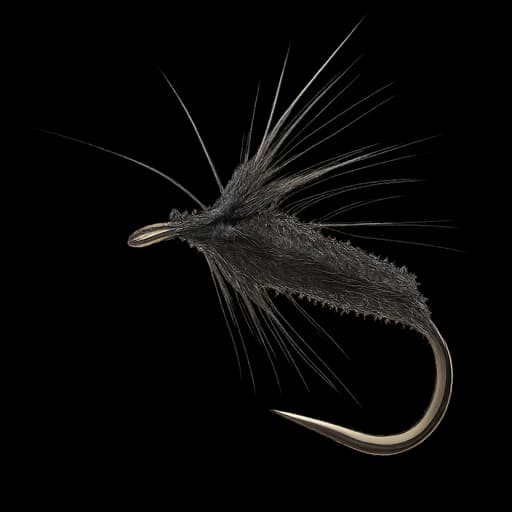
There is a kind of fishing with no reputation to defend, and it is often the most fun you can have with a fly rod. A small hill stream, a light rod, one small fly, and a fish that lives in the fast shallows and hits the surface like it has somewhere else to be. Nobody writes books about it. The fish rarely reach a pound. And on a warm afternoon you will get more takes in an hour than a chalkstream gives you in a season.
When & Where
Fast, clear, shallow freestone streams in warm weather. The fish sit where fast water meets slow — the gravel at a riffle tail, the seam beside a boulder, the edge of a pocket — and they take on or just under the surface. This is walk-and-wade fishing: covering ground beats sitting on one pool, and a stream that gives nothing in the first fifty metres is often full of fish round the next bend. Warm months only. These are warm-water fish and they simply stop as the stream cools.
Essential Gear
A short rod, 7 to 8 foot in 2 to 4 weight, because the streams are small and overhung. Floating line, 9 foot leader to 5x or 6x. One fly, and small: a Pheasant Tail nymph in 14 to 18, a foam beetle or ant for the surface, a small olive minnow streamer if fish are chasing. Nothing here needs to be heavy — in a stream you can see the bottom of, a lightly weighted nymph reaches the fish perfectly well.
How It Works
Work upstream and keep low; the water is thin and the fish see everything. Read the gravel where fast meets slow and put a single fly into the seam, letting it drift naturally through the fast lane. Takes are quick and often visible — a flash, a swirl, a fish turning — so watch the water rather than the line. Twitch a dry occasionally: unlike a trout demanding a perfect dead drift, these fish are provoked by movement. Cover a lie with two or three casts, then move. The next pocket is five metres up and probably holds fish.
Common Mistakes
Adjusting the Method
By season
May to October is the working season across the warm-temperate and subtropical streams where this fishing happens, and high summer is the peak — the same warmth that shuts a trout river down switches these fish on. They have real feeding floors rather than preferences: makou stops feeding below about 15°C and 军鱼 below 10°C. Once the stream drops through the mid-teens the fishing genuinely closes rather than merely getting harder, and no change of fly reopens it.
By species
马口 (makou, Opsariichthys bidens) is the classic target of this method in China — a small predatory minnow with an outsized mouth that holds in the fast shallows and takes on top. 宽鳍鱲 and 长鳍鱲 (Zacco) share the water and behave the same way. Beneath them, 军鱼 (光倒刺鲃) and 溪石斑 (光唇鱼) hold deep in the stone and want a weighted fly on the bottom. In Europe the same method takes chub and dace on small rivers, and chub in particular will take a beetle off the top with enthusiasm.
By water
The Zhejiang hill streams — 壶源溪, 葛溪, 昌化溪, 渌渚江, 分水江 — are the water this guide is written from, and southern Anhui, Jiangxi and Fujian hold the same fishing. Domestic fly writing describes the method almost exactly as above: 先读水、找鱼,再把一枚不到一克的毛钩准确递到它的觅食线上 — read the water, find the fish, then place a sub-gram fly accurately on its feeding lane. 野鸡尾, the Pheasant Tail, is the pattern those sources name most often. ⚠️ Basin closed seasons differ sharply and the difference matters: the Qiantang system EXEMPTS recreational angling from its closure, so the Zhejiang streams are fishable year-round in law, while Xinjiang's closure INCLUDES angling outright and shuts everything from 1 April to 30 June. Check the basin, not the province. Every step here is written for ONE fly, and that is deliberate rather than cautious: a single fly is legal on every water this guide covers, and a dropper rig is not. China caps natural waters at one rod, one line and two hook points nationwide (revised fisheries law, in force 1 May 2026, fines to ¥50,000), and Sichuan's Yangtze-basin waters add a hook gape under 2 cm, no boats, rafts or floating platforms, no fish finders, and a daily retention of about 2.5 kg. Spanish and Portuguese cyprinid rules vary by confederation and basin and several carry closed seasons — check the water, not the country. Where droppers are permitted they are an option, never a requirement; nothing above depends on one.
More in Cyprinid Specialist
The river is the hero, not the app. · © 2026 Rise Daisy