Sight-Fishing to Carp
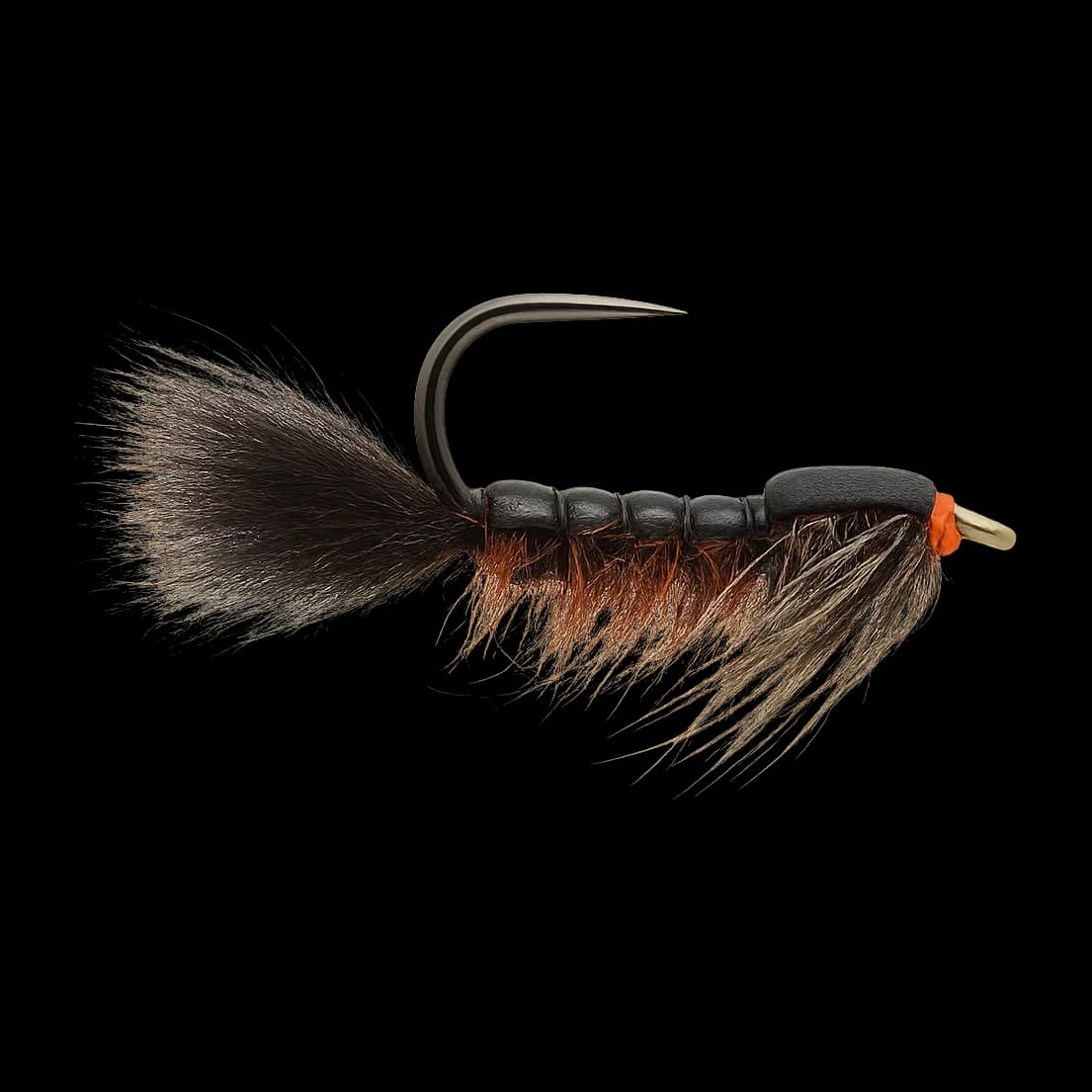
Carp were never supposed to be a fly-fishing quarry, which is exactly why they make such good sport. They are large, they live in bright shallow water where you can see them, they are cleverer than a stocked rainbow will ever be, and when one decides to eat your fly it does so with an unhurried confidence somehow more nerve-wracking than any trout's slashing rise. This is hunting rather than fishing. You will spend most of the day walking and looking, and the reward is measured in single fish.
When & Where
Bright, calm, warm days — the opposite of classic trout weather. You need to SEE the fish, so sun over your shoulder and a polarised lens are the two non-negotiables. Work the shallow margins of reservoirs and lakes: bays with a soft bottom, weed edges, the windward shore where food collects, and any shelf a metre or two deep where a big fish shows against a pale bed. Look for tailing fish with their heads down in the silt and their backs out, for clouds of disturbed mud, and for slow cruisers working a bank. Ignore fish hanging motionless near the surface: those are sunbathing, not feeding, and they will not eat.
Essential Gear
A 9 or 10 foot rod in 6 to 8 weight — not for distance but for turning a heavy fish away from snags. Floating line, and a leader of 12 to 15 feet tapered to 8 or 10 lb fluorocarbon; carp are not leader-shy the way a chalkstream trout is, but they are strong and they find the nearest weed bed. One fly. Small and sparse beats big and flashy: a bead-eye nymph, a soft hackle, a small crayfish, or a bread imitation where surface feeding is happening. Sparse dressings that sink slowly and land quietly do most of the work.
How It Works
Walk the bank slowly and look before you cast — the fish are usually closer than you expect, and the first one you see has often already seen you. Pick a FEEDING fish, not a cruising one. Work out which way it is moving and cast well ahead of it, a metre or more, so the fly is already on the bottom when the fish arrives. Let it settle. Do not strip. The take is the whole art: a carp does not chase, it drifts over the fly, tips down and inhales, and what you see is the mouth open and close, or the tail lift, or the leader twitch once. Set on the visual cue, not on feel — by the time you feel it, the fly is gone. Then hold on, and steer it away from cover.
Common Mistakes
Adjusting the Method
By season
Late spring through summer, because that is when you can see them. On English and Welsh rivers the coarse close season runs from 15 March to 15 June, so start from 16 June; most stillwaters stay open, but check the water's own rules. Carp feed hardest as water climbs through the high teens and low twenties, and the same warmth brings them into the shallows where sight-fishing is possible at all. In hot weather fish early and late — midday pushes them deeper and makes the shallows uncomfortable. Autumn produces some of the biggest fish of the year as they feed ahead of winter, but the window narrows and the water clouds. Once it drops through the low teens they largely stop, and no amount of stalking changes that.
By species
Common carp is the classic target and everything above is written for it. Grass carp are harder again, take surface food more readily, and fight above their weight. In Iberia carp share water with barbel: a barbel in the shallows behaves quite differently, feeding harder on the bottom and in faster water, and generally wants the bottom-contact approach rather than this one. In China the same reservoirs hold 翘嘴 and other predatory cyprinids that will chase a small streamer, which is a different day out.
By water
Iberian reservoirs — Cíjara, La Serena, Alqueva, Burguillo, Belesar, Cuerda del Pozo — are the classic European venue for this: big, bright, warm, and holding unpressured fish. Water levels swing hugely through the season on all of them, and the good margins move with the level. In China, carp on the fly is a minority technique rather than established practice: domestic sources are divided, and 台钓 is the usual method for bottom feeders. Treat it as a legitimate thing to try, not the local way. On Qingshan Lake specifically, Lin'an's own 2024 notice permits angling ONLY in two marked zones — 钱王索秀 and 板桥 — and only between 06:00 and 18:30. Those are BANK zones: fishing from a boat, raft or floating platform is prohibited on Chinese natural water, so every approach here is a walked one. Every step here is written for ONE fly, and that is deliberate rather than cautious: a single fly is legal on every water this guide covers, and a dropper rig is not. China caps natural waters at one rod, one line and two hook points nationwide (revised fisheries law, in force 1 May 2026, fines to ¥50,000), and Sichuan's Yangtze-basin waters add a hook gape under 2 cm, no boats, rafts or floating platforms, no fish finders, and a daily retention of about 2.5 kg. Spanish and Portuguese cyprinid rules vary by confederation and basin and several carry closed seasons — check the water, not the country. Where droppers are permitted they are an option, never a requirement; nothing above depends on one.
More in Cyprinid Specialist
The river is the hero, not the app. · © 2026 Rise Daisy