Basic Fly Casting: The Overhead Cast
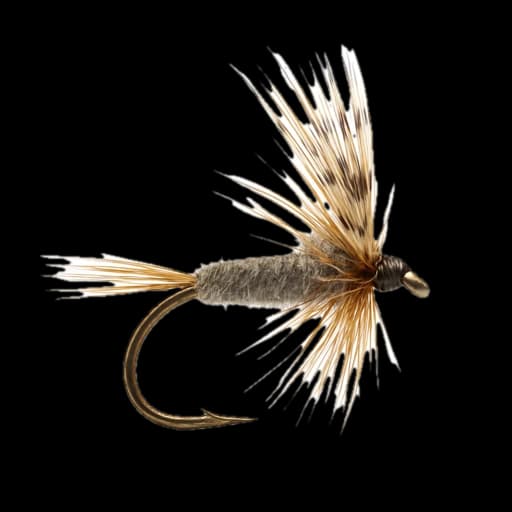
Everyone's first cast goes the same way. The line lands in a heap, the fly lands in a bush, and anyone nearby is kind enough not to look. The overhead cast is a small movement done well, and it can be learned on a lawn, fifteen minutes at a time, long before you stand in a river.
Where and When to Practise
Before your first day on the water, and again at the start of every season. Learn on short grass or a quiet open field, not at the river, where the fish, the wading and the audience are all in the way. You need clear space behind you for the back cast, so check for trees, fences and overhead wires first. Short, regular sessions beat one long one: fifteen minutes a few times a week will do more than an afternoon.
What You Need
The rod and line you will fish with, which for most beginners is a 9 foot rod of 5 or 6 weight and a floating line: see Choosing Your First Rod and Line. A leader of about 9 feet, and for a fly a short piece of bright wool tied on, never a hook. Glasses and a hat, because a loop that goes wrong comes back at you. A target, such as a hat or a hoop, laid on the grass 20 to 30 feet away. For practice between sessions, and when there is no grass or no time, the Fly Cast app uses your phone as the rod, as a warm-up, and a casting instructor gives you the lesson.
The Cast, Step by Step
Set up. Stand relaxed, with the line straight out in front of you, the rod tip low and no slack. Grip the rod with your thumb on top. The line is your ruler: if it is not straight, the cast starts wrong.
Lift. Raise the rod smoothly to take up the slack and bring the line moving. Smooth matters more than big.
Back cast. Accelerate the rod through the vertical, on a straight, flat path, and stop crisply at about one o'clock. It is the stop that sends the line back. A tip that dips on the way produces a tailing loop and a tangle.
Pause. Wait for the line to straighten behind you. At first, watch it over your shoulder. Start the forward stroke just before it pulls the tip back: if you wait too long, the line falls, and if you go too soon, it cracks like a whip.
Forward stroke. Accelerate smoothly, with the speed peaking late in the stroke, not at the start. Stop crisply at about ten o'clock. That stop forms a tight loop that carries the line to the target.
Present. Let the rod tip follow the line down as it lands, so the fly settles softly and straight.
Practise short, then lengthen. Begin with 20 to 30 feet of line and add a little at a time. Stop when you are tired, because a tired angler practises mistakes.
Practise the movement anywhere. Fly Cast turns your phone into the rod and scores the movement of your cast phase by phase: the lift, the pause timing and the stop. It cannot see your rod, line or fly, so it is a warm-up for the lesson, not a replacement for it.
Book a lesson. A certified casting instructor will see what you cannot, and will correct a fault in ten minutes that you could practise for a month. Fly Cast has a directory of casting instructors in the UK, Ireland, the USA and Canada.
| Step | What to do | The fault to watch for |
|---|---|---|
| Lift | Raise the rod smoothly to take up slack | Jerking the rod, leaving slack |
| Back stop | Accelerate, stop crisply at about one o'clock | A dipping tip, which makes tailing loops |
| Pause | Wait for the line to straighten behind you | Hurrying (a crack) or waiting too long (the line falls) |
| Forward stroke | Accelerate smoothly, speed peaking late | All the power at the start |
| Forward stop | Stop crisply at about ten o'clock | Breaking the wrist, a wide loop |
| Present | Let the tip follow the line down | Lifting the tip, so the fly crashes |
Faults to Fix First
Season, Fish and Water
Through the year
The close season, and winter evenings, are the time to learn: practise on grass and you will be ready in April. Do a short session before your first day of the season to wake the movement up. Windy days are harder, so start on a calm day.
By species
The overhead cast is the foundation for every other cast: the roll cast, the Spey casts and the double haul share its principles of loading and stopping. Learn it for trout and grayling first. Pike and salmon fishing ask for heavier lines and, for salmon, a double-handed rod: see Winter Pike on the Fly and Spey Casting.
By water
Casting instructors are certified by schemes such as AAPGAI, GAIA, APGAI Ireland and FFI. Fly Cast's directory lists casting instructors across the UK, the USA, Ireland and Canada, grouped by country, with their certification. Many fisheries and clubs also run beginners' days. Check the rules of the water before you cast a real fly: see The Rules of the Water.
Practise with Fly Cast
Fly Cast turns your phone into the rod and scores the movement of your cast, phase by phase: the lift, the pause and the stop. You can practise anywhere, with no water and no line. It cannot see your rod, line or fly, so use it as a warm-up for a lesson and not a replacement for one.
The directory lists certified instructors in the UK, Ireland, the USA and Canada. The overhead cast is free in the app; the other casts need Fly Cast Pro.
Practise the Cast
Step-by-step guides from our sibling app, Fly Cast Coach
More in Watercraft & Presentation
The river is the hero, not the app. · © 2026 Rise Daisy