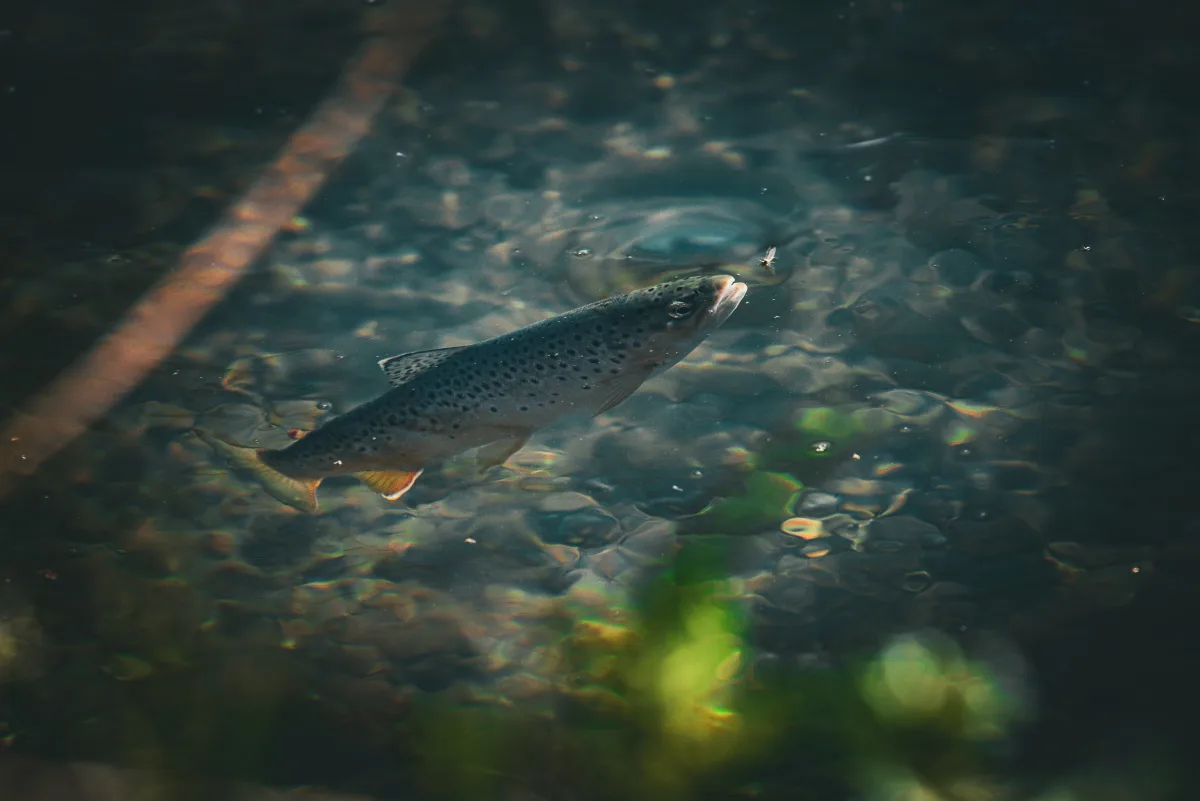
Sight Fishing
Seeing the fish changes everything. The cast is no longer a hopeful offering into promising water — it is a deliberate, targeted act. You know where the fish is, you can read its behaviour, you can see whether it moves to your fly or ignores it. Sight fishing is the most absorbing form of fly fishing because you are engaged in a direct, visible relationship with an individual fish. It is also the most humbling, because you see every mistake you make and the fish sees most of them first.
When & Where
Sight fishing requires clear water and enough light to penetrate it. Chalk streams are the classic venue — the Test, the Itchen, the Kennet — where the gin-clear water and weed-fringed channels reveal fish holding on station. But it works on any clear river, low spate water, limestone streams, and the shallow margins of lochs and lakes. The best conditions are bright overhead sun (to cut through the surface) and low, clear water. Overcast skies and coloured water make fish invisible.
Essential Gear
Polarised sunglasses are not optional — they are the most important piece of equipment. Amber or copper lenses for overcast conditions, grey or green for bright sun. Beyond that, the tackle matches the method: dry fly or nymph rig as dictated by what the fish is doing. Longer leaders (14 feet or more) and finer tippets (6x–7x) help in clear water. Muted clothing helps — you are stalking, and the fish has excellent eyesight.
How It Works
Walk slowly along the bank. Stop frequently. Look before you move. Polarised glasses penetrate the surface glare and reveal fish that are invisible to the naked eye — look for shadows on the bottom, the white flash of a mouth opening, the subtle shift of a fin. When you spot a fish, stop. Watch it. Is it feeding? Moving? Static? Read its rhythm. Approach from behind and below, keeping low. Make your first cast count — present the fly two to four feet upstream of the fish and let it drift naturally. Watch the fish, not the fly. If it moves to intercept, wait for the take before setting the hook.
Common Mistakes
Adjusting the Method
By season
Late spring through autumn is the prime sight-fishing season, when water levels are lower and light angles work in your favour. Summer offers the best conditions: low, clear water, long days, and fish on station feeding regularly. Winter sight fishing for grayling is possible in clear rivers and can be excellent — grayling shoal visibly in the deeper glides and are often less spooky than trout.
By species
Brown trout in clear water are the ultimate sight-fishing quarry — cautious, intelligent, and demanding of accurate presentation. Grayling are easier to spot (they shoal and hold in open water) but can be surprisingly tricky to fool. Salmon in clear, low-water pools can be sight-fished with flies, though inducing a take is a different challenge entirely.
By water
English chalk streams are the birthplace of sight fishing as a discipline. New Zealand made it famous on the world stage. In Britain, the Test, Itchen, and other southern chalk streams offer the best clarity. The limestone rivers of the Yorkshire Dales, the clear streams of Wales, and any river in low-water conditions will reward the sight-fishing approach. In Europe, the clear rivers of Slovenia, the Pyrenean streams, and the Austrian and Italian limestone rivers are outstanding.
More in Watercraft & Presentation
The river is the hero, not the app. · © 2026 Rise Daisy