Winter Pike on the Fly
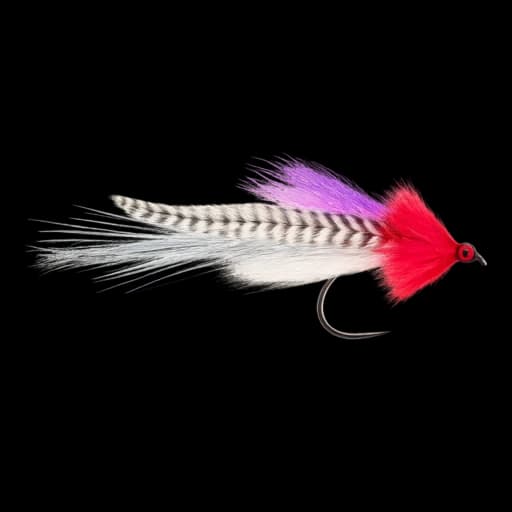
Winter is when a fly angler can fish a big reservoir for pike and have it to themselves. The trout rods have gone, the water is cold and clear, and the pike are still there, lying deep along the drop-offs and slow to move. You will not catch many. The one you do catch may be the biggest fish you have ever played on a fly rod.
Where and When
On the reservoirs that open to pike fly fishing, the best of it is in the cold months, from October to January, when the water is clear; on Anglian Water's reservoirs the pike fly season runs from mid-June to 31 January. On a big reservoir, fish the dam wall, the points and the drop-off where a shelf falls away into deeper water, the mouths of bays, old hedgerows and drowned walls, and the margins of the arms where roach and perch shoals gather. Pike lie close to their prey: find the shoals and the pike are not far off. Fish a bank only where the fishery allows it. Many allow pike on the fly from a boat only. Start with the water rules: the season, the permitted methods, the minimum fly size and the boat rules are set by the fishery and they change.
Tackle and Flies
A 9 or 10 weight rod of 9 to 10 feet, and a reel that holds the line and 100 yards of backing, with a smooth drag. For the lines, carry two spools: an intermediate, and a fast-sinking head for the deep water. A short leader butt of heavy nylon, about a metre, and then a wire trace of 20 to 40 lb and at least 30 cm long: see Streamer and Predator Leaders. Flies of 15 to 25 cm in roach, perch and fry colours, some weighted, some not: many fisheries set a minimum fly length, so check it. Long forceps, wire cutters, a large net, an unhooking mat, a measuring tape, and a hook remover. Safety glasses, a hat, a life jacket and warm layers, because a winter boat day is colder than the shore.
On the Water
Check the rules first. On Anglian Water's reservoirs the rules for pike on the fly include a fly over 10 cm, a wire trace, barbless hooks, an unhooking mat and a large enough net, all fish returned alive, and no trout and pike fishing in the same boat. Season dates and bank access vary by reservoir, so check each one. See The Rules of the Water.
Pick the day and the hour. The published research on pike catch rates is thin. It supports water that is cool, not cold or warm, moderate wind more than a flat calm, and the hours around dusk. It does not support a barometer rule. The strongest effect on record is fishing pressure: a pike that has been fished over for a few days learns to avoid the fly. Fish where few anglers have been.
Find the fish. On a big reservoir, start where the prey is. Look for roach and perch in the bays and along the shelves, and fish the drop-off beside them. In cold water pike are often deep and slow, so work the break line and the dam wall thoroughly before the shallows, not the open middle. Use a drogue on a drift: see Using a Drogue and Boat Drift and Positioning.
Choose the line for the depth. Use a floating or intermediate line in the shallow bays and margins, an intermediate or a slow-sinking line on the shelves and points, and a fast-sinking head on the drop-offs and the dam wall. Let the line sink to the depth you want before you start the retrieve. See Controlling Fishing Depth.
Fish the fly slowly. In cold water, use a slow strip with long pauses, so the fly rises and falls as a wounded fish does. Many takes come on the pause or as the fly drops. Cover the water with a long cast, count the fly down, and vary the depth by a few seconds on each cast.
Work the retrieve to the end. Pike follow, and many fish take at the boat or at the bank. Keep the rod tip low, and do not lift the line from the water: finish the retrieve with a figure of eight, and keep the fly moving. If a fish follows and turns away, rest the water for a few minutes and cast again.
Strike with the line, not the rod. When you feel a take, strip hard to set the hook, keep the rod low and then lift to the fish. Do not strike as you would at a trout. Keep a steady pressure and do not give slack.
Land and release it quickly. Use a large net, keep the fish in the water, unhook with long forceps and support it level in the water to recover. Measure and photograph it quickly on a wet mat, and in cold air do it in seconds. See Catching and Releasing Fish Well.
| Water | Line | Fly |
|---|---|---|
| Shallow bays and margins, to about 3 m | Floating or intermediate | Unweighted or lightly weighted |
| Shelves and points, about 3 to 5 m | Intermediate or slow-sinking | Lightly weighted |
| Drop-offs and the dam wall, 5 m or more | Fast-sinking head | Weighted, in a roach or perch pattern |
| Section | Material | Length |
|---|---|---|
| Leader butt | Heavy nylon, about 25 to 30 lb | About 1 m |
| Bite trace | Wire, 20 to 40 lb | 30 cm or more |
| Fly | Long streamer | 15 to 25 cm is typical |
What Goes Wrong
Season, Fish and Water
Through the winter
October and November are the most active: the water is cooling, the fish are putting on weight and they will use the whole water column as the reservoir turns over. December and January are slower and deeper, with a sinking line and a slow retrieve. In February pike begin to move toward the shallows to spawn, and a female heavy with spawn is a fish to handle with great care and release at once. Anglian Water's pike fly season on its reservoirs ends on 31 January. Pike spawn from late February to April.
By species
Pike eat what the water gives them: roach, perch, rudd, bream, fry and, where they are stocked, trout. A fly in a roach or perch colour is a safe choice, and a brighter fly in coloured water. Pike are tough but not indestructible: a cold, tired pike needs more time to recover, so keep the fight short, keep the fish wet and do not hold it up for a long photograph. Never gaff, and never keep a pike where the fishery requires it to be returned.
By water
In England, Anglian Water's reservoirs, such as Grafham, Rutland and Pitsford, allow pike fly fishing on a trout ticket, with a season that runs into January and a rule that the fish must be returned alive: the rules vary between the waters and between the years, so check the current ones. Other reservoirs have their own rules, and some do not allow pike fishing at all. In Scotland, Loch Lomond and the other large lochs hold big pike. In Ireland, Lough Corrib, Lough Mask and Pollaphuca fish well: check each water's season and rules. See Pike on the Fly for the general method, and Streamer and Predator Leaders for the trace. See Choosing Your First Rod and Line for which rod and line to buy first.
More in Watercraft & Presentation
The river is the hero, not the app. · © 2026 Rise Daisy