The first thing to fix in your head is the calendar. In New Zealand the year runs the other way up: summer is December to February, winter is June to August, and the angler who arrives in July expecting the long evenings of a European summer will find a very different country. The second thing is that the South Island is not one fishery but several, laid out along a line from Christchurch's braided rivers through the Mackenzie and Otago high country to Southland's dry-fly glides, with Nelson-Marlborough in the north and the wet, quick West Coast down the western side. The method is covered in the New Zealand playbook. This guide is the other half: where to base yourself, what each region offers, which months suit a visitor from the north, and who to ask before you wet a line.
Summer is December to February. Pick a base, then pick a second river.
A Calendar Turned Upside Down
It takes a little time for the northern-hemisphere brain to accept it: in New Zealand, the long warm days come at Christmas and the cold dark ones arrive in June. Nobody quite believes this until they are standing in a river in the middle of January, in the sun, while their friends at home send photographs of frozen windscreens. The effect is slightly comic and entirely welcome.
This guide is about access and timing, and complements the New Zealand playbook. It is set up around two bases, Queenstown and Christchurch, and the South Island regions that radiate from them. Method, tackle and the finer points of sight fishing are in the playbook; here you will find where each kind of water sits, when it tends to fish, and who to check with before you travel.
Christchurch and Canterbury: The Braided Rivers
Big, shifting, glacier-fed water on the doorstep, and clearer channels for the trout.
Canterbury is the country of the braided rivers. The Waimakariri is the most accessible of the Canterbury salmon rivers, a big braided glacial river right on Christchurch's doorstep, with brown trout in the gorge and the clearer channels. The Hurunui, in North Canterbury, is headed by Lake Sumner and so steadier than the open braids; it holds brown and rainbow trout through its gorges and clearer runs, with a modest sea-run chinook fishery in the lower river.
The Rakaia and Rangitata are the classic braided salmon rivers, huge shingle-braided systems running off the Alps, fished for sea-run chinook through the summer run and for brown and rainbow trout in the gorge and the clearer channels. Salmon numbers are under serious pressure and the rules are restrictive. That is not a footnote: check the current salmon rules with Fish & Game before you fish for them or keep one.
Braided rivers move their own channels between visits, and they call for respect and careful wading. After rain, they colour; the sensible approach, on the Hurunui as elsewhere, is to time your visit to the falling, clearing flow.
The Mackenzie Country: Ahuriri and Waitaki
Tussock basins, gin-clear water and a dam that keeps one of the big rivers honest.
The Ahuriri is the sight-fisher's river of the Mackenzie: a clear, braided high-country stream through tussock basins to Lake Benmore, holding large brown and rainbow trout you spot and stalk. The upper river runs through conservation land and rewards stealth, good light and accurate casting over numbers. It is exposed, spectacular and not a place to be careless with the weather.
The lower Waitaki is the biggest of the Canterbury salmon rivers, but because it is dam-controlled below the Mackenzie hydro lakes it runs steadier and clearer than the free glacial rivers. That makes it a reliable big-river option when others are up, although dam-driven flow changes and restrictive salmon rules both need checking.
Queenstown and Otago: Lakes, Wilderness and the Big Clear River
Gin-clear flats under the Alps, one big stable river, and a pair of dry-climate classics.
Queenstown is the sensible base for a run through the lakes country. The Greenstone is one of the great Southern-Lakes wilderness rivers, a clear, walkable back-country river between Wakatipu and Te Anau holding brown and rainbow trout you spot and stalk. Public DOC access runs via the Greenstone valley track; fish lightly and give other anglers space. At the head of Lake Wānaka the Makarora has braided gravel flats and runs under the Southern Alps; snowmelt can lift and colour it in spring, and it is at its best low, clear and stable through summer.
The Clutha / Mata-Au is the stable giant: New Zealand's largest river by flow, lake-fed from Wānaka and Hāwea and held by the Clyde and Roxburgh dams, so it runs big and clear where rain-fed rivers blow out. It is fished from the wadeable margins, side-braids and slower edges. Inland, the Taieri is classic slow, clear, dry-climate sight water best in low, clear, light-wind conditions, and the Pomahaka in West Otago is a friendly Clutha tributary with long glides and a reliable afternoon mayfly hatch, best low and clear.
Southland: The Dry-Fly Rivers
Long glides, afternoon mayfly, and one river where the best advice is to fish lightly.
Southland is where many anglers hope to fish the Mataura. It is one of the world's great brown-trout dry-fly rivers, a long, accessible freestone famous for reliable mayfly hatches and the afternoon rise, wadeable along much of its length and fishing through a wide range of flows, though at its dry-fly best when low and clear.
The Oreti is a celebrated sight-fishing river, the upper river especially, famous for large, wary browns that must be spotted and stalked. Treat it as a fragile, much-loved fishery under real pressure: fish lightly and space yourself from others. The Aparima is the less-pressured western Southland alternative, a friendly medium freestone with gravel runs and glides, the mayfly rise and summer terrestrials, and a sensible way to take pressure off the famous rivers.
Nelson and Marlborough: The Sheltered North
Sunny, sheltered, forgiving water at the top of the island.
The Motueka is the accessible jewel of Nelson, a clear, friendly freestone of gravel runs and willow glides, holding brown trout you can spot and stalk along much of its length. Sheltered and sunny, it takes in sight nymphing, dry-dropper, the mayfly rise and summer terrestrials, colours after rain but clears quickly, and fishes well over a wide range of flows. It makes a fine all-round Nelson base river.
The Wairau, running through Marlborough's dry vineyard country, is a long braided greywacke river that fishes best falling and clearing after rain, with the clear spring-fed tributaries and side-streams offering sight fishing through the summer. The Buller / Kawatiri is bigger and more powerful: steadier below Lake Rotoiti, a fine large-river fishery, but gathering serious West Coast rain downstream, so fish it by spate timing.
The West Coast: Fish the Weather
Wet, quick and brilliant, if you have the patience to let the water fall.
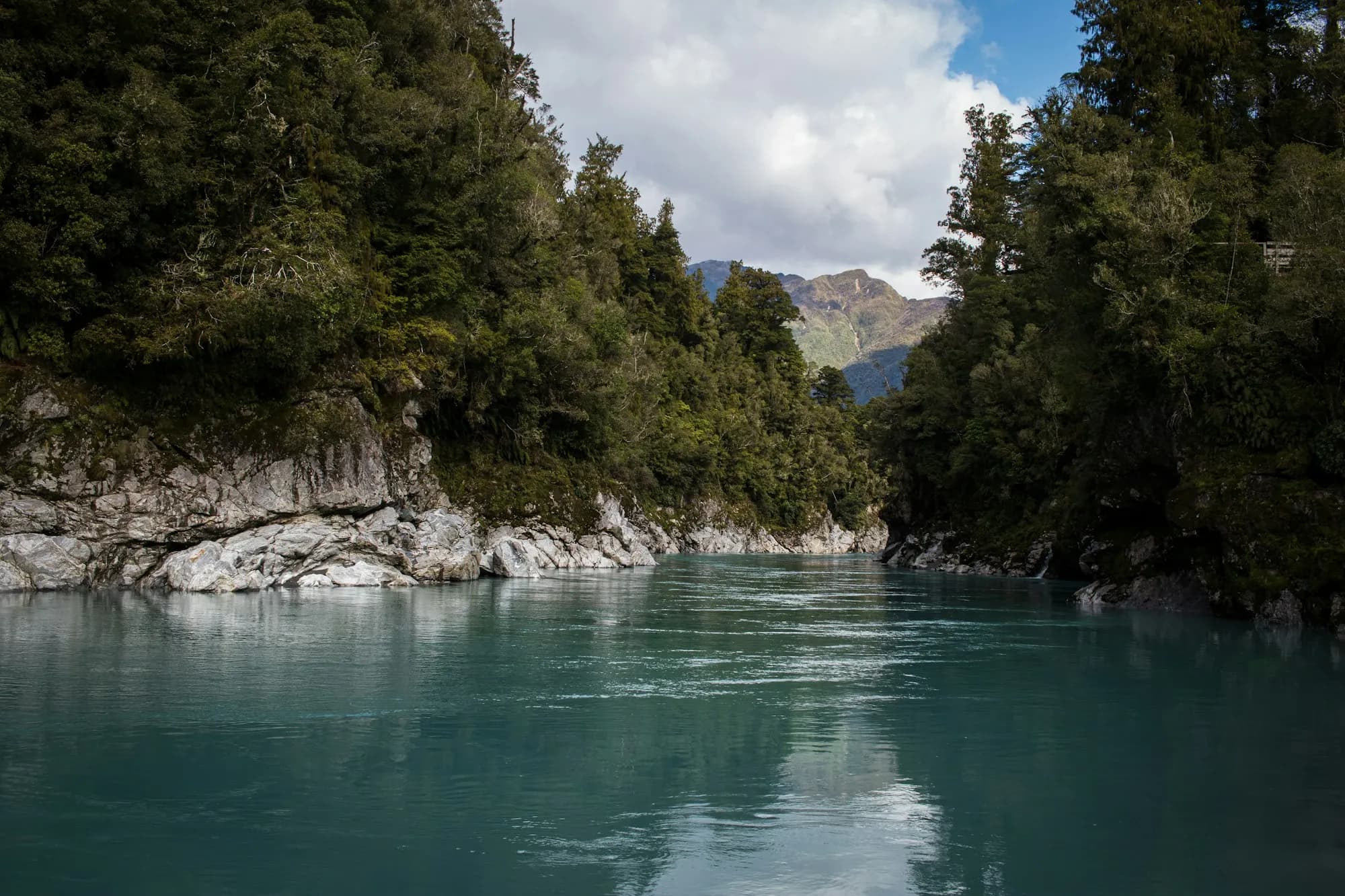
The Grey, the Hokitika and the Karamea all live by the weather. The Grey is a big spate river that runs high and coloured after rain and switches on as it falls and clears, with the tributaries clearing first. The Hokitika is fast and scenic but can run milky and rise hard, so lean on the clearer lower reaches and tributaries when the main river is up.
The Karamea, in Kahurangi National Park, is remote wilderness water, much of it reached only on foot or by air; it is unfishable and fast after rain, and access and safety need careful planning. Treat the West Coast as a bonus to a trip built on drier regions, never as the reason for it.
The New Zealand Year
Summer is December to February, and March is often the most settled month of all. The shoulders are wetter, less crowded and less certain.
Summer (December to February): the heart of the visiting season and the best months for most northern-hemisphere visitors. The Ahuriri and Makarora are at their best low and clear, the Mataura fishes its dry-fly rise, the Motueka and Wairau offer summer terrestrials and sight fishing in the clear tributaries, and the Canterbury salmon run is a summer event whose rules need checking before you fish.
Autumn (March to May): March is still prime time, and often the most settled month of the year, with low, steady flows, lighter angling pressure and trout feeding up on the tail of the terrestrial season. April can be good too, though the days shorten and the weather turns less certain. By May many waters are winding down; the reliable pattern of falling, clearing flows after rain still decides the day. Check the open season for the water you want.
Winter (June to August): cold, short days and, for a visitor, mostly the wrong time of year; many rivers close to protect spawning trout, so check Fish & Game for which waters are open before planning anything. This is not the season for the clear, low-water sight fishing on which the island's reputation is built.
Spring (September to November): many rivers are closed in early spring, so check the opening date for the water before you plan around it. Snowmelt can lift and colour rivers such as the Makarora, and the West Coast and Canterbury spate rivers remain at the mercy of the rain. Late spring, November, is a sensible shoulder month; the Southland and Otago rivers fish best low and clear, so expect the best of them to be a little later.
Licences, Biosecurity and Logistics
Fish & Game first, then the regional rules, then the weather forecast.
Freshwater sports fishing in New Zealand is licensed through Fish & Game New Zealand, with Taupō separately administered, and each region publishes its own rules. Overseas visitors need the correct non-resident licence. A licence is not a right to cross private land, so confirm access before you set out. Most of the island's regions are covered by regional Fish & Game bodies, including Southland, Otago, Central South Island, North Canterbury, Nelson-Marlborough and West Coast.
Check, Clean, Dry between catchments: didymo is established in the South Island, which is exactly why moving wet gear between rivers matters. Felt-soled wading boots are not permitted for freshwater fishing in New Zealand, so confirm the current rules with Biosecurity New Zealand and Fish & Game before you travel. Handle trout gently and quickly in warm, low water, and leave spawning fish and redds alone. Travel with a nine-foot five-weight, polarising glasses, a wading staff for the braided rivers, and a plan that has two rivers in two regions for every day you hope to fish. Build the trip round regions you can fish from, not a single river you hope will be low.