Upstream Dry Fly
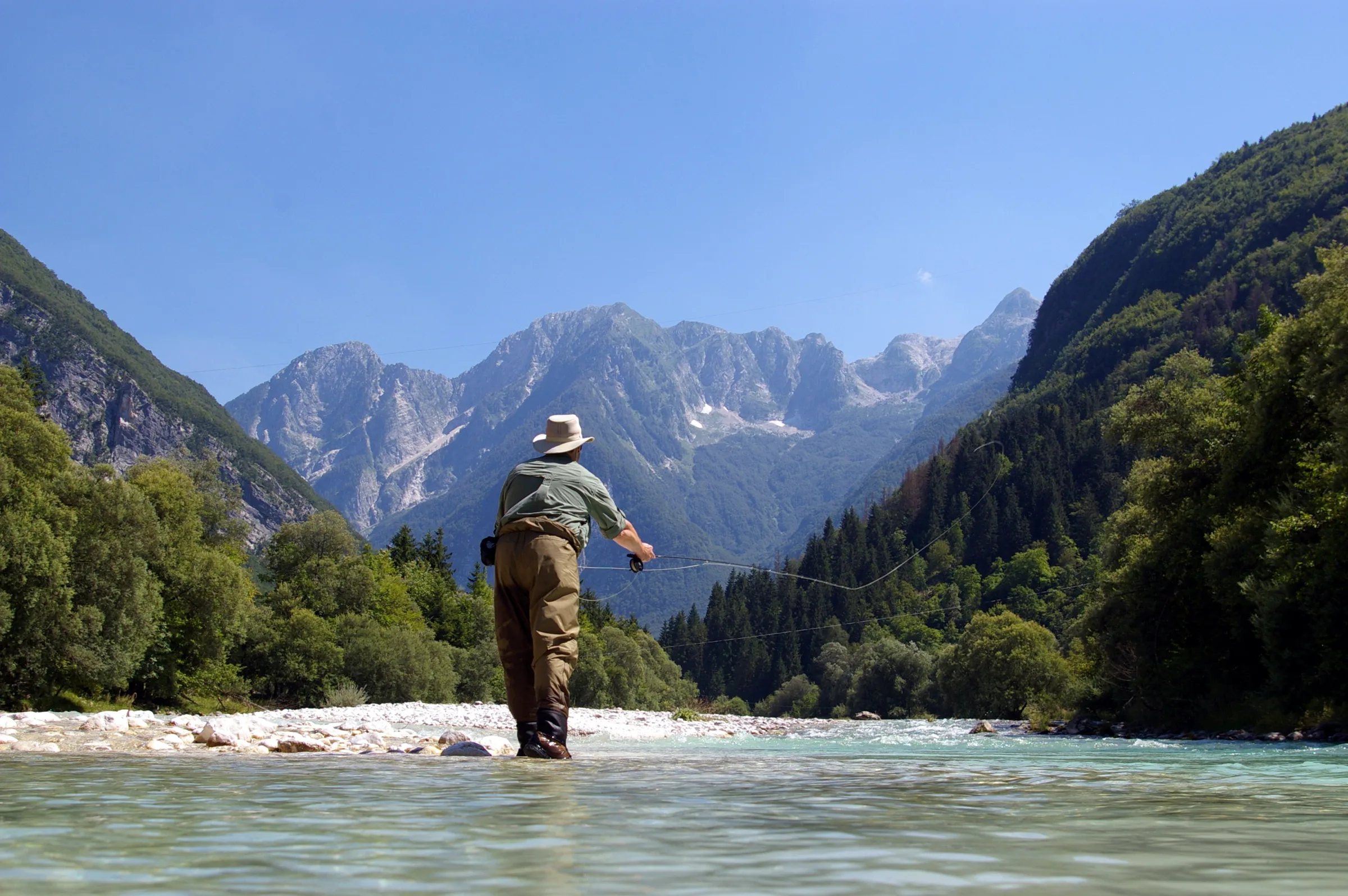
The simplest idea in fly fishing, and the most satisfying. A floating fly, cast upstream to a rising trout, drifting back as though it belongs there. Everything else — the leader design, the approach angle, the choice of pattern — is detail. Important detail, mind you. But the core of it is this: put your fly where the fish expects its food to be, and let the current do the rest.
When & Where
This is the method for visible rises. When trout are taking insects from the surface — during a hatch of olives, a fall of spinners, a scatter of terrestrials on a summer afternoon — the upstream dry fly is your first option. It works best on rivers and streams with a defined current: chalk streams, freestone rivers, limestone creeks, and the smoother glides of spate rivers between hatches. Flat, glassy water demands the most precision. Broken, faster water forgives a lot.
Essential Gear
A 9-foot rod in 4 or 5 weight. Floating line. Leader: 12 to 15 feet of tapered nylon, ending in 5x or 6x tippet. On gin-clear chalk streams, extend to 7x. Use nylon, not fluorocarbon — fluorocarbon sinks and drags small dries under. Apply floatant before the fly touches water, not after.
How It Works
Approach from downstream. Trout face into the current; you are behind them. Wade slowly or stay on the bank. Identify the fish or the rise form. Cast upstream and slightly to one side, placing the fly two to four feet above the fish. The drift must be drag-free — line, leader, and fly all travelling at the same speed. Mend upstream before drag begins, not after. When the fish takes, wait. Watch the mouth close, then lift the rod. Strike too quickly and you pull the fly away.
Common Mistakes
Adjusting the Method
By season
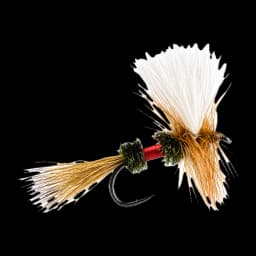
Early season, when hatches are sparse and fish are not yet looking up with confidence, consider a larger, more visible fly — a size 14 Klinkhamer or a bushy CDC pattern. By summer, when fish have seen every artificial in the box, go smaller and finer. Autumn offers some of the best dry-fly sport of the year, especially when blue-winged olives hatch on mild, overcast afternoons.
By species
Brown trout in clear water are the classic quarry — demanding accuracy, stealth, and drag-free drift. Grayling rise freely but take differently: they come up from deeper and the take can be more of a sip than a splash. With grayling, the strike must be quicker. Rainbow trout on stillwaters take dries with less discrimination but demand different timing in the strike.
By water
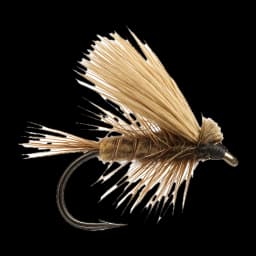
On English chalk streams, the upstream dry fly is the traditional — sometimes the only permitted — method. These rivers demand the finest tippets and the most accurate casting. Northern English and Welsh rivers fish well with slightly larger patterns. Scottish rivers and Irish streams offer wilder, less pressured fish that forgive more. On the limestone rivers of Slovenia and the clear freestone rivers of the Pyrenees, the method translates directly. See Leader Formulas for how to build a leader for the fly and the water. See Fishing the Sedge Hatch for how to fish the sedge, from the grannom to the evening hatch. See Choosing Your First Rod and Line for which rod and line to buy first. See Basic Fly Casting for how to learn the overhead cast.
More in Dry Fly
The river is the hero, not the app. · © 2026 Rise Daisy