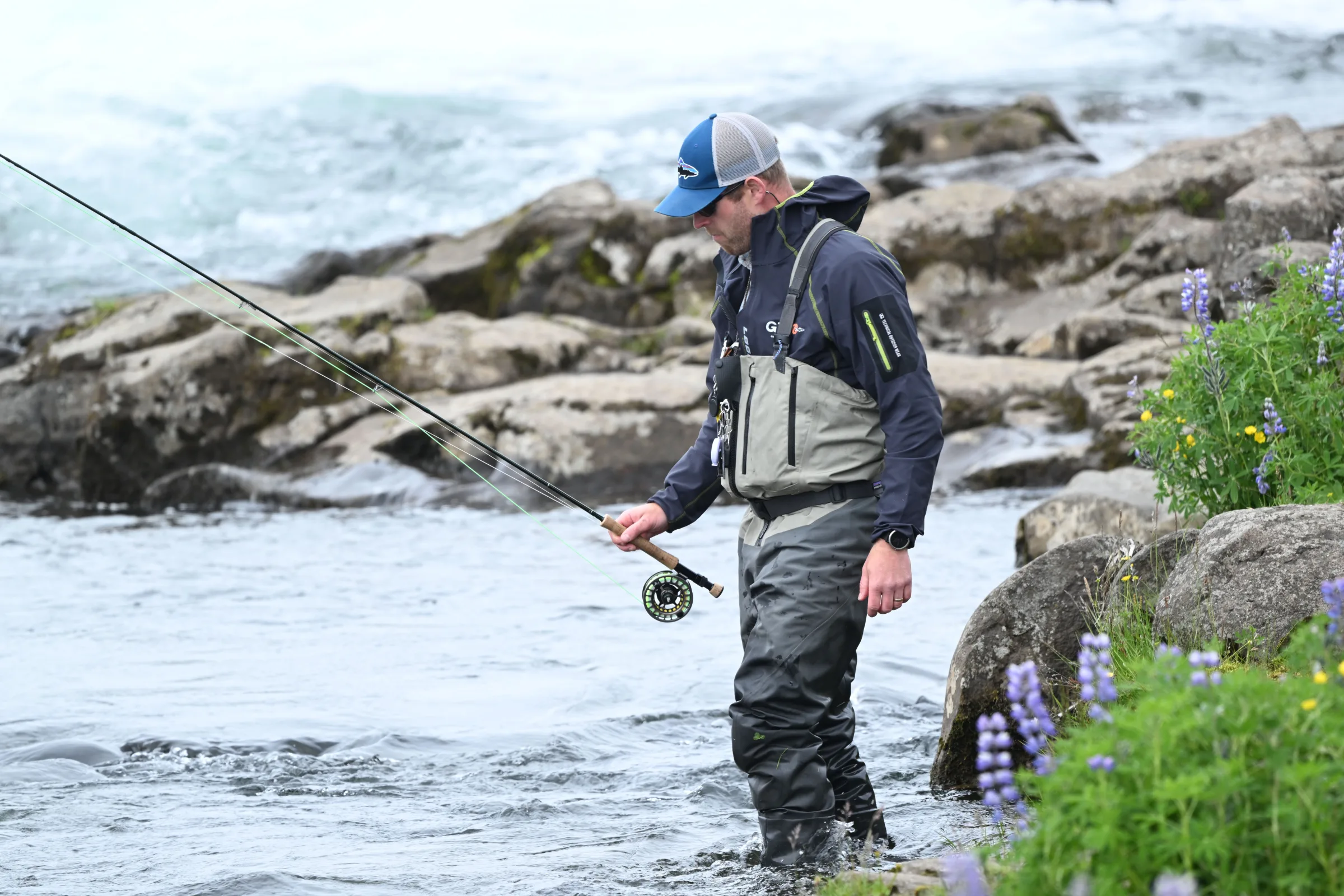
Tight-Line Nymphing
Take away the indicator and you are left with your rod, your leader, and the current. Tight-line nymphing means fishing in direct contact with the fly — no float, no bobber, no intermediary. You feel the take through the leader, or you see it in the sighter. It is the most sensitive way to fish a nymph, and once you learn to read the signals, the takes that were invisible before become unmistakable.
When & Where
Tight-line nymphing excels in moderate to fast water: runs, riffles, pocket water, broken glides, and pool heads. It works wherever fish hold in current and feed on drifting nymphs. Particularly effective in water that is too broken or fast for indicators, and where precise depth control and immediate strike detection matter. Not ideal for very deep, slow pools, where the indicator rig holds depth more consistently.
Essential Gear
A 10 to 11-foot rod in 2 to 4 weight, designed for Euro or contact nymphing. The extra length keeps line off the water. A long leader — 15 to 25 feet — built with a coloured sighter section of bi-colour nylon. The sighter is your bite indicator. Below the sighter, 4 to 6 feet of fine tippet to a weighted nymph, often with a lighter dropper above. Tungsten beads are essential for getting down fast.
How It Works
Cast upstream or up-and-across. As the nymphs sink, track them with the rod tip, keeping the sighter just above the water with no slack. The line should not touch the surface — only the leader and tippet are in the water. Lead the flies through the drift at the speed of the current. Watch the sighter. Any pause, jump, or deviation from its natural path means a fish has taken the nymph. Lift to set the hook immediately. At the end of each drift, lift the flies smoothly — this can trigger an induced take as the nymphs rise.
Common Mistakes
Adjusting the Method
By season
Tight-line nymphing works year-round but is at its best in the colder months when fish hold deep and takes are subtle. In spring and autumn, heavier nymphs fished slowly through deep runs account for big fish that would not have registered on an indicator. Summer allows lighter patterns and faster water.
By species
Grayling are extraordinarily responsive to tight-line methods — their deep holding position and delicate take suit the sensitivity of the approach perfectly. Trout in fast water take with more conviction. On competition rivers across Europe, tight-line nymphing dominates for both species.
By water
This approach evolved from European competition fishing and is now standard across British and continental rivers. The freestone rivers of Wales, northern England, and Scotland suit it perfectly. French and Spanish rivers — clear, fast, and technical — are where the method was refined to its modern form. Check before you fish: many beats allow only a single fly, dry fly only, or no weighted flies, and some chalk streams restrict nymphs until a set date. A nymph on a dropper or a weighted fly breaks those rules, so read the beat rules first. See The Rules of the Water for the licence, close-season and beat-rule checks to make before you fish. See Leader Formulas for how to build a leader for the fly and the water.
More in Nymph
The river is the hero, not the app. · © 2026 Rise Daisy