Paris is not London. It is not Madrid or Glasgow either, where you can stand on a city pavement, point vaguely north, and be on a trout river within an hour. Paris is its own thing — a city that arranges itself around food, light and the Seine, and that has comparatively little interest in arranging itself around the fly angler. The water is there. The trout, to a useful approximation, mostly are not. Once you have made peace with that, Paris becomes a perfectly decent base for a kind of fly fishing that is less famous, less photographed, and quite a lot more interesting than people give it credit for.
Three lanes within ninety minutes of the Périphérique. None of them is the Test. All of them will fill the day.
Paris Is Not a Fly-Fishing City
Paris is not London. It is not Madrid or Glasgow either, where you can stand on a city pavement, point vaguely north, and be on a trout river within an hour. Paris is its own thing — a city that arranges itself around food, light and the Seine, and that has comparatively little interest in arranging itself around the fly angler. The water is there. The trout, to a useful approximation, mostly are not.
This is the first thing to make peace with. Once you have, Paris becomes a perfectly decent base for a kind of fly fishing that is less famous, less photographed, and quite a lot more interesting than people give it credit for.
Within ninety minutes of the city there are three realistic lanes: fly-only stocked stillwaters, small first-category trout streams east and south-east of town, and a surprisingly varied urban-and-suburban warm-water fly fishery on the Seine, the Marne, the Loing, and the canals. None of them will replace a week on the Test or a fortnight on the Sella. All of them will fill an evening, a day off, or the gap between meetings.
Lane One — The Fly-Only Stillwaters
The strongest play for the visiting angler, and it is not even close. Gravelle in the city, BEP22 for the local club day, Coyolles for the proper trip.
Lac de Gravelle, Bois de Vincennes (20–40 minutes). A proper Paris oddity. A one-hectare lake tucked inside the Bois de Vincennes, set aside specifically and only for fly fishing. The APBV — the local association — runs it as a no-kill fishery, with barbless or de-barbed hooks, trout that must be released, and landing nets required. It is stocked. It is small. It is twenty minutes from a Métro stop. None of that makes it a wilderness, but on a damp Tuesday in April, with a southwesterly putting a ripple across the surface and the joggers vanishing into the trees, it does a passable impression of one. Take a 9-foot 5-weight, a box of Diawl Bachs and Cormorants, a couple of small black buzzers, and a sense of proportion.
Étang BEP22, Chessy / Marne-la-Vallée (35–55 minutes). The Marne-la-Vallée AAPPMA lists a no-kill fly reservoir at Étang BEP22 at Chessy, with casting and fly-tying activity centred around Torcy. It is not glamorous, and it is mostly used by people who actually live in the eastern suburbs and want to fish on a Sunday morning without writing off the whole weekend. That is, in fact, what makes it worth knowing about. It is the local club water, with all that implies: practical, slightly utilitarian, and entirely fishable from RER A. If you are in Paris with a family at Disneyland and a small window of personal sanity, this is your reservoir.
Domaine de Coyolles, Aisne (70–90 minutes). The serious option. Coyolles is a private fly-only domain in the Aisne valley — seven hectares of grounds, five lakes, around four hectares of water, all of it fed by the sources of the Automne. Fly fishing only, on every lake. This is the closest thing to a destination fly venue inside the ninety-minute band, and the most likely place to spend a full day without feeling that you have settled. The lakes vary in character; the fishing has the kind of considered, well-managed feel you would expect from a place that has decided to do one thing properly rather than three things vaguely. If your trip allows exactly one day of real fishing, go here.
The whole stillwater lane is short on romance and long on practicality. You will not write a book about any of these. But you will catch fish, and you will do it without burning the kind of car-time that turns a day off into a journey home in the dark.
Lane Two — The Small First-Category Streams
The lane visitors get excited about and then quietly downgrade once they have driven to one. Île-de-France has small trout streams. It does not have great ones.
The upper Grand Morin is the obvious candidate, partly because everyone has heard of it. It is classified as first-category water upstream of the Moulin de Montblin at La Ferté-Gaucher; below that it slides into the more mixed, coarse-fish water that defines most of the regional rivers. Fish the upper reaches around La Ferté-Gaucher or further up towards Esternay, expect modest stream trout in modest numbers under modest pressure, and you will not be disappointed. Travel up with images of the Andelle or the Risle in your head and you will be.
Beyond the Grand Morin, the Seine-et-Marne federation lists something close to a hundred kilometres of first-category water across a string of streams that most people outside the département have never heard of: the Orvanne, Betz, Voulzie, Lunain, Vannetin, Aubetin, Durteint and Dragon. These are local AAPPMA streams, not destinations. They reward the angler who is willing to do their homework — phoning ahead, working out which beats are accessible, understanding that you may walk a kilometre to find the one piece of water that looks the way you hoped the whole river would. They will not give you a famous fishing day. They will, occasionally, give you a quietly excellent one.
The honest summary: if you are in Paris for the river fishing specifically, you are in the wrong city. If you are in Paris anyway, and you fancy a half-day exploring a chalk-leaning stream in deep France, the Orvanne and its neighbours are a sound way to spend a morning.
Kit: a 9-foot 4-weight, a small dry-fly box (olives, sedges, the inevitable Klinkhåmer), a thin tippet, and a willingness to be patient with second-category banks where the grass has won.
Lane Three — The Urban and Suburban Warm-Water Fly
The lane the trout-obsessed angler will overlook and the open-minded angler will go home talking about. Chub, perch, pike, carp — fish a fly rod for whatever is swimming.
This is the lane the trout-obsessed angler will overlook and the open-minded angler will go home talking about. The Île-de-France regional fishing body lists, among the species pursued on local waters with a fly rod, trout, pike, black bass, barbel, perch, chub and carp. You can hit several of those without leaving the inner suburbs.
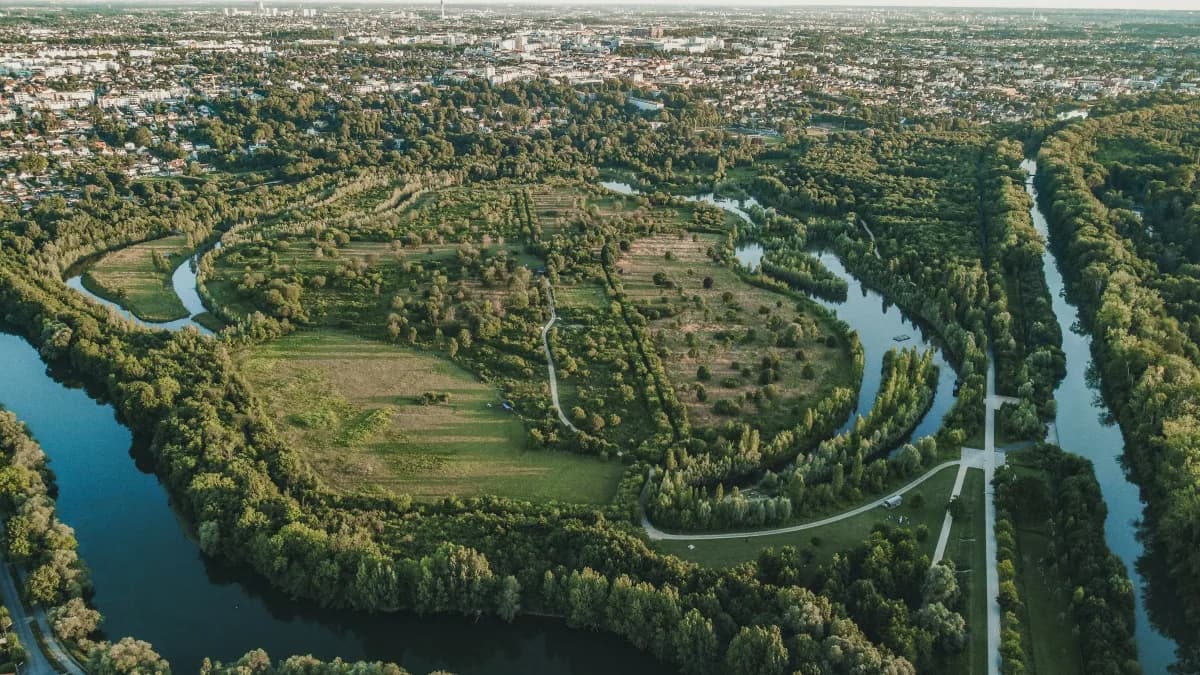
The Seine through Paris and downstream holds chub, perch and pike in places, and good carp in others. The Marne, especially around Chelles, Champigny and the eastern bends, is a properly varied warm-water fly venue — chub on small foam beetles in summer, perch on small streamers, the occasional pike on a heavier rod. The Loing, south towards Nemours, fishes a bit more like a real river and holds the same mix with the added bonus of better banks. The Canal de l'Ourcq is what it is: a canal. But it is also half an hour by bike from Belleville, and there are perch and chub in it for an angler who is willing to creep along the towpath and sight-fish.
This lane is not about catching trout. It is about deciding that a fly rod is for catching fish on a fly, full stop, and then matching the fly to whatever is swimming. Streamers. Small poppers. A bread-fly for cruising carp on a summer evening when the city slows down and you can hear the river move. Bring an 8-weight if you want to take pike seriously; otherwise a 6-weight will cover most of what is interesting.
Best Choice by Angler Type
Half a day in town. A full day with a car. A morning on moving water. A predator-and-coarse pivot. Four answers, no overlap.
For the visitor with half a day: Lac de Gravelle. It is in the city, it is fly-only, it is stocked, and the only thing standing between you and a trout is a local ticket and reading the rules properly.
For the visitor with a car and a full day: Domaine de Coyolles. It is the most complete fly-fishing venue within the ninety-minute band and the one most likely to feel like a proper day's fishing rather than an errand with a rod.
For the angler who wants moving water: the upper Grand Morin around La Ferté-Gaucher, or one of the Seine-et-Marne first-category streams — Orvanne, Betz, Voulzie. Check the AAPPMA beats and access before you travel. Travel with low expectations and a willingness to enjoy small fish in a small river.
For the predator and coarse fly angler: the Marne, the Seine, the Loing, the Canal de l'Ourcq, and any city lake that turns out to hold perch. Streamers, foam, nymphs, and a fly tied to imitate a piece of crust.
Licences and Rules — Read Once, Save the Headache
You will normally need a French carte de pêche, and the local AAPPMA rules can matter more than the fly choice.
You will normally need a French carte de pêche to fish here, and the local AAPPMA rules can matter a lot — more, in many cases, than the fly choice. The Seine-et-Marne federation's 2026 notice lays out the basics: first- and second-category waters, trout size limits, salmonid bag limits, and the different rules that apply depending on which category you are fishing.
In non-domanial first-category waters a single line is allowed; second-category waters allow more. The trout and predator seasons do not line up. Read the notice before you travel, and check whether your chosen water is private, club-only, or open with a national ticket — many of the best small-stream sections are AAPPMA-managed and not interchangeable.
The Honest Verdict
Paris is not a fly-fishing city. It is a city you happen to be in, with some fly fishing nearby. Frame it that way and the picture becomes cheerful.
Paris is not a fly-fishing city. It is a city you happen to be in, with some fly fishing nearby. Frame it that way and the picture becomes cheerful: stocked fly-only stillwaters within easy reach, a respectable small-stream scene in Seine-et-Marne if you are willing to do the homework, and a genuinely interesting urban warm-water fly fishery on the Seine, Marne, Loing and the canals.
Sometimes the best fishing trip is the one you were not really planning to take. Bring a single rod, a small box, and the willingness to let a Tuesday afternoon turn into something. The river will do the rest.