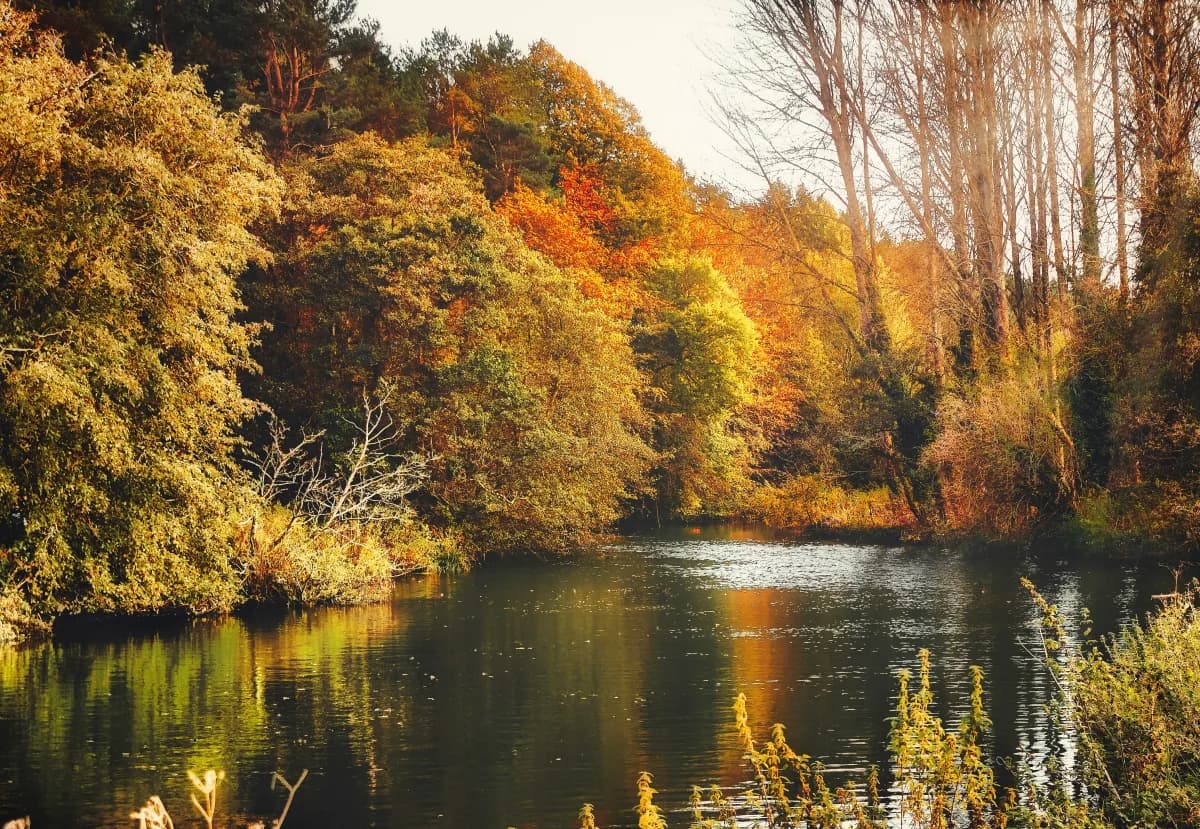
Belfast is not the first city that comes to mind when someone says fly fishing destination. It probably isn't the second, either. But it has more depth than most visitors expect — a compact urban wild trout fishery, a practical ring of accessible DAERA stillwaters, and access to the dollaghan rivers of Lough Neagh.
The dollaghan is a migratory brown trout endemic to Lough Neagh. It runs the rivers to spawn, fights like a sea trout, and is found nowhere else in the world. Most visiting anglers completely overlook it.
Fly Fishing from Belfast: More Depth Than It Looks
Belfast is not the first city that comes to mind when someone says fly fishing destination. It probably isn't the second, either. But it has more depth than most visitors expect, and some of it is genuinely worth knowing about — not in a well-it's-better-than-nothing way, but in a this-is-a-proper-local-fishing-culture-with-its-own-character way.
The Lagan runs through the city and holds wild brown trout. A ring of stocked trout waters sits within thirty to fifty minutes of the centre. And feeding into Lough Neagh is a network of rivers that carry the dollaghan — a migratory form of brown trout found nowhere else in the world, a fish that runs like a sea trout, fights like one too, and is still largely unknown outside Northern Ireland. If you fish out of Belfast and you don't know about dollaghan, you're missing the whole point.
The honest hierarchy, in the order most anglers will use it: the Lagan for a short local session; Hillsborough and the DAERA stillwater belt for the easy day when conditions don't matter; the Six Mile Water for proper river fishing close to home; and the Maine, Braid and Kells Water tributaries of Lough Neagh for the dollaghan — Belfast's genuinely distinctive fishery. The River Bush is the further-afield salmon day when you want to plan a proper outing.
The Legal Bit: DAERA Licences and Permits
Northern Ireland operates its own licensing system under DAERA. A DAERA game rod licence is required by law for every rod used by anyone over twelve. Fishery-specific permits are layered on top.
All game fishing in Northern Ireland — on DAERA Public Angling Estate waters, club beats, or private fisheries — requires the appropriate DAERA game rod licence. This is required by law for every game-fishing rod used by anyone over twelve, and it is separate from any fishery permit or club ticket. Annual, monthly and day licences are available; DAERA's website (daera-ni.gov.uk) is the authoritative starting point.
DAERA Public Angling Estate (PAE) waters — including Hillsborough Lake, the Lagan at Shaw's Bridge, and most of the reservoir belt — require a separate DAERA game fishing permit on top of the licence. The two are distinct. Club waters such as Antrim and District's Six Mile Water stretch operate their own permit arrangements. Check directly with the relevant club or through local tackle shops, which are the most reliable source of current permit information, method restrictions and bag limits.
Seasons vary by water and species. Most game rivers open 1 March and close 31 October; Hillsborough Lake runs 1 February to 31 December. Always verify the current season and rules for each specific water before fishing — rules change, and the DAERA website is the authoritative source.
The River Lagan: Wild Trout Inside the City
Ten to twenty minutes from the city centre. Not glamorous. But the fish are real, the water is real, and it is genuinely there — which counts for more than it sounds on a Tuesday evening.
The DAERA-managed Shaw's Bridge stretch runs from Shaw's Bridge to just below the Red Bridge, and the better trout water sits in the faster-flowing sections where the river has pace and oxygenation. These are not large fish. They are not chalk-stream fish. They are urban wild brown trout in a river that flows through a regional park, and that is exactly what they are — no more and no less. Season runs 1 March to 31 October; you'll need a DAERA game rod licence and a game fishing permit. Salmon are present and must be returned.
The Lagan is the kind of fishing that rewards an hour after work more than a full day. Don't spend the whole session casting to flat, slow water expecting something to happen. Find the riffle, find the current break, fish the seam. The trout are there; they just don't advertise.
Hillsborough Lake: The Easiest Option
About half an hour south of Belfast. Stocked rainbows, prolific midge hatches, and a long season running 1 February to 31 December. The practical short-notice option.
Hillsborough Lake is a DAERA Public Angling Estate water that does what it says on the tin. A nutrient-rich lough with prolific midge hatches — in practice, buzzers and small nymphs are your friends most of the time. A few restrictions apply: no fly fishing from the dam or the shore beside it, nor near the southern footbridge. No boats. Within those boundaries, it is a straightforward day out.
A DAERA game rod licence and PAE permit, a floating line, buzzers in black or red on a slow figure-of-eight retrieve, Diawl Bachs on a slack line, a small CDC emerger in the surface film when there is visible midge activity, and some patience. Damsels and small lures when nothing subtler is working. This is bread-and-butter stillwater trout fishing; the lake rewards methodical prospecting more than inspired pattern selection.
A good option for newer fly anglers, visitors who want a low-pressure session, or anyone who has driven to Belfast for something else and fancies bending a rod while they are there.
The Six Mile Water: Belfast's Most Interesting Nearby River
If the Lagan is what you fish after work, the Six Mile Water is what you fish when you want something that feels like proper river fishing. Wild trout in spring and early summer; dollaghan from summer onwards.
The Six Mile Water runs through County Antrim, managed from Doagh Bridge down to Lough Neagh by Antrim and District Angling Association. It holds wild brown trout alongside annual runs of dollaghan and salmon. In spring and early summer it is a wild trout river: fish the broken runs, the pool tails, and the current seams with nymphs and wet flies. Small olives and spiders will account for plenty of fish on the right evening.
But from summer through to autumn, after a rise in water following rain, it becomes something else: a dollaghan river, and that changes the complexion of a session considerably. Fish lower light, fish after rain, and fish heavier. Dollaghan are migratory fish with migratory fish instincts — they move in the dark, they respond to a river that is dropping after a lift, and they take wet flies and small streamers with the kind of conviction that reminds you why you drove out here in the first place.
For wild trout: nymphs, spiders, small dries fished upstream in the riffles. Standard northern Irish river trout fishing — don't overcomplicate it. For dollaghan: heavier tippet than you would use for trout, patterns in the size 10–12 range, fished across and down in the sea trout manner.
Stocked Trout Waters: The Wider Belfast Belt
DAERA maintains a practical network of stocked trout fisheries within range of the city. They cover enough ground to be useful whether you want a quick fix or a more scenic day out.
The closest options — North Woodburn, Lower and Middle South Woodburn, and Copeland/Marshallstown — are all within forty-five minutes and represent the most practical I-want-to-fish-today belt. Bank fishing, intermediates, nymphs, lures. Nothing complicated.
Hillsborough (covered above) sits at the easy end, but Lough Cowey and Lough Money in County Down are worth knowing about if you are willing to go a little further south. Both are DAERA waters and quieter than some of the closer options.
Castlewellan Lake in County Down is the most visually rewarding of the DAERA stillwaters near Belfast — a forest park setting with the castle as backdrop, stocked trout, and enough room to feel like you are somewhere rather than just anywhere. Worth the extra drive if you want the fishing to feel like an occasion. Altnahinch and Lough Mourne are further out but have a more rugged character: the right choice for a day that does not feel like a car park and a stocked pond.
Dollaghan: Northern Ireland's Special Trout
The dollaghan is a migratory brown trout native to Lough Neagh and its feeder rivers. It has never been to sea — it grows big on the lough's insect life and returns to the rivers lean and powerful. A double-figure fish is a real fish.
It is worth explaining what dollaghan actually are, because if you have arrived from mainland Britain with expectations set by sea trout fishing in Wales or Cumbria, you might need to recalibrate. The dollaghan is a migratory brown trout — Salmo trutta — native to Lough Neagh and its feeder river system. It spends time in the lough and runs the rivers to spawn, in the manner of a sea trout, but it has never been to sea. Its food source is the lough itself: it grows big on the lough's rich insect life and returns to the rivers lean and powerful.
A double-figure dollaghan is a real fish. A fish over four or five pounds is a good one by any standard. The key rivers within range of Belfast are the Six Mile Water, the Maine, the Braid and Kells Water — all feeding into Lough Neagh from the west and north. What all of them share: they fish best after rain, on a dropping river, in low light. Think late evenings and into dusk from July onwards. Think sea trout tactics on an inland river. The comparison is imperfect but it is the closest frame of reference for most visiting anglers.
The Maine, Braid and Kells Water: Dollaghan Country
The Maine system — with the Kellswater and Glenwherry as tributaries — is classic dollaghan country. Forty-five to seventy minutes from Belfast. It rewards local knowledge and the right conditions more than a blind visit.
Don't go in low water expecting results. Wait for a rise, let the river steady and drop back, then fish the evenings hard. A team of wet flies in sizes 10–12, dark patterns with some body to them — Claret, Black Pennell, Peter Ross, and a lightly dressed streamer if you want something with more movement. Standard double-handed tactics are unnecessary; this is single-hand wet-fly water. A nine-foot rod, a floating line, a leader down to 8–10lb fluorocarbon.
The Braid and the Six Mile Water fish similarly and are worth knowing as alternatives when the Maine is either too high or already busy. All three rivers sit within a forty-five to seventy-minute window from Belfast city centre and follow the same tidal rhythm of dollaghan movement: rain, rise, drop, darkness, fish. If you can only do one dollaghan trip from Belfast, make it an evening in August or September after a decent rainfall event. That is what Belfast's fishing culture is quietly built around.
The River Bush: The Salmon Day Trip
Sixty to seventy-five minutes from Belfast. Northern Ireland's premier salmon river — compact, intensely managed by DAERA, and with one of the most studied salmon populations in the British Isles. A planned outing, not an afterthought.
The Bush runs from the Antrim basalt plateau to the north coast at Bushmills, close to the Giant's Causeway. Three managed beats rotate anglers through the pools. Spring salmon from March, building through April and May; grilse from June. The river fishes best twelve to twenty-four hours after rain — it rises fast off the basalt and clears quickly. Small doubles (size 10–14) on floating line in summer; larger tubes on sink-tips for spring fish. Book beats through DAERA or Bushmills Salmon Anglers.
The Bush earns its place as the proper game-river day trip from Belfast — the most accessible salmon option with some structure behind it. But it is not the core of what Belfast-area fishing offers. Treat it as an extension, not the main event. The main event is dollaghan.
The Belfast Year
March and April for the stocked stillwaters and the first river sessions. June and July for wild trout. August to October is dollaghan season. November onwards, most game waters close but some DAERA stillwaters carry on.
March and April: the DAERA stillwater belt is the most reliable early-season option. Hillsborough opens 1 February and fishes well in cool water on buzzers and small nymphs. The Lagan and Six Mile Water are waking up; small nymphs and spiders work on the milder days.
June and July: the best time for wild trout on the Lagan and Six Mile Water. Evening dry fly, nymph fishing during the day, small dries when there is something hatching. The dollaghan are beginning to be a possibility after any significant rain.
August to October: dollaghan season. Rain is the trigger; a river that has dropped two or three inches after a lift is the condition. Fish the Six Mile Water and the Maine system in the evenings, wet fly, low light. This is the most distinctive fishing Belfast's region offers and the time to be there for it.
November onwards: most game waters close at the end of October. Some DAERA stocked stillwaters, including Hillsborough, remain open into winter for rainbow trout on a fly-fishing-restricted permit. Check current DAERA rules before going.
Suggested First Trips
Hillsborough on a Saturday morning to shake off the winter. The Lagan in April and May for the first evening sessions. The Six Mile Water in summer — wet fly, dusk — when the dollaghan become a real possibility.
Begin at Hillsborough Lake on a Saturday in February or March to remember what casting feels like. Move to the Lagan at Shaw's Bridge in April and May for short evening sessions — find the riffle, fish the seam, keep it simple. Spend a summer evening on the Six Mile Water in June or July when the wild trout are at their best and the river is carrying enough water to fish well.
Book a late-August or September dollaghan session on the Six Mile Water or the Maine after a rainfall event. Fish from early evening into dark with a team of wet flies and a properly tied-on leader. That is when Belfast earns its place on a fishing itinerary.
Keep the DAERA licence in your wallet. Read each fishery's rules before you stand in the water. Check daera-ni.gov.uk for current seasons, permit requirements and any method restrictions. The rest tends to look after itself.
The Final Verdict
The Lagan for a session after work. Hillsborough for the easy day. Six Mile Water for proper river fishing. The Maine and Braid for dollaghan. The Bush for salmon. A compact, distinctive fishing region — and one that most visiting anglers completely overlook.
Belfast is not a headline fly-fishing destination. It doesn't have a chalk stream, it doesn't have a famous salmon river running through the middle of it, and nobody is writing magazine features about the urban wild trout of the Lagan.
What it has is something more interesting, in its own way: a compact urban wild trout fishery, a practical ring of accessible DAERA stillwaters, and access to the dollaghan rivers of Lough Neagh — a fishery that is entirely and specifically Northern Irish, that you will not find anywhere else, and that most visiting anglers completely overlook.
If you are coming to Belfast for something else and want to fish while you are here, the Lagan and Hillsborough will serve you well. If you come specifically to fish, go in late summer, wait for rain, and spend an evening on the Six Mile Water or the Maine with a team of wet flies and a properly tied-on leader. That is when Belfast earns its place on a fishing itinerary.