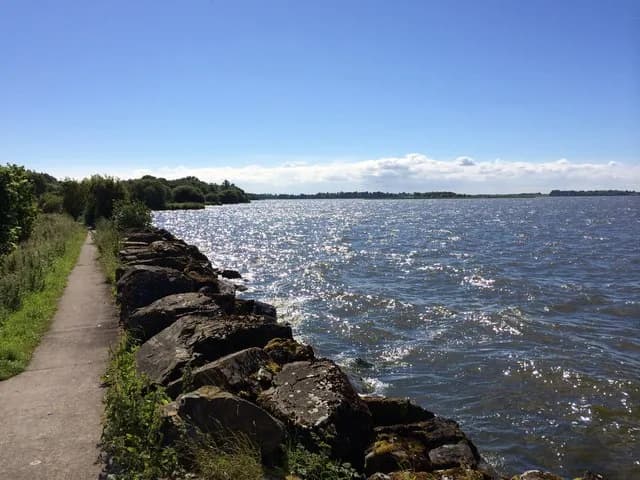
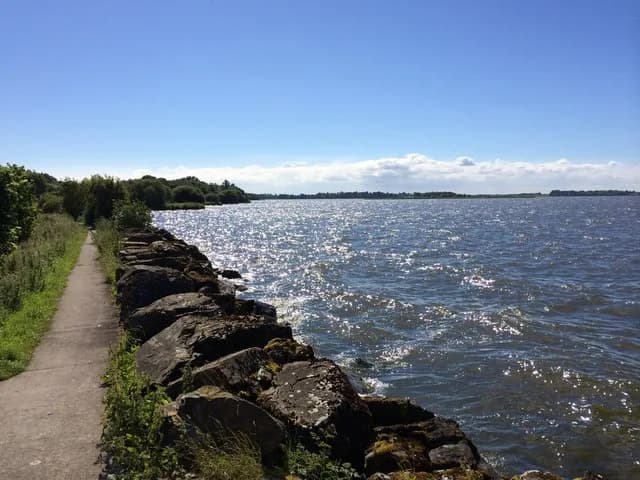
Lough Neagh is the largest freshwater lake in the British Isles (388 km²) and the heart of the Six Counties. Shallow and eutrophic, it supports the famous dollaghan (Lough Neagh lake-run brown trout), which enter the tributary rivers (Ballinderry, Moyola, Blackwater NI, Six Mile Water) from July through October. Open-water trout fishing on the lough itself is challenging owing to scale and exposure — most serious anglers target the dollaghan in the tributaries during the run. Pike and coarse fish are plentiful. Commercial eel fishery is the traditional industry. Boat fishing by local arrangement; most fishing effort is bank-based in the feeder rivers.
A patient day, if you fancy it
Useful ripple, fishable wave. Take your time — read the water before you cast.
Conditions on the water
Some readings unavailable — check directly before fishing.
The brief
The plan
Work Bibio on the bob and Peeping Caddis on the point.
If the main plan is not working, switch to a smaller, more imitative pattern fished slower and deeper. A change of drift angle can also make a difference.
Keep an eye on changing conditions — wind shifts and cloud breaks can trigger short feeding spells.
Windy conditions suit anchoring in productive areas rather than open-water drifting.
What's on, when
Numbers are intensity 0 (none) to 3 (peak) — a guide, not a guarantee.
Top pattern + the box
Why today scores what it does
- Wind conditions (windy) are not ideal for this water.
- Hawthorn Fly is in its seasonal window, boosting the chance of targeted feeding.
Precipitation
Who this water suits
Lough Neagh, on the water
Field guide · contributor-editedWhat this water is
Lough Neagh is the largest freshwater lake in the British Isles (388 km²) and the heart of the Six Counties. Shallow and eutrophic, it supports the famous dollaghan (Lough Neagh lake-run brown trout), which enter the tributary rivers (Ballinderry, Moyola, Blackwater NI, Six Mile Water) from July through October. Open-water trout fishing on the lough itself is challenging owing to scale and exposure — most serious anglers target the dollaghan in the tributaries during the run. Pike and coarse fish are plentiful. Commercial eel fishery is the traditional industry. Boat fishing by local arrangement; most fishing effort is bank-based in the feeder rivers.
- Lake
- Mixed
How to get to the water
Where the rules change
- Trout1 March → 31 October
Licences, sorteo, the rules
- DAERA rod licence required
- Coarse fishing permits available
- Dollaghan catch-and-release strongly encouraged — this is a unique endemic form.
Lough Neagh
Lough Neagh is the largest freshwater lake in the British Isles (388 km²) and the heart of the Six Counties.
A patient day, if you fancy it
Useful ripple, fishable wave. Take your time — read the water before you cast.
Some readings unavailable — check directly before fishing.
Conditions are away from this venue's sweet spot — it usually fishes best in ripple wind with mixed skies.
Work Bibio on the bob and Peeping Caddis on the point.
If the main plan is not working, switch to a smaller, more imitative pattern fished slower and deeper. A change of drift angle can also make a difference.
Keep an eye on changing conditions — wind shifts and cloud breaks can trigger short feeding spells.
Windy conditions suit anchoring in productive areas rather than open-water drifting.
- Wind conditions (windy) are not ideal for this water.
- Hawthorn Fly is in its seasonal window, boosting the chance of targeted feeding.
Numbers are intensity 0 (none) to 3 (peak) — a guide, not a guarantee.
Terrain map
- DAERA rod licence required
- Coarse fishing permits available
- Dollaghan catch-and-release strongly encouraged — this is a unique endemic form.
Lough Neagh is the largest freshwater lake in the British Isles (388 km²) and the heart of the Six Counties. Shallow and eutrophic, it supports the famous dollaghan (Lough Neagh lake-run brown trout), which enter the tributary rivers (Ballinderry, Moyola, Blackwater NI, Six Mile Water) from July through October. Open-water trout fishing on the lough itself is challenging owing to scale and exposure — most serious anglers target the dollaghan in the tributaries during the run. Pike and coarse fish are plentiful. Commercial eel fishery is the traditional industry. Boat fishing by local arrangement; most fishing effort is bank-based in the feeder rivers.
- Lake
- Mixed
- Trout1 March → 31 October
Lough Neagh is the largest freshwater lake in the British Isles (388 km²) and the heart of the Six Counties. Shallow and eutrophic, it supports the famous dollaghan (Lough Neagh lake-run brown trout), which enter the tributary rivers (Ballinderry, Moyola, Blackwater NI, Six Mile Water) from July through October. Open-water trout fishing on the lough itself is challenging owing to scale and exposure — most serious anglers target the dollaghan in the tributaries during the run. Pike and coarse fish are plentiful. Commercial eel fishery is the traditional industry. Boat fishing by local arrangement; most fishing effort is bank-based in the feeder rivers.