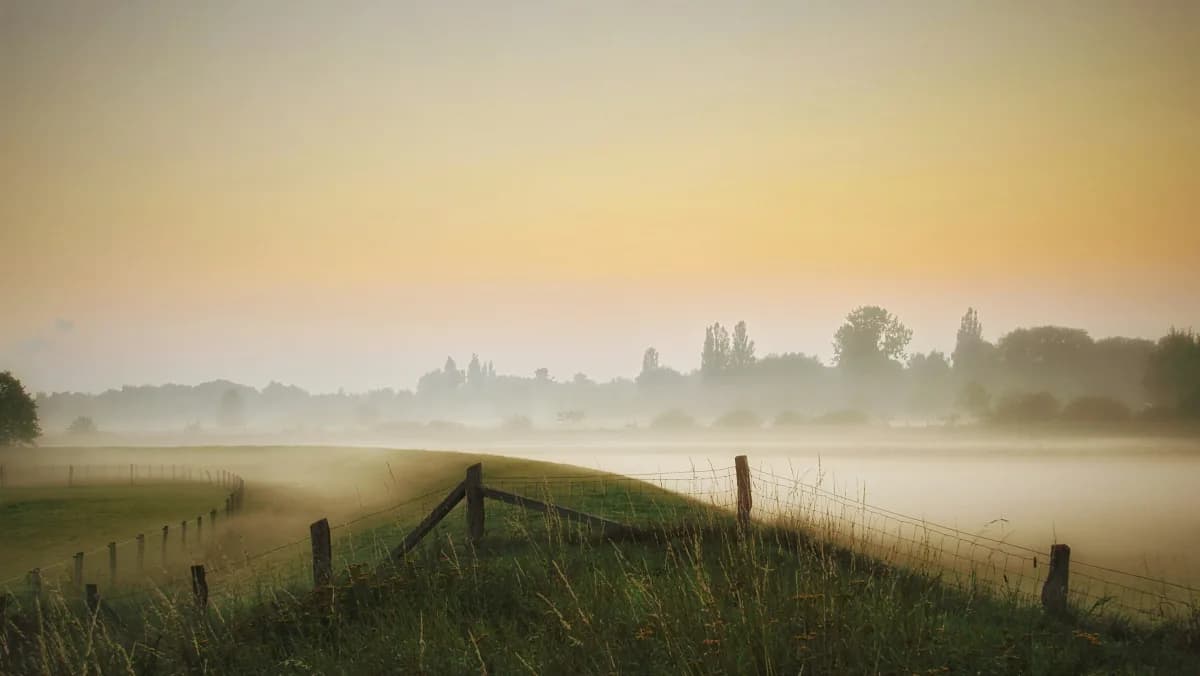
By late October the big hatches are a memory. The mayfly is months gone, the evenings are dark by six, and the river has a tired, brown-leaved look. Then one day around noon, in thin sunshine or under a flat grey sky, something small and dark sits up on the surface, and the whole river wakes up for an hour.
The hour that matters
The middle of the day is the warmest part of a cold day, and that is when the insects come. In October and November, expect the main activity between roughly noon and three, with a peak somewhere around the middle. Before and after, very little. If you arrive at nine and leave at one, you'll miss the best of it. If you arrive at three, you'll hear about it.
Temperature matters, but it isn't the whole story. Cold nights and short days slow the nymphs, and the hatch waits for the warmest part of the afternoon. Don't write off a mild, grey day, though. Autumn olives come off quite happily under cloud, and a soft, overcast afternoon can be as good as a bright one. Hard frost on the morning and a bitter east wind are what put the lid on it.
The olives
The olive that matters in autumn is the Large Dark Olive (Baetis rhodani), which hatches in spring and again from September into November.
The autumn brood is on the small side for the species, dark olive-brown with slate-grey wings. The nymphs are agile, streamlined swimmers in moderate to fast gravelly water, riffles and runs.
Two other small olives are worth knowing:
Pale Watery (Baetis fuscatus) is mainly a summer insect, a pale, delicate olive that tails off through September. You may still find a few early in October on milder rivers, but don't build your day around it.
Iron Blue (Alainites muticus, formerly Baetis muticus; the lowland species is Nigrobaetis niger) is small and dark, with dark slate wings and an olive-brown to dusky body. It has a second brood in autumn, usually thinner than the spring one, and it likes cold, rough, overcast weather when little else will come off.
Both Large Dark Olive and Iron Blue love stony water, so the stony spate and upland rivers are not the poor relations you might expect. For many of them the autumn Large Dark Olive is the only hatch worth the name, and it can be prolific. The difference is in the fishing: the water is rougher, so fish are harder to spot and the rises are quick. Chalk streams and the lower reaches of limestone rivers have the calmer surface and the easier reading, and the olives share the water with the last stragglers of the Blue-winged Olive and plenty of midges.
The fly doesn't have to be exact. A size 14–16 dark olive dun or emerger is the standard answer for the Large Dark Olive, dropping to 16–18 for an Iron Blue. Fish the film: in cold water the nymphs often hang in the surface film for longer before the dun gets free, and trout take the emerger more readily than the dry.
The sedges
In autumn the caddis stay big.
The commonest large sedge of the back end on rivers is the Caperer (Halesus radiatus, with a close relative, H. digitatus), a mottled, russet-brown limnephilid active from September into November. Cinnamon sedges (Limnephilus and Potamophylax species) turn up too, mostly on slower or stiller water. Don't confuse any of them with the Great Red Sedge (Phryganea grandis), which is a summer insect of stillwaters and slow, weedy rivers and is long finished by now.
These are dusk sedges. They fly low over the water in the last of the light, and the females skitter and flutter along the surface laying eggs. Trout take them with a splash. By late October that means the last half hour of daylight, which is often after the trout season has closed. Grayling will have a go at them if you're still on the river.
A big sedge pattern, size 10–12, in brown or russet, fished with a twitch or a skate across the surface, can bring the best fish of the back end. It will not always work. When it does, it's a surprise.
Autumn Dun and the rest
On northern and western rivers, and around the stony shores of the lakes, the Autumn Dun (Ecdyonurus dispar) is a late flat-winged mayfly worth watching for.
It is a creature of stony, upland water, not the chalk. It hatches from midday into the afternoon from August through October and fades as the cold comes in. It is a bigger fly than the olives, so think size 12–14. Trout take it readily when it comes, though never in the numbers of the olives.
The small dark needle flies (Leuctra species) are about on stony rivers right through the autumn, and crane flies (daddy-long-legs) linger into October. The odd heather fly may still be blown onto upland water early in the period, but by November the terrestrials are essentially gone. Midges are the constant. When nothing else is hatching, there are midges.
Fishing it
Arrive late morning, stay till mid-afternoon.
Walk the river first. Look for fish in the slower water below riffles, and in the tails of pools. If you want the sedges, stay for the dusk, and take a torch.
Watch for the first rise. Don't start casting until you've seen what's coming off.
Think small and fine. A lighter leader, 5x or finer, and a size 14–18 pattern. In low, clear water, fish are wary.
Be sure of your dates. Trout seasons close at the end of September or in October, depending on the river and the region. In England and Wales the grayling season runs on to 14 March, but club and byelaw dates vary, and Scotland differs, so check. A river that has closed to trout may still be fishing for grayling, and they eat the same flies.