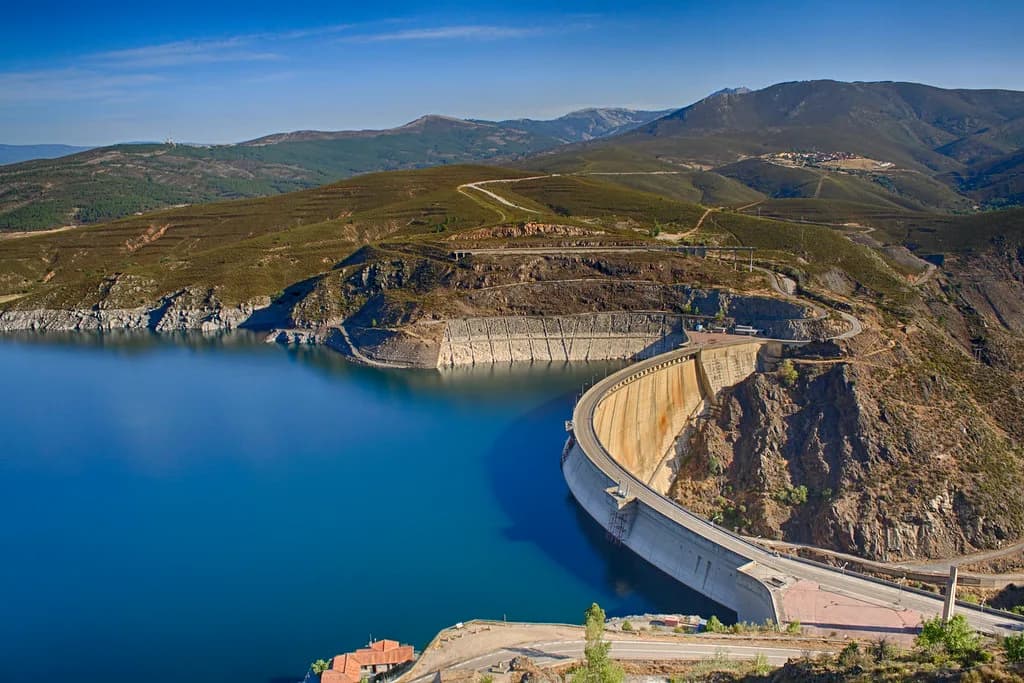


Madrid's largest reservoir, on the lower Lozoya system 70–90 minutes north-east of the city. Big, scenic, serious water that is not easy to read — bank access varies by water level and the steep walled arms mean covering water is a real exercise. Holds black bass, pike, carp, and barbel. For the fly angler this is an exploratory day, not a beginner trout substitute: lower catch certainty but genuine potential for the angler willing to walk and search.
Summer pike — dawn and dusk topwater
Good wave on — drift country. A useful wave. Work the productive shore.
Pike are ambush-feeding from weed cover. Fry and small perch concentrate in the warm shallows, drawing pike in during low-light periods. Mid-day pike retreat to deeper weed channels.
Live now
Conditions on the water
Trends shown where the gauge supports them
Some readings unavailable — check directly before fishing.
How to fish · for pike
The brief
When · where · method · kit
Today's tactical plan
The plan
Plan A · Plan B · what to watch · bank or boat
Summer pike on the fly. Fish early (first light) and late (last hour) when pike push shallow to feed. Topwater is king — poppers and gurglers over weed beds. Mid-day fish hold deep in weed channels. Take a break during the heat of the day. Use a 9-10wt rod with a stiff butt for turning big fish away from weed.
If the main plan is not working, switch to a smaller, more imitative pattern fished slower and deeper. A change of drift angle can also make a difference.
Evening tends to be the best period in summer — stay late if you can for a sedge or spinner fall.
A gentle ripple is ideal for drifting — broadside drift covering the wind lanes should be productive.
Hatches & runs
What's on, when
Twelve months at a glance
Numbers are intensity 0 (none) to 3 (peak) — a guide, not a guarantee.
Today's fly · curated pack
Top pattern + the box
5 patterns from this venue's curated pack
Evidence
Why today scores what it does
The factors driving today's verdict
- Temperature (moderate) is in the sweet spot for summer fishing.
Embalse de El Atazar · profile
Who this water suits
Strengths · watch-outs · best for
Embalse de El Atazar, on the water
Field guide · contributor-editedEmbalse de El Atazar · about
What this water is
Background · character · contributors
Madrid's largest reservoir, on the lower Lozoya system 70–90 minutes north-east of the city. Big, scenic, serious water that is not easy to read — bank access varies by water level and the steep walled arms mean covering water is a real exercise. Holds black bass, pike, carp, and barbel. For the fly angler this is an exploratory day, not a beginner trout substitute: lower catch certainty but genuine potential for the angler willing to walk and search.
- Reservoir
- Granite
Embalse de El Atazar · directions
How to get to the water
Embalse de El Atazar · permits
Good to know
- Comunidad de Madrid licence required
- Check the current accessible shoreline — water-level changes can isolate bank access points and reveal or submerge bays
- No fishing in the buffer zones around the dam infrastructure.
Embalse de El Atazar · learn
Related guides
Learn-zone playbooks for this water
Embalse de El Atazar
Madrid's largest reservoir, on the lower Lozoya system 70–90 minutes north-east of the city.
Summer pike — dawn and dusk topwater
Good wave on — drift country. A useful wave. Work the productive shore.
Pike are ambush-feeding from weed cover. Fry and small perch concentrate in the warm shallows, drawing pike in during low-light periods. Mid-day pike retreat to deeper weed channels.
Some readings unavailable — check directly before fishing.
A good match for this venue — most conditions are close to what it fishes best in.
Summer pike on the fly. Fish early (first light) and late (last hour) when pike push shallow to feed. Topwater is king — poppers and gurglers over weed beds. Mid-day fish hold deep in weed channels. Take a break during the heat of the day. Use a 9-10wt rod with a stiff butt for turning big fish away from weed.
If the main plan is not working, switch to a smaller, more imitative pattern fished slower and deeper. A change of drift angle can also make a difference.
Evening tends to be the best period in summer — stay late if you can for a sedge or spinner fall.
A gentle ripple is ideal for drifting — broadside drift covering the wind lanes should be productive.
- Temperature (moderate) is in the sweet spot for summer fishing.
Numbers are intensity 0 (none) to 3 (peak) — a guide, not a guarantee.
- Comunidad de Madrid licence required
- Check the current accessible shoreline — water-level changes can isolate bank access points and reveal or submerge bays
- No fishing in the buffer zones around the dam infrastructure.
Madrid's largest reservoir, on the lower Lozoya system 70–90 minutes north-east of the city. Big, scenic, serious water that is not easy to read — bank access varies by water level and the steep walled arms mean covering water is a real exercise. Holds black bass, pike, carp, and barbel. For the fly angler this is an exploratory day, not a beginner trout substitute: lower catch certainty but genuine potential for the angler willing to walk and search.
- Reservoir
- Granite
Madrid's largest reservoir, on the lower Lozoya system 70–90 minutes north-east of the city. Big, scenic, serious water that is not easy to read — bank access varies by water level and the steep walled arms mean covering water is a real exercise. Holds black bass, pike, carp, and barbel. For the fly angler this is an exploratory day, not a beginner trout substitute: lower catch certainty but genuine potential for the angler willing to walk and search.