Damselfly Nymph
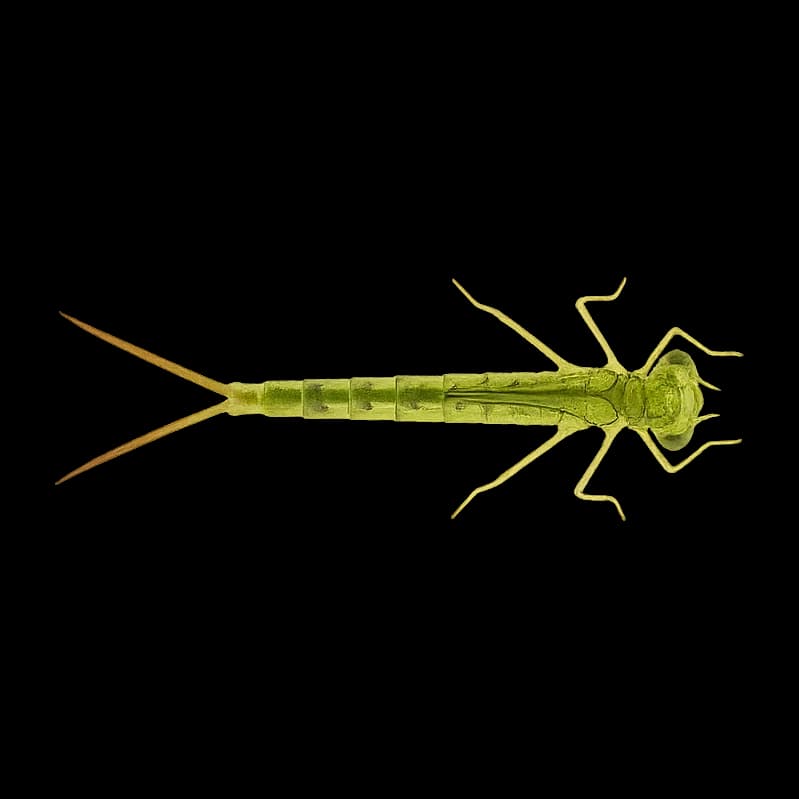
Nymphs are in the water all year, long before and after the hatch window — the season and temperature figures on this card describe when the adults emerge, not when this stage is available. It very nearly always is.
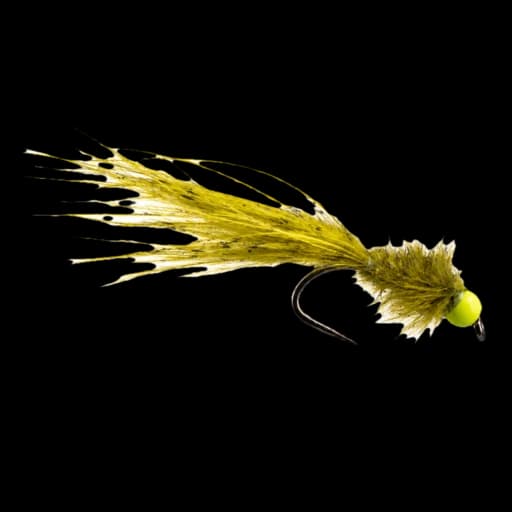
The damsel nymph is a real swimmer — a wriggling, side-to-side motion that trout lock onto — but the moment that matters is the migration. Just before emergence, from May into September on any water this far north, they leave the weed and head for the margins in numbers, all travelling the same way at the same time, and fish patrol the shallows to meet them. Fish it shallow, towards the bank, with a slow jerky retrieve. Away from that window it's a fair searching fly; during it, it's the only one worth having on. This is the Holarctic bluet of the northern reservoir and loch — a different animal from the redcoat damsels of a New Zealand or Patagonian lake, not just a southern-hemisphere version of the same fly.
- British IslesCommon
- ScandinaviaCommon
- Continental EuropeCommon
- Atlantic fringeCommon
- North America — WestCommon
- North America — EastCommon
- The AlpsOccasional
- East AsiaOccasional
- IberiaOccasional
Enallagma cyathigerum ( common blue damselfly , common bluet , or northern bluet ) is a species found mainly between latitudes 40°N and 72°N. The species can reach a length of 32 to 35 mm (1.3 to 1.4 in). It is common in many different countries including Russia, Europe and South Korea. Damselflies are an important link between the health of the aquatic ecosystem and its response to climate change.