Sheffield is not the city you expect to associate with fly fishing. You associate it with steel and hills and the particular civic pride that comes from being told you are the greenest city in England and not quite believing it. But the rivers are real, the fish are real, and if you are willing to look past the assumption that proper fly fishing only happens somewhere else, then Sheffield turns out to be one of the more interesting places in northern England to wade in with a fly rod.
Wild trout on four rivers within the city limits, Ladybower thirty minutes away, the Derwent below the dam for a serious wild-trout day, and the Derbyshire limestone dales within an hour. An angler's city, even if it doesn't advertise itself as one.
Ladybower for the headline day. The urban Don for a quick session. The Derwent below the dam for wild fish. The limestone dales when you want to ask harder questions.
Fly Fishing from Sheffield: Better Than It Lets On
Sheffield is not the city you expect to associate with fly fishing. You associate it with steel and hills and the particular civic pride that comes from being told you are the greenest city in England and not quite believing it. But the rivers are real, the fish are real, and if you are willing to peer past the assumption that proper fly fishing only happens somewhere else — somewhere with a visitor centre and a fish counter — then Sheffield turns out to be one of the more interesting places in northern England to wade in with a fly rod.
The city sits on the edge of the Peak District like someone who hasn't quite decided whether they want to go for a walk. The moors begin almost immediately to the west. The Don, Loxley, Rivelin and Sheaf flow down through the valleys into the city itself. Ladybower is thirty minutes away. The limestone dales — the Wye, the Lathkill, the Bradford — are reachable for a long afternoon. This is an angler's city, even if it doesn't particularly advertise itself as one.
The Urban Rivers: Don, Loxley, Rivelin and Sheaf
Wild trout within the city limits — and grayling on the Don, which makes it unusual among urban rivers. Tree-lined, stubborn, rewarding. Hatches of olives and caddis when the season is right. Small rods, close quarters, a short accurate cast.
Sheffield's biggest surprise is that you can fish for wild trout within the city limits and catch them. This ought to be more remarkable than it sounds, but after a few casts on the Loxley or the upper Don, it starts to feel entirely natural — which is probably the point.
The River Don has grayling as well as brown trout, which makes it unusual among urban rivers and worth knowing about. Grayling are obliging fish in winter when the trout season is closed; they take nymphs and spiders readily when you have got the depth right, and they fight with that characteristic sideways surge that always catches you slightly off guard the first time. The Loxley, Rivelin and Sheaf are smaller, quicker, tree-lined and stubborn. They reward patience and a short rod.
This is not polished fishing. The banks are not maintained, the hatches do not arrive on schedule, and you will spend some portion of your day unravelling a cast from a branch. But real fish are present — olives come off in spring, caddis in summer — and there is a particular quality to catching a wild brown trout in a city that makes it feel like a small act of discovery.
A 7 to 8 ft rod is better here than a 9-footer. On the smaller tributaries, you are dealing with overhanging trees and close quarters. Think bow-and-arrow casts, roll casts, short accurate deliveries — the kind of fishing that makes you look briefly competent and then immediately demonstrates you are not quite as competent as you thought.
Access on the Don System
Patchy and partly club-controlled. The Don Catchment Rivers Trust lists several organisations. Some stretches are more accessible than others. Check local signage, club boundaries, and EA rules before fishing.
Access on the Don system is patchy and partly club-controlled. The Don Catchment Rivers Trust lists several clubs and controlling organisations on these waters, including Tin Mill Club, Salmon & Trout South Yorkshire and Rotherham & District United Angling Federation. Some stretches are more accessible than others. Check local signage, club boundaries, and Environment Agency rules before fishing — and if you are not sure, ask someone who is.
All anglers fishing freshwater in England need a valid EA rod licence beyond any club or fishery permit. North East regional byelaws cover Yorkshire waters alongside the national rod-fishing rules. Season dates, method rules and fishery-specific permissions apply across all the venues mentioned here.
Ladybower Fisheries: The Headline Venue
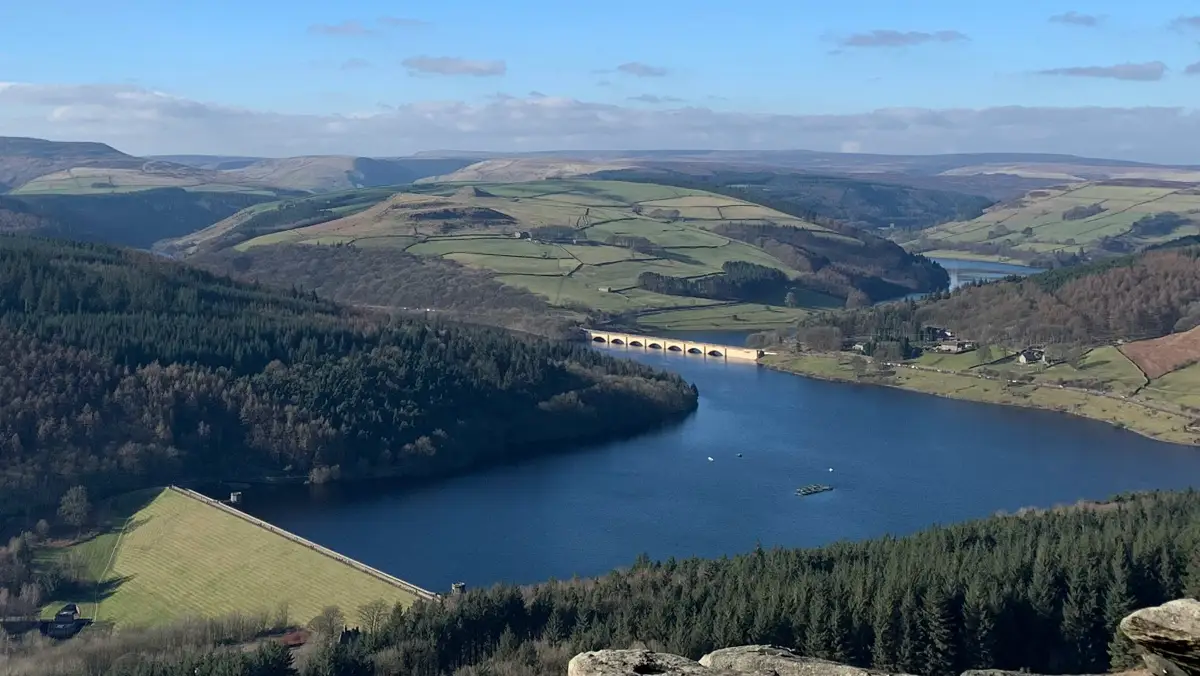
If you want to send someone to one place near Sheffield and know they will have a good day, it is Ladybower. Thirty to forty minutes, set in the kind of Peak District valley that makes you feel obscurely grateful, with bank fishing, boat and float tube options for rainbow, blue and brown trout.
If you want to send someone to one place near Sheffield and know they will have a good day, it is Ladybower. It is thirty to forty minutes from the city, set in the kind of Peak District valley that makes you feel obscurely grateful just to be in it, and it offers reliable trout fishing for rainbow, blue and brown trout with bank fishing, boat and float tube options. There are easier venues to walk away from disappointed.
Ladybower is the answer to several questions at once. For a beginner: yes, especially with tuition — Peaks Fly Fishing runs guided lessons on local waters with equipment provided. For a visitor who does not know the area: yes, this is your first day. For a stillwater angler who wants proper sport and proper scenery: also yes.
Cold water favours depth — intermediates, Di3s, lures, damsels and snakes where the rules allow. From spring onwards, as the water warms, the game shifts: buzzers become important, then diawl bachs and crunchers, then dries on a calm evening when things are rising. Washing-line tactics off a boat in a ripple can be very effective through the warmer months. Wind is not an afterthought on a reservoir of this size — a favourable bank, one where the wind is pushing in and concentrating food, can matter more than where you habitually park.
Derwent below Ladybower: Wild River Fishing within Reach
Six miles of wild river below the reservoir outflow — Derwent Fly Fishing Club and Birchinlee Fly Fishing Club. Club and private access, not casual turn-up-and-fish water. Wild brown trout, grayling, clear water. Genuinely good.
The Derbyshire Derwent below Ladybower is the river option that makes Sheffield serious as a fly-fishing base. It is close enough for an evening and credible enough for a proper wild-trout day.
Derwent Fly Fishing Club owns or leases around six miles of this river, starting below the reservoir outflow. Birchinlee Fly Fishing Club also holds water here. This is not casual turn-up-and-fish water. It is club and private access, and you will need to make arrangements in advance. But once you do, you have something genuinely good — wild brown trout, grayling in suitable stretches, clear water, tree cover, and the technical challenge of presenting a fly on a river that has had time to develop a degree of natural selectivity.
The character is a step change from the urban streams. More rural, quieter, and properly demanding in the way that wild brown trout water tends to be. This is the kind of fishing that makes Sheffield worth owning up to.
Derwent and Howden Reservoirs: Upland Wild Trout
Further up the Upper Derwent Valley: wilder, less visible, populated by wild brown trout rather than stocked fish. Waltonian Angling Club. Expect walking. Expect weather that changes. Expect modest trout with no obligation to cooperate.
Further up the Upper Derwent Valley, Derwent and Howden reservoirs offer a different proposition from Ladybower — smaller, wilder, less visible, and populated by wild brown trout rather than stocked fish. Waltonian Angling Club has water here, with bank fishing available in what can genuinely be described as isolated upland conditions.
Expect walking. Expect weather that changes. Expect modest trout that are in no way obliged to cooperate. The sedge hatches in the evenings can produce good activity on calm summer days, and traditional wet flies fished on the drift suit these waters well. This is not a venue for someone who wants quick results, but it is an excellent one for someone who wants the particular combination of solitude and expectation that only upland reservoir fishing quite provides.
Scout Dike, Penistone: South Yorkshire's Practical Option
Forty acres near Penistone, run by Barnsley Trout Club. Rainbow and brown trout. Not as scenic as Ladybower, and it doesn't try to be. Useful for a session when you don't want to commit to a full Peak District day.
Scout Dike sits north of Sheffield near Penistone and fills a useful practical role: a forty-acre stocked trout water run by Barnsley Trout Club, accessible enough for a session when you do not want to commit to a full day in the Peak District.
It is not as scenic as Ladybower, and it does not try to be. It is a working community fishery for rainbow and brown trout, and it does that job well. If you are in South Yorkshire and want fly fishing without the drive, Scout Dike is worth knowing about.
Wye, Lathkill and Bradford: The Destination Option
An hour from the city. Wild rainbow trout as well as brown trout and grayling on the Wye — Peacock Fly Fishing Club fishes seven miles of unstocked water. The Lathkill and Bradford carry the classic limestone dale character: clear water, pale gravel, selective fish. Club access throughout.
This is where Sheffield becomes genuinely interesting for a destination fly angler. An hour from the city — less, in some conditions — you can be standing in one of the most celebrated stretches of dry-fly water in England.
The River Wye is the most significant of these options, partly for its quality and partly for something rarer: it holds wild rainbow trout as well as brown trout and grayling. Peacock Fly Fishing Club fishes over seven miles of unstocked Wye water — no stocked fish, everything resident and wild — which puts it in a different category from most accessible trout fishing in northern England. These fish are experienced and patient. They have had time to develop opinions about fly selection, and they are prepared to share those opinions with you at length.
The Lathkill and Bradford carry the classic limestone dale character: clear water over pale gravel, selective fish, technical presentation, and the feeling that you are being watched by someone who knows exactly what they are doing, even when you do not. Access to all three rivers is by club membership, syndicate or pre-arranged booking. This is not a place to turn up and wander in hopefully.
Cressbrook & Litton Flyfishers fishes limestone dale water in the same Peak District tradition — clear water, wild brown trout, proper dry-fly challenge. Club access rather than day-ticket. Worth the process of investigating membership if you are going to be fishing near Sheffield regularly, because this kind of water does not turn up just anywhere.
The Sheffield Year
Spring for trout waking up on the urban rivers and Ladybower. Summer evenings for dry fly. Autumn is the best grayling season — the Don fishes through winter. Limestone dales at their best in late spring and early summer.
Spring is the urban river season. Olives come off the Don, Loxley and Rivelin from March onwards as the water warms. Small nymphs first — Hare's Ear, Pheasant Tail — then dries as the fish look up. Ladybower opens to fish on buzzers and slowly retrieved diawl bachs, especially on overcast mornings.
Summer rewards the early start and the late evening. Low, clear water on the urban rivers is an honest test of tackle and approach. On limestone water — the Wye, the Lathkill — late spring into early summer is the best of it: reasonable flows, active fish, and the full succession of Derbyshire hatches. Evening sedge fishing on Derwent and Howden through the longer days.
Autumn shifts the focus to grayling. The Don system fishes well through October and November. Ladybower and Scout Dike hold form as the reservoir temperatures settle. A good autumn evening on the upper Derwent below Ladybower — falling leaves, lower pressure, fish moving — is not something you forget quickly.
Winter is grayling season on the Don, and the urban tributaries are there when conditions allow. Ladybower is open year-round. The limestone rivers close for their season, which is worth remembering before planning a January trip to the Lathkill.
What to Carry
A 7–8 ft rod covers the urban rivers. A 9 ft 4-weight for the Derwent and limestone dales. A 9'6" 6-weight with floating and intermediate for Ladybower. Polarised glasses on all water. A thermometer in summer.
For the urban rivers — Don, Loxley, Rivelin, Sheaf — a 7 to 8 ft rod of 3 to 4 weight is the practical choice. Overhanging trees and close quarters make a 9-footer a liability. North Country spiders, small nymphs (sizes 14–16), a few dry flies for rising fish. Polarised glasses. Waders are optional on the Don if conditions allow access from the bank; they are not optional on the upper Derwent.
For the Derwent below Ladybower and the limestone rivers: a 9 ft 4-weight with a floating line and long tapered leaders. Dry flies in sizes 14–18 — CDC olives, pale wateries, comparaduns — and a range of nymphs for when fish are not looking up. The limestone rivers are selective water; a well-tied small fly on a fine tippet matters more than anything else in the box.
For Ladybower and Scout Dike: move to a 9'6" rod of 6 weight and bring both a floating and an intermediate line. Buzzers in black and olive sizes 12–16, diawl bachs, damsels, a few lures for when the fish are moving. Check barbless requirements before fishing.
The Final Verdict
Ladybower for the headline day. The urban rivers when you have two hours and a rod. The Derwent below the dam for the serious wild-trout session. The limestone dales when you want to ask harder questions. Scout Dike when you want something closer. A better hand than Sheffield admits to holding.
The thing about Sheffield as a fly-fishing base is that it has wild fish on four rivers within the city, and then opens into the Peak District almost immediately. Most cities in the north would settle for one of those facts.
Ladybower for the headline day — reliable, scenic, beginner-friendly without being patronising. The urban Don and Loxley when you have a couple of hours and access to a short rod. The Derwent below Ladybower for the serious wild-trout day once you have made the right arrangements. Derwent and Howden when you want something quieter and do not mind the walk. Scout Dike when the Peak District feels like too much commitment. The limestone dales — the Wye, the Lathkill, the Bradford — when you want to ask the harder questions that selective wild fish tend to ask back.
It is a strong set of options. It is more than most people give Sheffield credit for, and it is enough — for an angler paying attention — to build a season around.