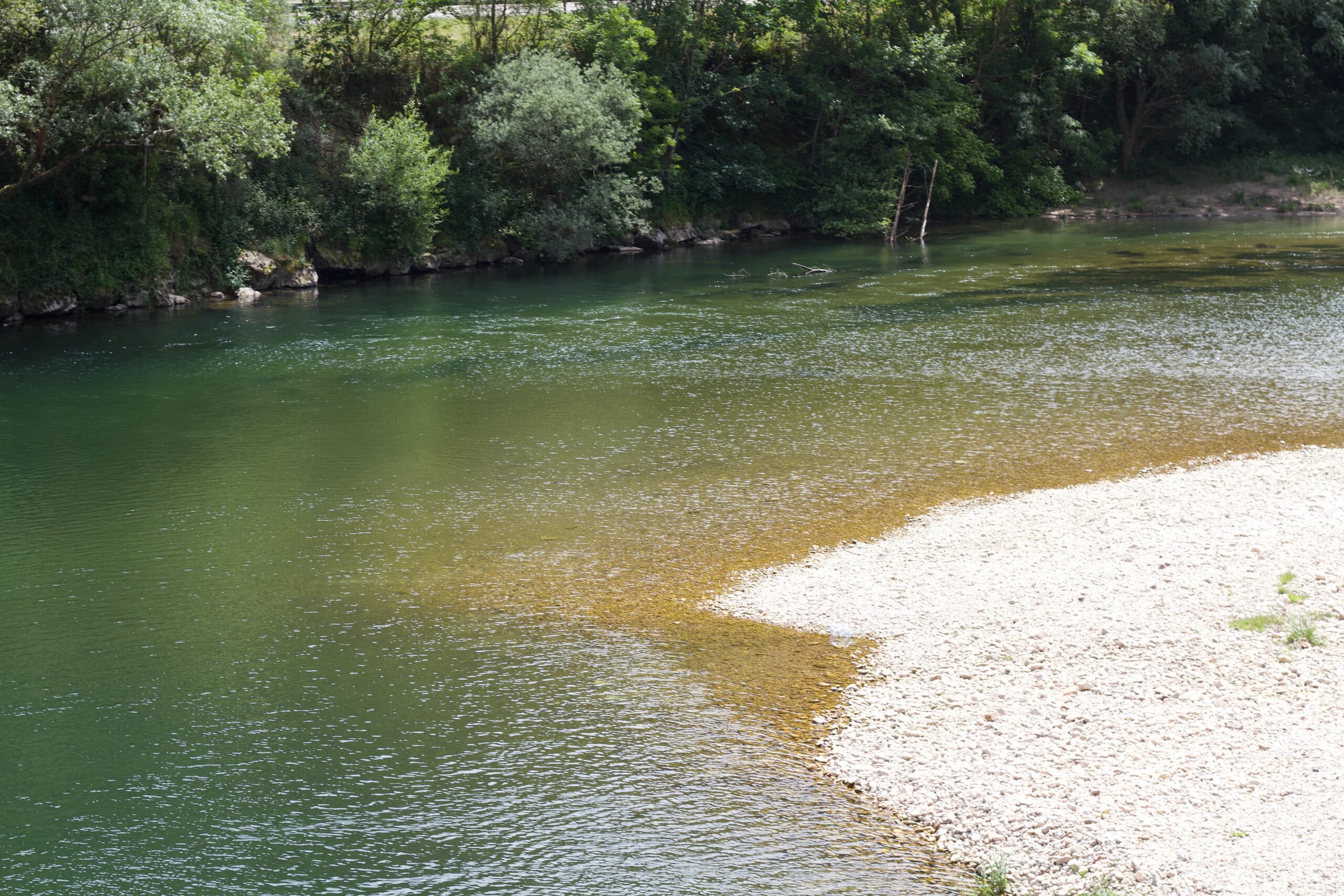
Oviedo does not need to travel to find its river. The Nalón runs through the city itself, and the Narcea — Asturias's highest-quota salmon river — is a short drive away.
Wild Atlantic salmon fishing here runs on a genuinely different system: named cotos allocated by public lottery rather than club membership. Learn the sorteo, and this is one of the last places in continental Europe where wild salmon fishing is still a living tradition.
Enter the September sorteo for a real shot at the Nalón or Narcea. The intensivo reservoirs for the day that doesn't depend on a lottery.
Fly Fishing from Oviedo: On the Nalón, Beside the Narcea
Oviedo does not need to travel to find its river. The Nalón runs through the city itself, a salmon and sea trout river carrying the same Atlantic runs that make this stretch of northern Spain one of the last places in continental Europe where wild salmon fishing is still a living tradition rather than a historical footnote.
A short drive further brings the Narcea into range — consistently one of Asturias's best salmon rivers, and the one carrying the region's highest salmon quota. Between the two, plus the Caudal running down into the Nalón and a handful of intensively-stocked reservoirs on the city's outskirts, Oviedo has a genuine case as a fly-fishing base — just one that works on a different system to anywhere else on this list.
The Coto System, Briefly
Wild salmon and trout fishing in Asturias runs through a permit lottery (sorteo) for named cotos, applied for each September with draws in October (salmon and trout) and April (sea trout) — a genuinely different model from anywhere else in these guides.
Spain does not work like Britain or Scandinavia here. A Principado de Asturias fishing licence (licencia de pesca) is the baseline requirement for anyone fishing fresh water in the region — but for the wild rivers, that licence alone does not get you onto the water. Asturias's best salmon and trout stretches are divided into named cotos (fishing reserves), and access to most of them is allocated by public lottery, not first-come permits or club membership.
The application window for the coto sorteo typically opens in September and runs about three weeks; the draw for salmon and trout cotos is usually held in October, with the sea trout (reo) draw in April. Applications go through the Negociado de Pesca in Oviedo or the Principado de Asturias's online portal. Quotas are real and enforced: no more than three salmon or six trout per angler (including any supervised minor) per coto. The Nalón is fishable for salmon only as far upstream as the Puente Peñaflor in Grado; the Narcea, in most recent seasons, has carried the highest salmon quota of any Asturian river.
The Nalón and Narcea: Wild Salmon Water
The Nalón in the city itself, the Narcea a short drive west — both allocated through the coto sorteo, both carrying genuine wild Atlantic salmon alongside sea trout and brown trout.
The Nalón inside and around Oviedo carries salmon, sea trout and brown trout, with the salmon-fishable stretch running down from Puente Peñaflor in Grado. Fishing a coto here means entering the autumn sorteo the season before, or watching for any cotos left unassigned after the initial draw — worth checking with the Negociado de Pesca directly, since unclaimed permits are sometimes released later in the season.
The Narcea, reached in well under an hour from the city, is the more serious salmon destination of the two — Asturias's highest-quota river in recent seasons, and one with a genuine reputation among anglers who travel specifically for Cantabrian-coast salmon. Sea trout here, as across Cantabrian Spain generally, run as a daytime fish rather than the nocturnal pursuit British anglers expect — fished in daylight, often alongside salmon, in the same pools and with broadly the same methods.
The Coto Intensivo Reservoirs: The Easier Day
San Andrés, Trasona and La Granda — three intensively-stocked reservoirs on Oviedo's outskirts, open March to November, permit required but without the lottery odds of the wild rivers.
When the sorteo has not gone your way, or you simply want a day without wrestling with the wild-river system, Asturias runs a second tier of fishing: the coto intensivo. San Andrés (on the Aboño, near Gijón), Trasona and La Granda are intensively-stocked reservoirs holding rainbow and common trout, all open from 1 March to 30 November, and all accessible through the same permit system as the wild cotos — but without a lottery, since these reservoirs are stocked specifically to meet demand rather than allocated against a fixed wild population.
This is the honest equivalent of a Kilnsey Park or an Avington for the Asturian angler: a straightforward, achievable day, useful for a first Spanish fly-fishing outing or simply when the wild rivers are running high and coloured.
The Oviedo Year
Salmon and trout cotos open in spring; sea trout typically follow behind. Intensive reservoirs run March through November. Autumn is when the following year's permit sorteo opens for application.
Wild salmon and trout seasons on Asturian rivers open in spring and run through into summer, with exact dates set annually by the Principado — confirm current-season dates before planning a trip, since they are gazetted each year in the Boletín Oficial del Principado de Asturias rather than fixed permanently. Sea trout typically follow a slightly later window, with the reo sorteo held in April.
The coto intensivo reservoirs run the longest season of anything covered here, open 1 March to 30 November, which makes them a reliable fallback across most of the year regardless of what the wild rivers or the lottery are doing.
September is worth marking regardless of whether you are fishing that month: it is when the following season's coto sorteo application window opens, and missing it means missing a full year's chance at the wild rivers.
What to Carry
A 9'–9'6" 7–8 weight double-hander or a stout single-hander for Nalón and Narcea salmon. A 9'–9'6" 5–6 weight for the intensivo reservoirs and brown trout water.
For Nalón and Narcea salmon: a 9' to 9'6" 7- or 8-weight rod, single or double-handed depending on the width of the pool being fished, with both floating and sink-tip lines to cover the range of water heights the coto season might present. Spanish and Cantabrian salmon patterns run smaller and sparser than their Scottish equivalents — worth asking locally or checking with the coto's own guidance rather than assuming a Scottish fly box translates directly.
For the coto intensivo reservoirs and brown trout water: a 9' to 9'6" 5- or 6-weight with a floating line covers stocked rainbows and resident browns alike. Standard nymph and small lure patterns work well on the intensivos.
Carry your licencia de pesca and coto permit at all times — checks are routine on Asturian rivers, and quotas (three salmon, six trout per coto) are taken seriously.
The Final Verdict
Enter the September sorteo for a real shot at the Nalón or Narcea. The intensivo reservoirs for the day that doesn't depend on a lottery. Either way, this is wild Atlantic salmon fishing in continental Europe — worth the different system it takes to get there.
Oviedo's case rests on something increasingly rare: a European city with a genuine wild Atlantic salmon river running through it, and a proper salmon river close enough to reach for the day. That the access runs through a permit lottery rather than a club subscription is not a complication to route around — it is simply how this particular tradition has organised itself, and it is worth learning rather than avoiding.
Enter the September sorteo if you want a real shot at the Nalón or the Narcea. Lean on San Andrés, Trasona or La Granda when the lottery has not gone your way, or when a straightforward day is what's needed. Either way, this is one of the last places on the continent where wild salmon fishing is still simply what the local river does, not something people travel to remember.