Grayling Steel Blue
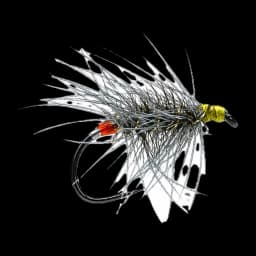
Thinly wound peacock herl ribbed with fine gold wire, a blue dun hackle palmered the whole length of it, a bright orange tag at the bend and orange silk at the head — sparse, spidery and deliberately untidy. One of the few flies in the canon designed for grayling from the outset rather than handed down from the trout box, and it fishes wet or dry. Fish it small; the winter olives it answers are rarely bigger than a 16.
October to December, on the mild overcast days when a few winter olives come off around midday and the shoal starts working the glide. The delayed strike matters more than the pattern.
The palmered hackle does two jobs at once: it holds the fly in the surface film without a hackle collar’s bulk, and its long soft fibres move constantly even on a dead drift. The orange tag gives a cold-water grayling something to aim at.