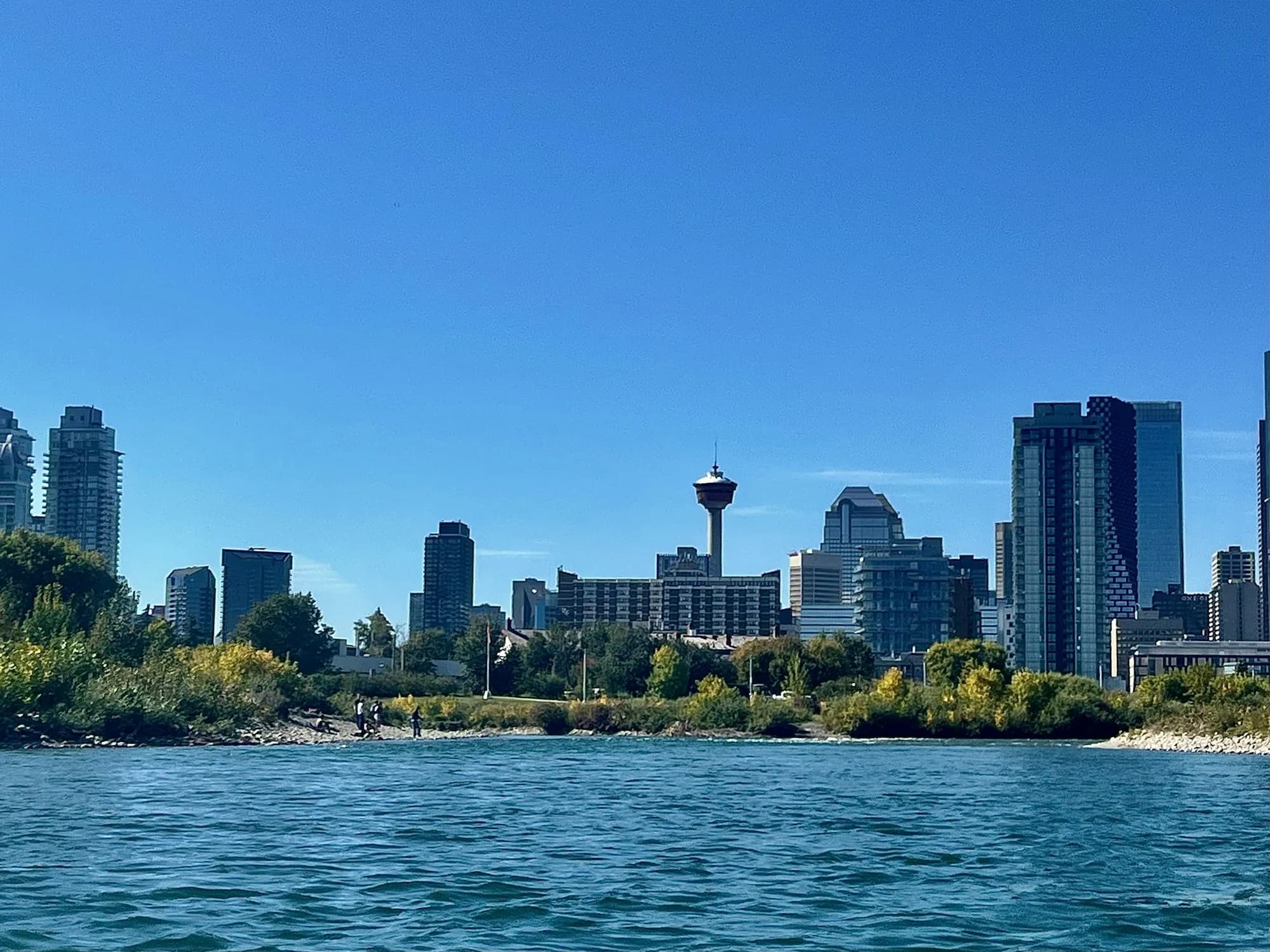
Calgary has the enviable problem of a world-class wild trout river running through the middle of town. The Bow is cold, nutrient-rich and stuffed with brown and rainbow trout that are wild and self-sustaining, and it fishes much of the year. An hour or so to the west and south, the foothills rivers — the Elbow, Sheep and Highwood — hold native cutthroat and bull trout and open for the summer after the spring spawning closure, though runoff can keep them high into July. Between them, there is a fishing year here that does not depend on the weather in July.
Bow for the big wild fish. Foothills for native cutthroat. Red Deer for autumn browns.
Fly Fishing from Calgary: Wild Trout in the City
It is one of the stranger facts of North American fly fishing that a city of over a million people sits on a world-class wild trout river, and that most of the fish in it have never been stocked (the trout are introduced, but they are wild now). The Bow is cold, rich and productive below Bearspaw Dam, and for a Calgary angler it is an after-work river and a weekend river and a December river, all in one.
This guide is about access: where to go, what kind of water each place is, who issues the licence and where the rules live. The method sits in the other playbooks. The thing the water itself asks for, in every case, is gentle handling: these are wild, native or largely wild fish, and the rules reflect it.
The Bow River: Wild Trout, All Year
Bearspaw to Policeman's Flats through the city, and McKinnon Flats to Carseland south of it.
The Calgary reach of the Bow, from Bearspaw Dam to Policeman's Flats, is mostly a float game: long riffles and seams, prolific hatches and fish that pull hard. Summer brings strong hatches and hopper fishing; the shoulder seasons reward streamers and nymphs through the deeper runs. It fishes much of the year (check the regulations for any seasonal restrictions on your reach), and these fish are the whole reason the river is what it is, so release them.
South of the city, McKinnon Flats to Carseland is the classic Bow float: long riffles and deep glides on the prairie edge, heavy wild browns and rainbows, and a real chance of a large fish on a dry in summer. It is drift-boat water with more room and a wilder feel than the city reach. Check the current regulations for the reach you plan to fish, and any boat-launch or access rules.
The Foothills Rivers: Elbow, Sheep and Highwood
Native cutthroat and bull trout on clear, cold freestones, open from mid-June after the spawning closure, though runoff often keeps them high into July.
The Elbow, out of Kananaskis past Elbow Falls and Bragg Creek, is accessible foothills dry-fly water holding native cutthroat and bull trout, with rainbows and browns toward the city. It is close to Calgary and popular. Above, it is native-trout water with a spawning closure, catch-and-release and a bait ban, and it fishes well once open from mid-June, though runoff often keeps it high and cold until late June or July, so expect July for dependable dry-fly water in most years, through to October.
The Sheep, west of Turner Valley, is intimate Highwood-system freestone through riffles, pools and little canyons. The Highwood itself, out of Kananaskis towards Longview, is a genuine summer dry-fly river once it opens after the spawning closure. The upper reaches are native-trout water with their own rules, while the lower stretches also hold introduced rainbows and browns and the rules differ by reach: respect the closures, fish lightly, and release bull trout without question, keeping them in the water. If you are parking in Kananaskis Country, check whether a conservation pass is required.
Quiet Water: Fallentimber and the Livingstone
Small, pretty and low-pressure. The days you remember.
Fallentimber Creek is a small, winding brown-trout stream in the Red Deer system north-west of Cochrane: clear water, undercut banks and quiet pools. It is low-pressure small-stream fishing, easy to overlook and rewarding when you do not. It is open from mid-June to October (check the dates), though early-season flows can run high.
The Livingstone River, off the Livingstone Range, is small clear cutthroat water: pockets and plunge pools full of willing native westslope cutthroat, with bull trout in the better runs. It fishes from late June through October, catch-and-release, and rewards a single dry fly and a careful approach. It is a longer drive, so plan it as a day.
The Red Deer and the Autumn Brown Trout
The upper Red Deer near Sundre: broad, productive and less pressured than the Calgary rivers.
The upper Red Deer near Sundre is a broad, productive foothills freestone with long riffles, gravel bars and good holding runs. Wild browns and rainbows share it with bull trout and whitefish, and it floats and wades well. It is less pressured than the Calgary-area rivers.
It fishes from summer through a strong autumn brown trout run, which makes it one of the better late-season trips from Calgary. Mind the bull trout: zero limit, always released and kept in the water. Brown trout spawn in autumn, so avoid wading gravel where fish are on redds.
Fishing Beyond July
The Bow is a winter river; the Red Deer is an autumn river; the foothills close out in October.
Alberta trout fishing is thought of as a summer pursuit, but the water is not. The Bow fishes all year, with streamers and nymphs through the deeper runs in the shoulder seasons and winter. Autumn is brown trout season on the Bow and the Red Deer. The foothills rivers open in mid-June but are at their best from July to October, then largely done for the year. Spring on the Bow (March to May) is nymph and small mayfly water, and late summer brings hoppers.
Whirling disease has been found in Alberta, including the Bow system, so clean, drain and dry your boat, waders and boots between waters, and check the current gear and decontamination rules. Winter fishing is cold-weather work: dress for it, watch the ice, and check access and the current regulations. Fish a deep, slow nymph or a streamer, and go in the middle of the day.
Gear and Licences
A nine-foot five-weight, a sink-tip line and a licence from the right agency.
A nine-foot five-weight covers almost every water on this list; a six-weight and a sink-tip or intermediate line help for streamers on the Bow. For the foothills, a lighter four-weight and a small selection of dry flies, caddis, attractor patterns and terrestrials suit the small water. Bear spray is sensible in the foothills.
Alberta Environment and Protected Areas issues sportfishing licences and publishes the Alberta Sportfishing Regulations, which cover seasons, closures, bait bans and native-trout rules. Always check the current regulations for the specific water.