
Freestone · Sedimentary · Shikoku, JP

Shimanto River

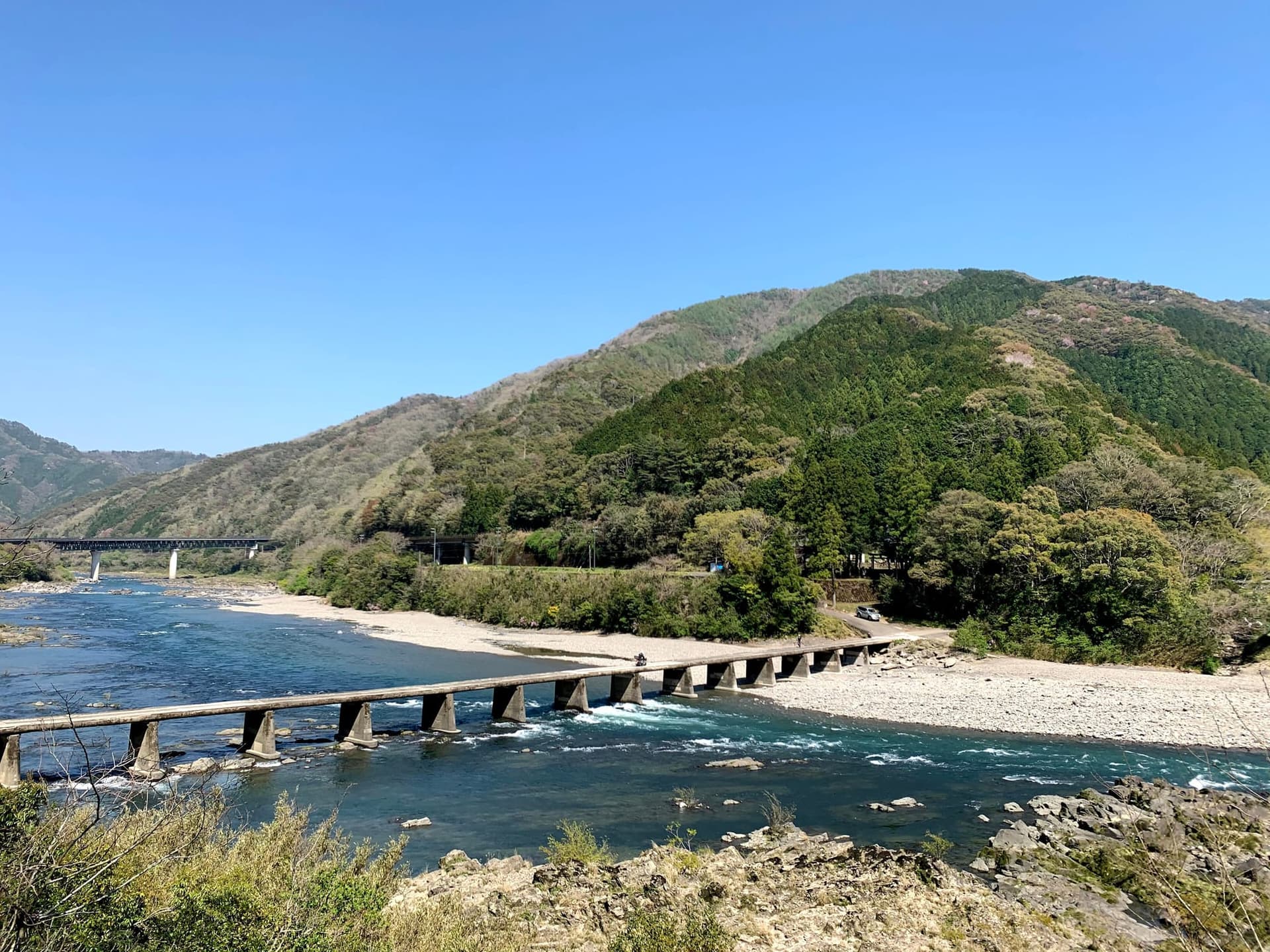
Spring in Shimanto River

The Shimanto is called Japan's last clear river — a long, undammed, gently flowing water through rural Kōchi crossed by its famous low 'sinking bridges', where ayu and amago share the river with a way of life that has changed little.

Tomorrow · Slow going — pick your moments
Sakasa kebari
Forecast · Tomorrow
Slow going — pick your moments
Slow going — pick your moments and do not force it.
80% projected
Today's fly
Sakasa kebari
Sakasa kebari
Conditions on the water · Tomorrow
Estimate
Level
Light rain recently
No gauge reading
Water temp18.2°C
ClarityClearing
Weather24°C
WindN 7 km/h
Pressure1021 hPa
Rain · recent7.4 mm
Rain · ahead1.3 mm

No gauge on this water — readings are regional estimates from weather, not a live gauge.

Water temperature for Amago
Warm — slow
18°C est.ideal 917°C
0°14°28°
How to fish it · for Amago
When
Spring to the autumn closure (salmonids in the upper river)
Where
The Shimanto is called Japan's last clear river — a long, undammed, gently flowing water through rural Kōchi crossed by its famous low 'sinking bridges',…
Why this works
Water at 17.5°C — above the masu salmon caution line (17°C). Fish dawn or dusk only. Land it fast, wet hands, no air shots.
Likely species
Hatch timeline · tomorrowPeak at 2pm

12pm(now) Heather Fly

Stage: Terrestrials on topApproach: Dry flyActivity: 86%
Also:Glossosoma (Japan)86%Black Gnat59%Isonychia japonica53%
Peak emergence windowWeather boost10 food groups active

Peak activity at 2pmIsonychia japonica (Isonychia japonica, Weather boost)

Sub-surface · on the nymphunder the surface

Hatch predictions

Top nymph shown — see all 3 guilds as a supporter.

Start free trial

14-day free trial. Cancel anytime.

Beyond the hatch · worth watchingambient prey(1)

Hatch predictions

Top prey shown — see all 4 as a supporter.

Start free trial

14-day free trial. Cancel anytime.

Evidence
Records-basedModerate confidence

Based on species-occurrence records, not local invertebrate surveys.

Through the year
0–3 scale · September highlighted
J
F
M
A
M
J
J
A
S
O
N
D
Stenopsyche CaddisHatch
2
3
3
2
Cicada (Semi)Hatch
2
2
Ephemera strigata (Mid-Reach Keiryu Mayfly)Hatch
2
3
3
3
2
Epeorus latifolium (Riffle Mayfly)Hatch
2
3
3
3
3
3
2

Numbers are intensity 0 (none) to 3 (peak) — a guide, not a guarantee.

Ranked for today
Amago fly box
EH
Elk Hair / Stenopsyche caddis
12–14 · Sedge
Evening sedge — twitch or dead-drift it as the light goes.
CB
Cicada & beetle terrestrials (midsummer)
10–12 · Terrestrial
Fish it tight to the bank on warm, breezy days.
Permits & access
Permit required — see local rules.
  • Co-operative yugyoken required; ayu and salmonid rules differ; spawning closure in autumn
  • Confirm the exact reach.
What's coming
Plan ahead
5-day outlook
Water here around 18°C. Nothing cooler within range — carry a thermometer.
Gallery · 2
  1. Spring in Shimanto River
    Japan's longest free-flowing river.
  2. Terrain map of the venue
    Terrain map
About this water

The Shimanto is called Japan's last clear river — a long, undammed, gently flowing water through rural Kōchi crossed by its famous low 'sinking bridges', where ayu and amago share the river with a way of life that has changed little. Broad, slow, pastoral fishing in a valley that feels like an older Japan.

Under the surface

Japan's 'last clear river' — long, largely undammed, sliding through rural Kōchi past the low chinkabashi sinking-bridges. Amago and iwana hold in the upper reaches; ayu and an old river culture fill the lower. Broad, gentle, pastoral water.

Wading: Gentle but broad water, soft banks

  • River
  • Sedimentary
  • Unconfined
  • Pool riffle
  • Glide
Conservation note

White-spotted char (iwana) and amago in the upper reaches (ayu in the lower river).

The full read · show the working · for Amago · confidence 80%
How the 31 is built — score × weight = contribution
Temperature80 × 28%22.4
Flow45 × 22%9.9
Clarity95 × 18%17.1
Feeding Time30 × 13%3.9
Pressure80 × 7%5.6
Insect activity51 × 12%6.1
Conditions total= 65
Can you trust it?
Water temperatureair-to-water estimateestimated
Level / flowon-river gaugeobserved
Prey activitymodelled from regional profilemodelled
What would change the calculation
The dawn and dusk windows score higher than the midday lull.
Directions
Seasons & zones
  • Char late February to Aprillate September to mid-October

    Honshu/Shikoku/Kyushu keiryu are managed by local fishery co-operatives — a yugyoken (day/annual ticket) is required, and most streams close around 30 September / mid-October for spawning. Species are surfaced in prose only (no engine slugs for yamame, amago or iwana). Legal status: guidance_not_permission.

Related guides
Booking & contacts