


Lake trout, char, and brown trout. Bank fishing at inflows and outlets is possible, but the exact arm and canton determine access and rules.
- Lake
- Limestone
With limited drift, anchor or fish static from sheltered positions. Work a bushy searching pattern on the bob and drop a contrasting nymph on the point. In the calm, a single dry fly or a slowly-fished nymph tends to out-fish an active retrieve.
If the main plan is not working, switch to a smaller, more imitative pattern fished slower and deeper. A change of drift angle can also make a difference.
Keep an eye on changing conditions — wind shifts and cloud breaks can trigger short feeding spells.
Flat calm suits bank fishing near features — points, weed beds, and inflows where fish patrol.
Hatch predictions
Top nymph shown — see all 2 guilds as a supporter.
Start free trial14-day free trial. Cancel anytime.
Hatch predictions
Top prey shown — see all 4 as a supporter.
Start free trial14-day free trial. Cancel anytime.
Numbers are intensity 0 (none) to 3 (peak) — a guide, not a guarantee.
A compact but high-quality Swiss box covering alpine streams, mountain lakes, and Jura salmonid rivers such as the Doubs.
A good match for Lake Lucerne — most conditions are close to what it fishes best in.
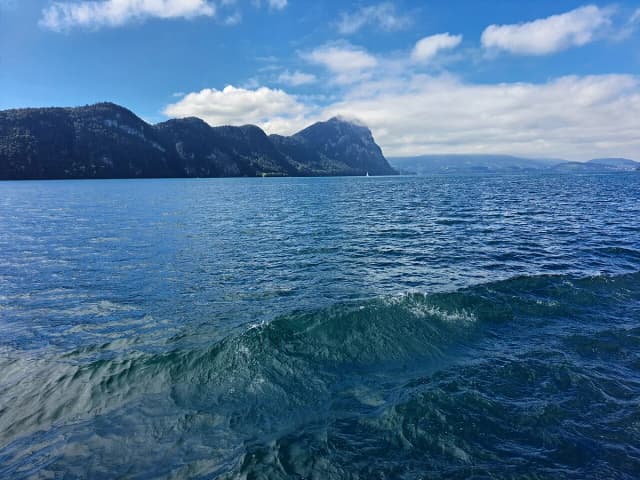
Lake trout, char, and brown trout. Bank fishing at inflows and outlets is possible, but the exact arm and canton determine access and rules.
Alpine char (Saibling) — seasons, minimum sizes, and retention rules are set by each canton's fisheries authority. Different cantons may apply different closed seasons or catch restrictions. Always verify with the specific cantonal authority for the arm you intend to fish.
Lake trout (Seeforelle) — seasons and regulations are set by each canton's fisheries authority. Minimum sizes, retention rules, and boat permits vary by canton and sometimes by arm. Check regulations with the relevant cantonal office before fishing.
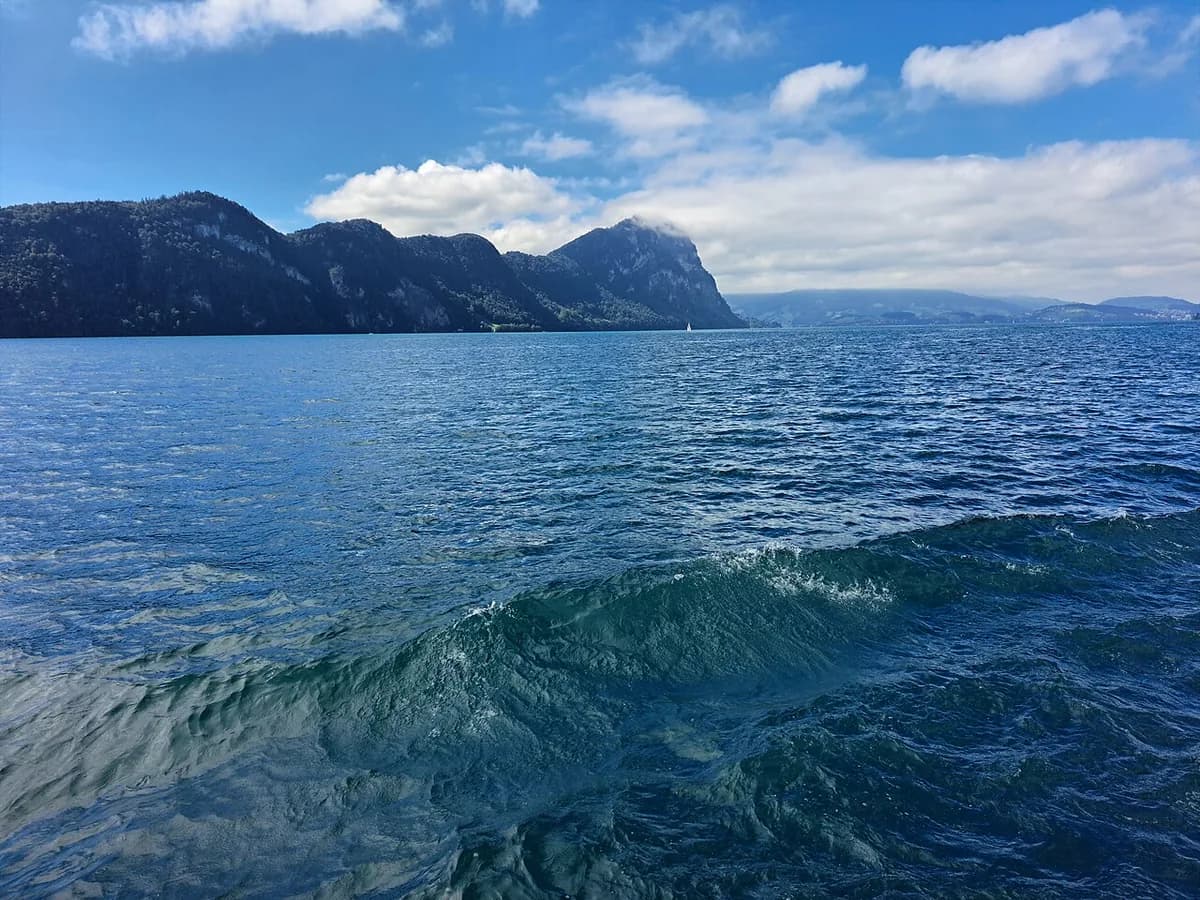
Iconic Swiss lake surrounded by mountains with complex shape, multiple arms, and genuinely multi-canton permit complexity.
With limited drift, anchor or fish static from sheltered positions. Work a bushy searching pattern on the bob and drop a contrasting nymph on the point. In the calm, a single dry fly or a slowly-fished nymph tends to out-fish an active retrieve.
If the main plan is not working, switch to a smaller, more imitative pattern fished slower and deeper. A change of drift angle can also make a difference.
Keep an eye on changing conditions — wind shifts and cloud breaks can trigger short feeding spells.
Flat calm suits bank fishing near features — points, weed beds, and inflows where fish patrol.
Hatch predictions
Top nymph shown — see all 2 guilds as a supporter.
Start free trial14-day free trial. Cancel anytime.
Hatch predictions
Top prey shown — see all 4 as a supporter.
Start free trial14-day free trial. Cancel anytime.
Numbers are intensity 0 (none) to 3 (peak) — a guide, not a guarantee.
A compact but high-quality Swiss box covering alpine streams, mountain lakes, and Jura salmonid rivers such as the Doubs.
A good match for Lake Lucerne — most conditions are close to what it fishes best in.
Lake trout, char, and brown trout. Bank fishing at inflows and outlets is possible, but the exact arm and canton determine access and rules.
Alpine char (Saibling) — seasons, minimum sizes, and retention rules are set by each canton's fisheries authority. Different cantons may apply different closed seasons or catch restrictions. Always verify with the specific cantonal authority for the arm you intend to fish.
Lake trout (Seeforelle) — seasons and regulations are set by each canton's fisheries authority. Minimum sizes, retention rules, and boat permits vary by canton and sometimes by arm. Check regulations with the relevant cantonal office before fishing.
Lake Lucerne is a lake in Central Switzerland. Its recorded elevation is about 434 m above sea level and the catchment geology is limestone. Our data lists brown trout, lake trout and char here. The trout season is recorded as running from 1 March to 31 December. The lake trout season is recorded as running from 1 March to 31 December. Best window recorded for anglers: May–September. Core methods listed: trolling from boat; streamer; nymph from boat. Level and flow data for this water is linked from 1 gauge (data from the Swiss FOEN (BAFU)). Nearby waters in our listings include Muota at 24 km, Emme at 51 km and Lake Brienz at 55 km.