Spate · Granite · Swedish Lapland (Norrbotten), SE

Lainioälven

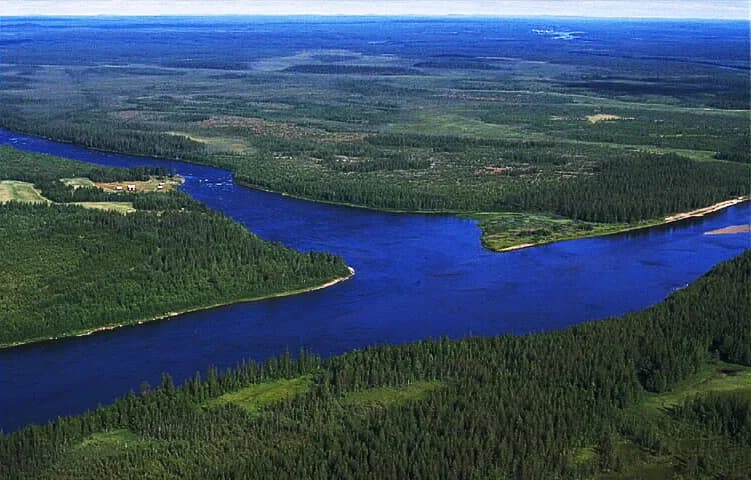
Lainioälven — Palokorva and the rivers Pitkäkoski and Lainioälven

Major tributary of the Torne system and one of Swedish Lapland's top salmon waters.

Today · Closed season
Forecast · Today
Closed season
Out of season. File this water for the right month.
50% projected
Conditions on the water · Today
Estimate
Level
Dry recently
No gauge reading
Water temp1.1°C
ClarityClear
Weather-7°C
WindN 4 km/h
Pressure987 hPa
Rain · recent1.4 mm
Rain · ahead0.0 mm

No gauge on this water — readings are regional estimates from weather, not a live gauge.

Water temperature for Atlantic Salmon
Too cold
1°C est.ideal 10–16°C
0°14°28°
How to fish it · for Atlantic Salmon
When
Morning into early afternoon.
Where
Pool tails, steadier runs, and any water with pace.
Method
Fish a sensible line-and-fly combination for the height and pace of water.
Kit
13 ft #8/9 double-hander in spate, 10 ft #8 single in low water. Floating line plus a fast-sink tip. 12–15 lb fluoro tippet.
Sub-surface · on the nymphunder the surface

Hatch predictions

Top nymph shown — see all 3 guilds as a supporter.

Start free trial

14-day free trial. Cancel anytime.

Evidence
Survey-backed · regionalHigh confidence

Backed by regional invertebrate surveys; no sampling on this exact reach yet.

Through the year
0–3 scale · November highlighted
J
F
M
A
M
J
J
A
S
O
N
D
Salmon runRun
1
2
1
Yellow SallyHatch
2
3
3
2
Nordic SpringflyHatch
2
3
3
2
Late March BrownHatch
2
3
2
Large Brook DunHatch
2
3
2

Numbers are intensity 0 (none) to 3 (peak) — a guide, not a guarantee.

Ranked for today
Atlantic Salmon fly box
SB
Small black tube
tube small · Swing
Beats · 2

The Lainio is the most important tributary of the Torne system — more than half the Torne's salmon run up it to spawn — and it inherits the same cross-border, annually-set rules: verify the current year's salmon dates and quota before you travel. Sweden's right to roam does not grant fishing rights; you need a permit (fiskekort) for the local water plus at least one gill tag before fishing salmon, and female salmon may not be kept and must be released. Salmon fishing closes 1 September–31 December. Most of the river is local FVOF permit water bought through iFiske or the beat manager, but one notable stretch is private: Camp Onka holds a lodge beat of private double-bank water (up to about 8 rods per week, on beats described as Lipistokoski, Onka and Phatakoski), booked as a package and not available as a public day-ticket.

Lainio FVOF permit waterMembers
The main public route: roughly 245 km of fully unregulated Lapland wilderness river, fished on local FVOF permits (fiskekort) most easily bought through iFiske.
Camp Onka — private lodge waterPrivate
A private lodge beat on the Lainio, not open permit water.
Permits & access
Permit required — see local rules.
  • Fiskekort required through the local association or beat manager
  • Remote tributary rules can vary by stretch, so check access, camping restrictions and any fly-only sections before travelling.
What's coming
Plan ahead
5-day outlook
Gallery · 2
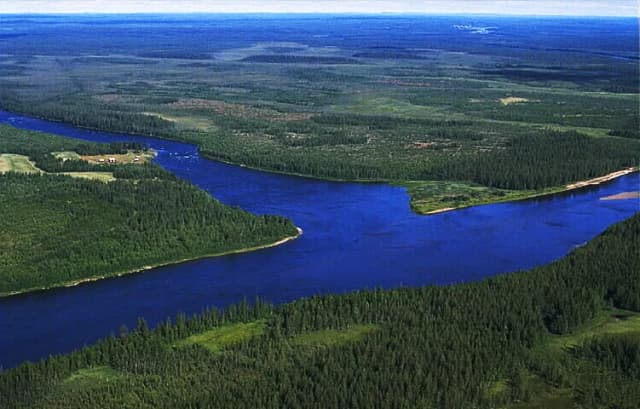
  1. Lainioälven — Palokorva and the rivers Pitkäkoski and Lainioälven
    Palokorva and the rivers Pitkäkoski and Lainioälven
  2. Terrain map of the venue
    Terrain map
About this water

Tourism and guide material repeatedly singles out the Lainio as a premier northern salmon river. Clear granite water. Hitch tubes and small dark flies effective. Also holds grayling and trout. Shorter than the main Torne but more intimate. Fiskekort from local FVOF. Atlantic salmon are managed under national rules (Havs- och vattenmyndigheten) — quotas, size limits and catch-and-release apply and differ between Baltic and west-coast rivers; check current rules before fishing.

Under the surface

The Lainioälven runs some two hundred and forty-five kilometres through pure Lapland wilderness, fully unregulated, before it gives its water to the great Torne. It is the most important tributary in that system — more than half the Torne's salmon turn up it to spawn — and a genuinely wild river, threading forest and mire with no dam or settlement to check it. For all its size it is a kindly river to fish: broad and gravel-bedded, easy to wade, with the salmon's resting lies laid out along long even runs over hard shield rock. These are Baltic salmon, big-shouldered fish for which a metre-long specimen is good but not remarkable, sharing the water with grayling and trout. The character is open northern water on a gentle gradient. Wading is unusually secure for a river of this scale, the firm gravel letting an angler cover the long runs in comfort.

Wading: Scale of the open runs

  • Granite
  • Unconfined
  • Pool riffle
Water quality (WFD)
  • Ecology: Moderate
  • Chemical: Unknown

WFD classification · SE2D63BE8D-1C74-4C8E-B001-20C795F5A674

Why this score · for Atlantic Salmon
  • Temperature030% weight
  • Flow6025% weight
  • Clarity9520% weight
  • Feeding Time3015% weight
  • Pressure8510% weight
Seasons & zones
  • Salmon 8 June → 25 August
  • Trout Opens June–September
  • Char varies_by_permit → varies_by_permit

    Swedish Arctic char (röding) seasons are set by local permit areas (fiskevårdsområden/FVOF). Each permit covers specific waters, species, methods, bag limits and dates. Northern Sweden/Lapland permits commonly regulate char alongside trout. Check the specific fiskekort for the water before fishing char.

Related guides
Booking & contacts
At a glance

Lainioälven is a spate river in Swedish Lapland (Norrbotten), Sweden. Its recorded elevation is about 245 m above sea level and the catchment geology is granite. The river is described as roughly 200 km long. Our data lists 4 species here, including brown trout, char and salmon. It is classed as a salmon river. The salmon season is recorded as running from 8 June to 25 August. Core methods listed: Salmon fly; Spey casting; Tube fly. Level and flow data for this water is linked from 1 gauge (data from SMHI). Its Water Framework Directive ecological status is recorded as moderate. Nearby waters in our listings include Kalixälven at 114 km, Torneälven at 124 km and Luleälven at 149 km.