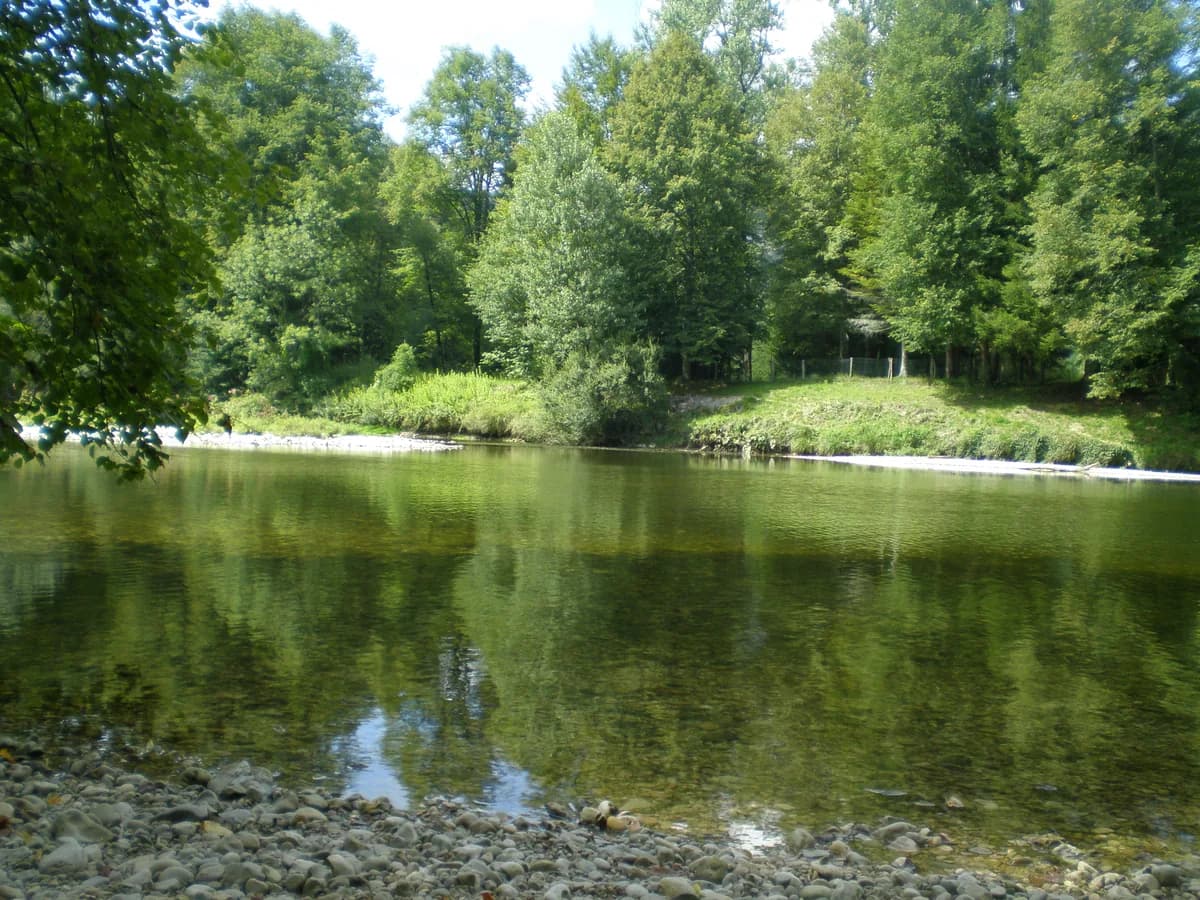


The Bienne rises high on the Jura plateau above Morez and runs one hundred kilometres through limestone gorges, meadows, and finally to the Ain with the composure of water that knows precisely where it belongs. The upper reaches are pocket water — narrow, cold, quick-flowing — where wild Jura trout respond to anything cast in front of them without ceremony. The middle reaches around Saint-Claude open into glides and riffles where the fishing requires the restraint the water itself demands: fine tippets, small dries worked to genuinely rising fish, and an absolute refusal to hurry. The grayling below Saint-Claude hold in numbers that astonish, particularly in September when the season turns toward their favour. This is the river where French competition nymphing found its grammar — where team tactics and long leaders and Perdigon techniques were refined into precision. If you want to understand why European nymphing strategies took hold, spend a day watching the locals work this water. Autumn and spring offer the cleanest fishing; summer thermal buffering fades as the karst dries and the plateau warms. This is a river for patient anglers who understand that excellence, once found, is worth the discipline required to meet it.
In chalk-spring and karst trout systems, generally stable temperatures broaden olive and other mayfly activity from early spring into autumn, with strong evening caddis, steady subsurface scuds and buzzers where clear groundwater and weedbeds develop, and terrestrials from meadow and woodland banks rounding out the food calendar, depending on how fast each river drops and clears after rain.
- Limestone