
- Permit required
With limited drift, anchor or fish static from sheltered positions. Work a bushy searching pattern on the bob and drop a contrasting nymph on the point. In the calm, a single dry fly or a slowly-fished nymph tends to out-fish an active retrieve.
If the main plan is not working, switch to a smaller, more imitative pattern fished slower and deeper. A change of drift angle can also make a difference.
Buzzer may strengthen through the middle of the day as conditions warm.
Flat calm suits bank fishing near features — points, weed beds, and inflows where fish patrol.

Hatch predictions
Top nymph shown — see all 3 guilds as a supporter.
Start free trial14-day free trial. Cancel anytime.
Beyond the hatch · worth watchingambient prey(1)

Hatch predictions
Top prey shown — see all 5 as a supporter.
Start free trial14-day free trial. Cancel anytime.
Numbers are intensity 0 (none) to 3 (peak) — a guide, not a guarantee.
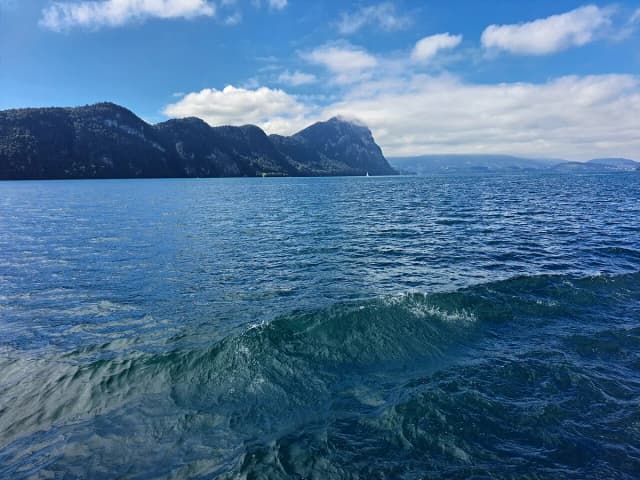
- Large central Swiss lake shared between cantonal regimes
- Boat hire is available at multiple locations, but the exact arm and canton determine the permit rules.
A good match for Lake Lucerne — most conditions are close to what it fishes best in.
Lake Lucerne, Switzerland Terrain map
- Cloud cover (cloud) suits the fishery well.
- Buzzer is in its seasonal window, boosting the chance of targeted feeding.
- Trout 1 March → 31 December
- Char varies_by_canton → varies_by_canton
Alpine char (Saibling) — seasons, minimum sizes, and retention rules are set by each canton's fisheries authority. Different cantons may apply different closed seasons or catch restrictions. Always verify with the specific cantonal authority for the arm you intend to fish.
- Lake trout 1 March → 31 December
Lake trout (Seeforelle) — seasons and regulations are set by each canton's fisheries authority. Minimum sizes, retention rules, and boat permits vary by canton and sometimes by arm. Check regulations with the relevant cantonal office before fishing.
Lake Lucerne
With limited drift, anchor or fish static from sheltered positions. Work a bushy searching pattern on the bob and drop a contrasting nymph on the point. In the calm, a single dry fly or a slowly-fished nymph tends to out-fish an active retrieve.
If the main plan is not working, switch to a smaller, more imitative pattern fished slower and deeper. A change of drift angle can also make a difference.
Buzzer may strengthen through the middle of the day as conditions warm.
Flat calm suits bank fishing near features — points, weed beds, and inflows where fish patrol.
Hatch predictions
Top nymph shown — see all 3 guilds as a supporter.
Start free trial14-day free trial. Cancel anytime.
Beyond the hatch · worth watchingambient prey(1)
Hatch predictions
Top prey shown — see all 5 as a supporter.
Start free trial14-day free trial. Cancel anytime.
Numbers are intensity 0 (none) to 3 (peak) — a guide, not a guarantee.
- Large central Swiss lake shared between cantonal regimes
- Boat hire is available at multiple locations, but the exact arm and canton determine the permit rules.
A good match for Lake Lucerne — most conditions are close to what it fishes best in.
Lake Lucerne, Switzerland Terrain map
- Cloud cover (cloud) suits the fishery well.
- Buzzer is in its seasonal window, boosting the chance of targeted feeding.
- Trout 1 March → 31 December
- Char varies_by_canton → varies_by_canton
Alpine char (Saibling) — seasons, minimum sizes, and retention rules are set by each canton's fisheries authority. Different cantons may apply different closed seasons or catch restrictions. Always verify with the specific cantonal authority for the arm you intend to fish.
- Lake trout 1 March → 31 December
Lake trout (Seeforelle) — seasons and regulations are set by each canton's fisheries authority. Minimum sizes, retention rules, and boat permits vary by canton and sometimes by arm. Check regulations with the relevant cantonal office before fishing.