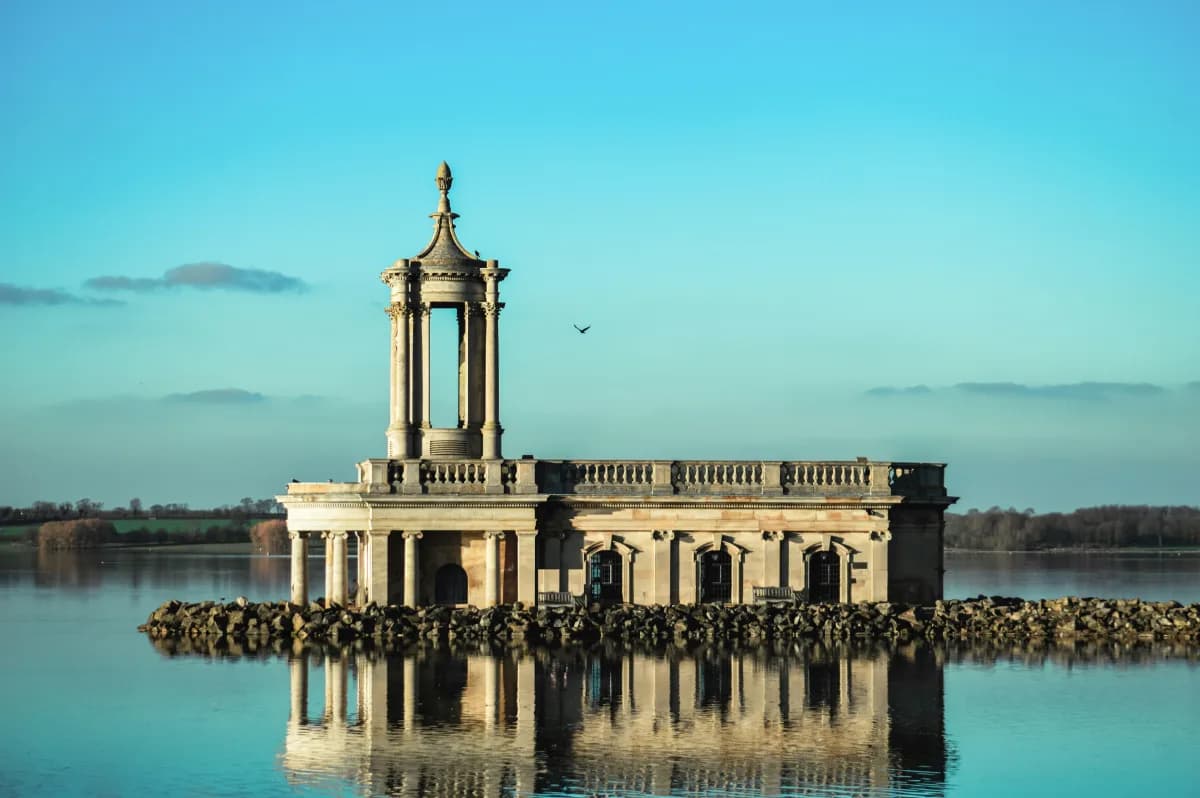
Birmingham is, above all else, a reservoir trout base. People who fish do not tend to move there for the rivers — and the fishing culture that has grown up around the city reflects this honestly. But what it has is actually quite good. Draycote and Blithfield sit within an hour. Pitsford, Rutland and Grafham are achievable on a long day. And for anglers willing to drive, the Dove and Derbyshire Wye are among the best limestone river fishing in England.
The right question for a Birmingham fly angler is not 'where is the nearest trout stream?' It is: do I want easy trout, big reservoir fishing, or proper wild river fly fishing? The answer to each of those is different.
Fly Fishing from Birmingham: A Reservoir Base
People who fish do not tend to move to Birmingham for the rivers. The Trent and Severn headwaters are not the Itchen. The Peak District is there if you drive, but it is not on the doorstep in any meaningful sense. And the fishing culture that has grown up around the city reflects this honestly: Birmingham is, above all else, a reservoir trout base.
What it has is actually quite good. Within a realistic day trip you can fish some of the best stillwater trout venues in England — Draycote, Blithfield, Pitsford, Rutland, Grafham — and a handful of rivers that reward the effort: the Teme for grayling and trout in a mixed, unpretentious way; the Dove and Derbyshire Wye for something closer to a proper limestone river experience; the Welsh Dee if you are prepared to treat it as a mission rather than an outing.
The right question for a Birmingham fly angler is not 'where is the nearest trout stream?' It is: do I want easy trout, big reservoir fishing, or proper wild river fly fishing? The answer to each of those is different.
The Legal Bit, Briefly
An Environment Agency rod licence covers fly fishing throughout England and Wales. Reservoir day tickets come from Anglian Water Parks and club websites. River access is almost entirely club, estate or association controlled.
Anyone fishing with rod and line for trout, salmon, freshwater fish, smelt or eel in England and Wales needs the correct Environment Agency rod licence — on club water, day-ticket water and private lakes alike. GOV.UK sells one-day, eight-day and twelve-month versions. The rod licence makes you legal nationally; the fishery permit gives you access to that specific water. Keep the two straight.
For the Midlands reservoirs — Draycote, Pitsford, Rutland, Grafham — day tickets are available at the gate or online from Anglian Water Parks. Blithfield Anglers runs its own permit scheme, available directly from the club. River access around Birmingham is overwhelmingly club, estate or syndicate controlled. Some waters operate day tickets; others require club membership or a guided booking. For river beats on the Dove and the Derbyshire Wye, expect permit prices that reflect the quality of what you are fishing.
Method restrictions, catch-and-release rules, barbless-only requirements and season dates vary by water. Always confirm before you stand in it.
Draycote Water: The Headline Venue
Probably the most important venue in this guide, which is a slightly strange thing to say about a reservoir on the edge of Warwickshire. But it earns it — close enough to be genuinely useful, and big and varied enough to satisfy experienced stillwater anglers without making beginners feel they have wandered into the wrong room.
The trout season runs from early March through to the end of January the following year — essentially year-round — with fly fishing available from both bank and boat. The reservoir is large enough to have proper character: bays, points, wind lanes, a varied bottom, and the kind of depth variation that means the right approach changes with the season rather than staying fixed. In spring, trout can be close in and bank fishing from the shallower bays is often excellent. By summer, boat tactics and an intermediate or sinking line tend to produce more consistently.
In autumn, when fry-feeding fish are active, surface activity can be extraordinary. Start with buzzers on a slow figure-of-eight retrieve in spring. Move to nymphs, diawl bachs and damsels through the season. In autumn, fry-pattern fishing on a floating line — a small streamer, a white lure, something that moves — accounts for some of the biggest fish of the year.
The honest pitch: Draycote is not a wild river. It is a managed trout reservoir. But it is a very good one, and for most Birmingham fly anglers it is the most realistic answer to 'where do I fish today?'
Blithfield Reservoir: The Best North-of-Birmingham Choice
Fly-only, eleven miles of bank fishing, a fleet of powered boats, and accessible from Sutton Coldfield, Walsall, Lichfield, Tamworth, Cannock and Stafford without having to fight through the city.
If Draycote serves the south and east of Birmingham, Blithfield covers the north. It is fly-only, which is not a minor detail; it keeps the water quieter and the fishing more purposeful than a mixed-method reservoir. Bank fishing can be excellent on the right day, particularly in the creeks and bays where wind concentrates surface activity. Boat fishing opens up the deeper water and gives you access to fish that never come within reach of the bank.
Similar tactics to Draycote — buzzers, nymphs, damsels, small lures — but with a distinctly fly-only atmosphere that rewards finesse over power. Intermediate lines and slow retrieves account for most fish. On flat, bright days, small dries and emergers in the surface film are worth a serious look. A proper fly-only reservoir within an hour of Birmingham's northern suburbs: it is the obvious regular-practice water for a significant portion of Midlands fly anglers.
Smaller Stillwaters: The Quieter Option
Not everyone wants a big reservoir. Some days you want to bend a rod without wind, without a boat, and without the slight anxiety of fishing a water so large you are not entirely sure where to start.
Broad Oak, near Malvern and Upton upon Severn, is the Worcestershire answer to that mood: a smaller, more manageable stillwater that works well for a half-day, a sociable session, or anyone still working on their casting. Standard stillwater nymph and lure approaches work here — small black patterns, gold-headed nymphs, damsels and buzzers. Forgiving enough for beginners; not interesting enough to hold most experienced anglers for a full day unless the company is good.
It is worth knowing these smaller waters exist as an alternative to the large reservoirs, particularly for newer fly anglers who want room to work on their casting without exposed water or a strong wind. Save Draycote for when you are ready to mean it; use the smaller waters to get there.
The Big-Water Belt: Pitsford, Rutland and Grafham
Birmingham sits close enough to the major Anglian Water trout reservoirs that they belong in any serious guide to Midlands fly fishing — even if none of them qualifies as 'local' in any straightforward sense.
Pitsford Water is the most realistic upgrade from Draycote and Blithfield. It is larger, it holds fish that have had more time and space to grow, and it rewards anglers who are willing to put some thought into their approach. Surface-feeding fish make the banks interesting at both ends of the season; bank and boat fishing for stocked rainbows and wild brownies on a water big enough that tactics genuinely matter. Season runs from late February to the end of January.
Rutland Water is a different proposition entirely. One of the great English reservoir trout fisheries — a venue that attracts serious anglers from across the country, holds genuinely large brown trout alongside stocked rainbows, and has the kind of scale that makes tactics matter in a way they don't always need to on smaller waters. From Birmingham it is a proper commitment: an early start, a full day, a long drive home. But it is too good to omit, and for anglers who want somewhere with a genuine reputation and a real destination feel, it is worth every mile.
Grafham Water is in the same category — another major Anglian Water reservoir offering bank and boat fly fishing on a serious scale. The honest framing for all three: these are not Birmingham's local fisheries. They are Birmingham's big-day fisheries. Put them in your diary for days when you want to mean it. A note on Ravensthorpe and Eyebrook: recent changes have altered the fishing arrangements at both. Check current operator pages before fishing either, and do not assume they are straightforward trout options.
River Teme: The Best Westward Option
The Teme rises in Mid Wales, crosses the border near Knighton, flows past Ludlow and Tenbury, and joins the Severn south of Worcester. It is not a manicured trout stream — and that is worth saying clearly. It is a mixed, honest river with genuine wild fish.
The whole river was designated an SSSI in 1996, which tells you something about the quality of the environment even if it does not tell you much about the fishing. It is a mixed river with some sections that are more open to casting than others, water that can be coloured, and a species list that runs from brown trout and grayling down through chub, roach and perch. The fly angler who arrives expecting a chalk stream will be disappointed. The fly angler who arrives expecting a varied, honest river with proper wild fish will usually find it.
Grayling are the most consistent fly target, particularly from summer through autumn and into winter. Trout are present. Chub on fly — a slightly underrated pursuit — can be genuinely interesting in summer: a dry beetle or hopper worked through a summer pool takes fish that fight better than most trout anglers expect. Nymphs and spiders on a short line for grayling; small dries in the evening when something is hatching. Keep your casting tight and your wading careful — the banks can be overgrown.
River Dove: The Classic River-Fly Name
Izaak Walton fished it. Charles Cotton wrote about it. Wild brown trout, wild grayling, limestone-clear water in the right conditions, and the kind of technical dry fly and nymph fishing that takes time to get right.
The Dove is the kind of river that appears in the history of fly fishing rather than just the local guide. It has earned a weight of reputation that it largely deserves. The Temple beat, a two-mile double-bank stretch, is one of the more accessible day-ticket options for Birmingham anglers without club access. It is described as suited to medium to good fly fishers — which is honest, and which should temper expectations for anyone still working on their mending and presentation.
Dry fly and nymph on limestone water means matching the hatch matters. Small olives, pale wateries, caenis, sedge in the evenings — the Dove has hatches and the trout know them. Czech nymphing and Euro-style techniques work well for grayling. Take lighter tippets than you think you need. Not a casual after-work option from Birmingham. An occasion. Worth it, but approach it as such.
Derbyshire Wye: The Premium Peak District Option
Probably the best fly fishing available within a serious day-trip radius of Birmingham. Also the most demanding. The water is clear, the fish are educated, the hatches are specific, and the river does not forgive sloppy presentation.
Cressbrook and Litton Flyfishers manage eleven miles of what they describe, reasonably accurately, as premium river fly fishing — wild brown and rainbow trout and grayling on the lower beats. Day-ticket access exists through several operators in the Bakewell area. Wild rainbow trout in a wild river are not something you encounter often in England. The Wye has them. It also has the kind of grayling fishing — clear water, visible fish, technical presentation — that makes you understand why some anglers stop pursuing trout altogether once they find it.
Dry fly, nymph and Euro-nymphing depending on conditions and time of year. Small flies. Long leaders. Careful wading. Do not wade through the fish you are trying to catch.
Further Afield: The Welsh Dee
Over two hours from Birmingham. Approach it as a weekend trip or a long-planned day rather than a casual detour. One of the best grayling rivers in Britain, with a scale and character that smaller Peak District streams cannot quite match.
The Welsh Dee will eventually appear on the list of any Midlands fly angler who takes grayling fishing seriously. Better to plan for it properly than to drive two hours on a Tuesday and wonder why it did not work out. Spring for trout on the upper water; autumn and winter for the grayling run — nymphs in the faster channels, Czech and Euro techniques through the glides, and the occasional dry on a still autumn afternoon when something is hatching and the fish are looking up.
Access through the Angling Passport scheme and several club and syndicate day-ticket arrangements covers much of the fishable water from Corwen downstream. Check the current permit situation before committing to the drive.
When to Go
Spring for the reservoirs and the first river sessions. Summer for wild trout in the evenings. Autumn for reservoir fry-feeders and grayling. Winter narrows the options but does not close them.
Spring is prime reservoir time. Trout are hungry, close to the bank, and a buzzer fished slowly on a floating line near the margins will account for a lot of fish. March and April can be excellent at Draycote and Blithfield. On rivers, March browns and dark olives signal the opening of the season; the Dove and Wye come alive from mid-April when water temperatures begin to rise.
Summer is best early and late in the day. Flat, bright water on a reservoir in July can be hard work. On rivers, evening rises, shaded runs, terrestrial patterns and careful low-water presentation are the answer. The Dove and Wye fish well on summer evenings when conditions align. Autumn is one of the best times on reservoirs as fish start chasing fry — surface activity, bigger fish, streamer fishing that can be genuinely exciting. It is also the right time to turn attention to grayling as temperatures drop and the trout rivers begin to close.
Winter narrows options considerably. Grayling fishing on the rivers continues and is often at its best — the Teme, Dove, Wye and Dee all fish well for grayling in the right conditions. Some stillwaters stay open for rainbow trout on a permit. Check current season dates for each specific water before going.
A Word for Beginners
If you are new to fly fishing and based in Birmingham, start on a managed stillwater before you attempt a river. This is not a concession to difficulty — it is the sensible order of operations.
Learning line control, depth, retrieve speed, fly selection and reading water is easier on a lake where the variables stay relatively fixed than on a river where everything moves. Best first choices: Draycote Water for the full reservoir experience, Blithfield for a fly-only atmosphere, Broad Oak or similar for a smaller and less exposed environment. A few sessions on stillwater, casting regularly and concentrating on the retrieve rather than the distance, will make you a significantly better angler before you set foot on the Dove.
The Derbyshire Wye is brilliant. It is also humbling. Go there when you are ready.
The Verdict
Birmingham will not compete with Sheffield or Edinburgh or Bakewell as a pure fly-fishing address. But it is not the dead zone it might appear on a map.
Draycote and Blithfield give Birmingham anglers two proper trout fisheries within an hour. Pitsford, Rutland and Grafham open up the best of English reservoir trout fishing on a longer day. The Teme offers grayling and mixed river fishing to the west. The Dove and Derbyshire Wye, for anglers willing to commit to the drive, are among the best limestone trout and grayling rivers in England.
It is not the kind of city where you walk out of your front door and into a famous chalk stream. But most cities are not. Birmingham works as a fly-fishing base for anglers who understand what it offers and plan accordingly.