Iceland's longest river. Major salmon and trout drainage with extensive productive water. Less intensive commercial operation than premium named rivers but excellent fishing opportunity. Volcanic bedrock underlies this river. Iceland's salmon are managed conservatively under operator and national rules — quotas, size limits and catch-and-release are widely applied; check the river's rules before fishing.
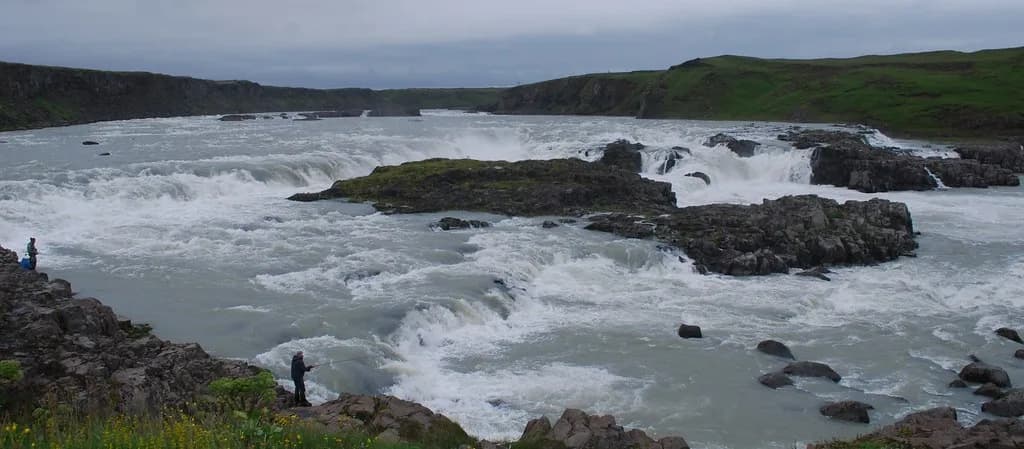
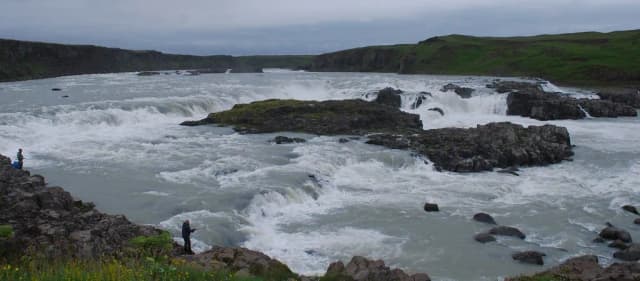
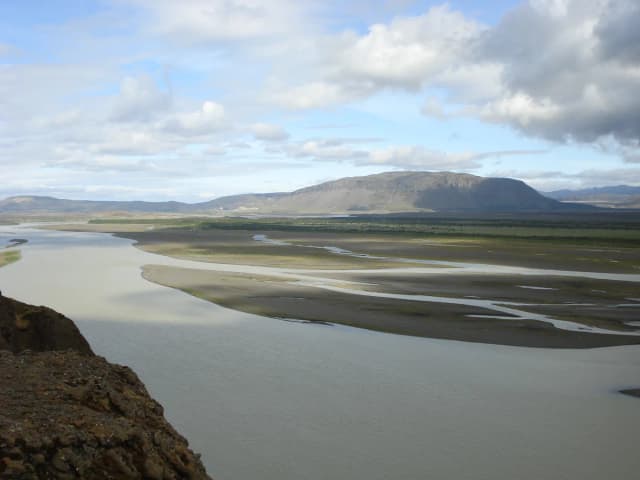
Þjórsá is the longest river in Iceland — some two hundred and thirty kilometres from the Hofsjökull ice down across the southern lowland to the sea, draining a basin of more than seven thousand square kilometres with its great tributary the Tungná. It is a true glacial river, grey and opaque with meltwater, tracking for much of its lower course the edge of the Great Þjórsá Lava, the largest single lava flow on Earth since the last ice age, laid down some 8,600 years ago. Despite the murk it carries one of the largest wild salmon stocks in the country — unusually, fish that spawn and grow in glacial water, a rarity worldwide — most of them pushing through past Urriðafoss in June. This is big, powerful, silt-laden water on a broad gradient. Wading is bold work in poor visibility; read the lava-edged channel rather than the bottom.
Wading: Poor visibility in silt laden glacial water
- River
- Volcanic
- Unconfined
- Large river