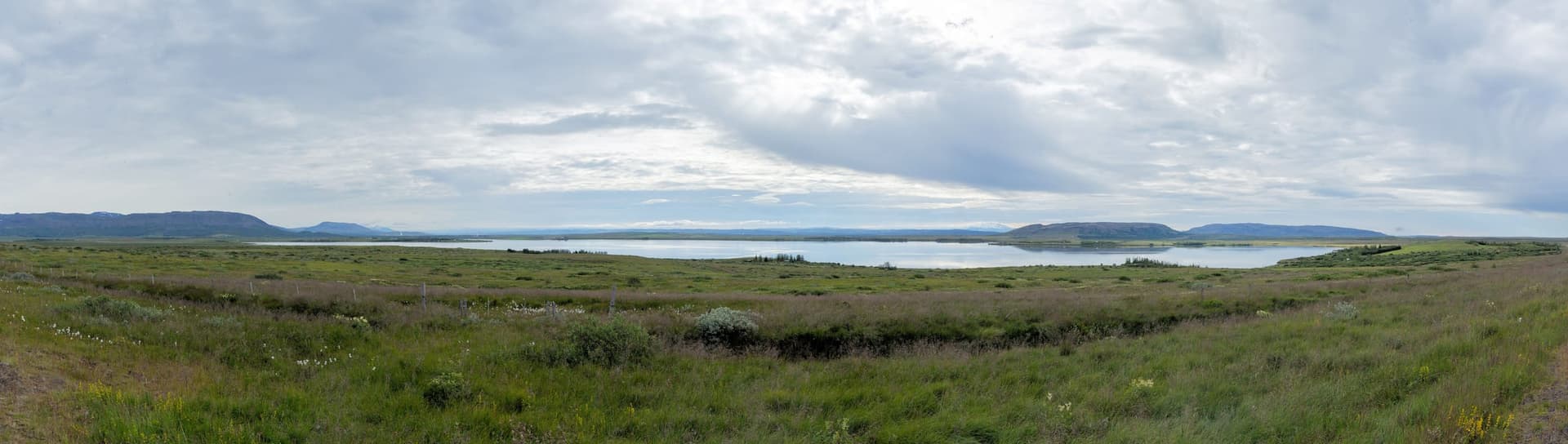
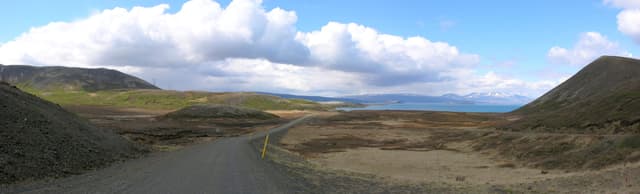
Iceland's largest natural lake, partly within Þingvellir National Park and famous for trophy brown trout plus multiple Arctic char forms. Spring-fed, crystal-clear water in a tectonic rift valley. The practical season in the national-park area runs from 20 April to 15 September, with stricter early-season fly-only and brown-trout-release rules.
- Free fishing
- Fly only
A patient day, if you fancy it
Good wave on — drift country. Take your time — read the water before you cast.
This venue is often best in june september.
Conditions on the water
Some readings unavailable — check directly before fishing.
The brief
The plan
Set up a broadside drift and cover the water systematically. Work a bushy searching pattern on the bob and drop a contrasting nymph on the point.
If the main plan is not working, switch to a smaller, more imitative pattern fished slower and deeper. A change of drift angle can also make a difference.
Keep an eye on changing conditions — wind shifts and cloud breaks can trigger short feeding spells.
A gentle ripple is ideal for drifting — broadside drift covering the wind lanes should be productive.
What's on, when
Numbers are intensity 0 (none) to 3 (peak) — a guide, not a guarantee.
Top pattern + the box
Why today scores what it does
- late spring conditions with overcast skies and breezy wind.
Precipitation
Who this water suits
Þingvallavatn, on the water
Field guide · contributor-editedWhat this water is
Iceland's largest natural lake, partly within Þingvellir National Park and famous for trophy brown trout plus multiple Arctic char forms. Spring-fed, crystal-clear water in a tectonic rift valley. The practical season in the national-park area runs from 20 April to 15 September, with stricter early-season fly-only and brown-trout-release rules.
- Lake
- Volcanic
How to get to the water
Where the rules change
- Trout20 April → 15 September
- Char20 April → 15 September
Licences, sorteo, the rules
- In the Þingvellir national-park area, the season is 20 April to 15 September
- From 20 April to 1 June only fly is allowed and all brown trout must be released
- Fishing is forbidden in Öxará and at its mouth, and Hallvík closes from 1 July to 31 August.
Þingvallavatn
Iceland's largest natural lake, partly within Þingvellir National Park and famous for trophy brown trout plus multiple Arctic char forms.
A patient day, if you fancy it
Good wave on — drift country. Take your time — read the water before you cast.
This venue is often best in june september.
Some readings unavailable — check directly before fishing.
A reasonable day here, though cloud isn't quite in the sweet spot.
Set up a broadside drift and cover the water systematically. Work a bushy searching pattern on the bob and drop a contrasting nymph on the point.
If the main plan is not working, switch to a smaller, more imitative pattern fished slower and deeper. A change of drift angle can also make a difference.
Keep an eye on changing conditions — wind shifts and cloud breaks can trigger short feeding spells.
A gentle ripple is ideal for drifting — broadside drift covering the wind lanes should be productive.
- late spring conditions with overcast skies and breezy wind.
Numbers are intensity 0 (none) to 3 (peak) — a guide, not a guarantee.
Terrain map
- In the Þingvellir national-park area, the season is 20 April to 15 September
- From 20 April to 1 June only fly is allowed and all brown trout must be released
- Fishing is forbidden in Öxará and at its mouth, and Hallvík closes from 1 July to 31 August.
Iceland's largest natural lake, partly within Þingvellir National Park and famous for trophy brown trout plus multiple Arctic char forms. Spring-fed, crystal-clear water in a tectonic rift valley. The practical season in the national-park area runs from 20 April to 15 September, with stricter early-season fly-only and brown-trout-release rules.
- Lake
- Volcanic
- Trout20 April → 15 September
- Char20 April → 15 September
Iceland's largest natural lake, partly within Þingvellir National Park and famous for trophy brown trout plus multiple Arctic char forms. Spring-fed, crystal-clear water in a tectonic rift valley. The practical season in the national-park area runs from 20 April to 15 September, with stricter early-season fly-only and brown-trout-release rules.