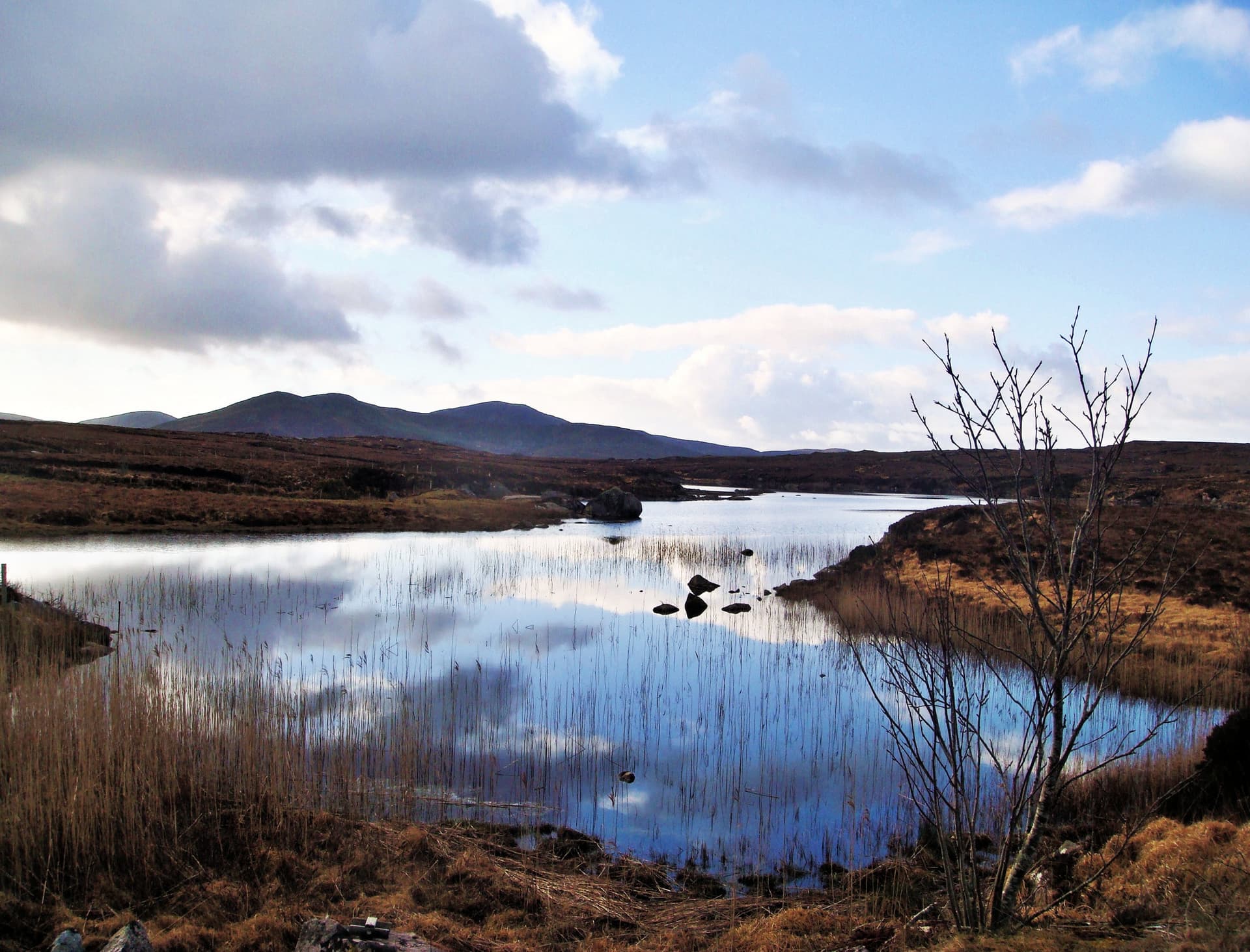

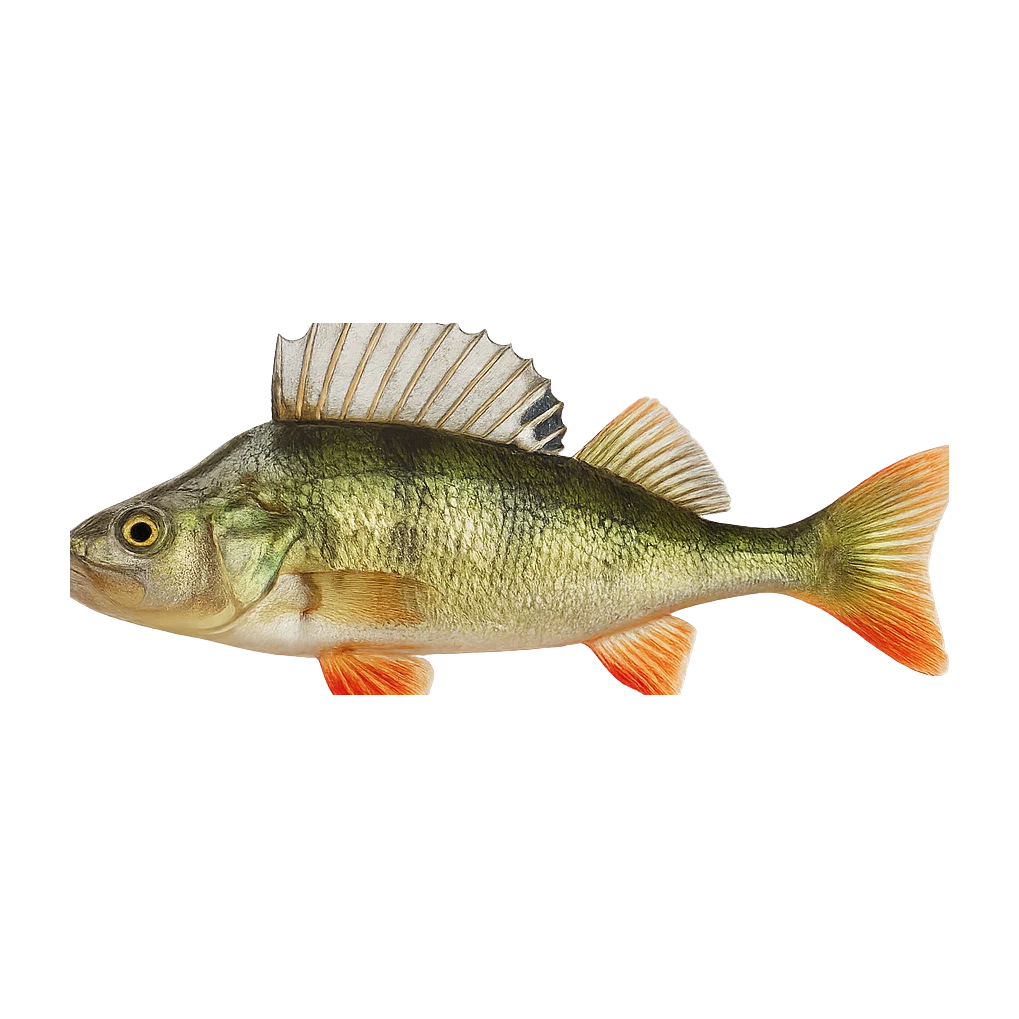
The Rosses — the rough stony country between Dungloe and the Atlantic — holds approximately 130 small wild brown trout loughs spread across a few square kilometres of blanket bog and quartzite moorland. It is probably the densest concentration of accessible wild trout water in Ireland. The lakes vary from half an acre to twenty — most are unfished except by locals, but the Rosses Anglers' Club manages a significant portion and issues day permits for boats and bank fishing. Fish average around the half-pound mark but wild trout to 2 lb are possible on the better loughs. Sea trout enter the system via the short connecting rivers when water is high. This is not destination fishing in the conventional sense — you need local knowledge or a willingness to explore — but for the angler prepared to read the terrain and fish creatively, it is some of the finest wild-trout country in Ireland.
- Permit plus club or public
A patient day, if you fancy it
Glassy and bright — hard work without a breeze. A flat lough is a quiet lough — wait for the breeze.
Conditions on the water
Some readings unavailable — check directly before fishing.
The brief
The plan
With limited drift, anchor or fish static from sheltered positions. Work Black Pennell on the bob and Bumble on the point.
If the main plan is not working, switch to a smaller, more imitative pattern fished slower and deeper. A change of drift angle can also make a difference.
Keep an eye on changing conditions — wind shifts and cloud breaks can trigger short feeding spells.
Strong wind makes boat fishing difficult — sheltered bank spots near lee shores will fish best.
What's on, when
Numbers are intensity 0 (none) to 3 (peak) — a guide, not a guarantee.
Top pattern + the box
Why today scores what it does
- Wind conditions (strong) are not ideal for this water.
Precipitation
Who this water suits
Rosses Lakes Fisheries, on the water
Field guide · contributor-editedWhat this water is
The Rosses — the rough stony country between Dungloe and the Atlantic — holds approximately 130 small wild brown trout loughs spread across a few square kilometres of blanket bog and quartzite moorland. It is probably the densest concentration of accessible wild trout water in Ireland. The lakes vary from half an acre to twenty — most are unfished except by locals, but the Rosses Anglers' Club manages a significant portion and issues day permits for boats and bank fishing. Fish average around the half-pound mark but wild trout to 2 lb are possible on the better loughs. Sea trout enter the system via the short connecting rivers when water is high. This is not destination fishing in the conventional sense — you need local knowledge or a willingness to explore — but for the angler prepared to read the terrain and fish creatively, it is some of the finest wild-trout country in Ireland.
- Lake
- Quartzite granite
How to get to the water
Where the rules change
- Trout15 February → 30 September
Licences, sorteo, the rules
- Rosses Anglers' Club — day permits from Dungloe
- Some loughs have specific access rules (fly-only, boat-only)
- State rod licence required.
Rosses Lakes Fisheries
No photos yet for this water.
The Rosses — the rough stony country between Dungloe and the Atlantic — holds approximately 130 small wild brown trout loughs spread across a few square kilometres of blanket bog and quartzite moorland.
A patient day, if you fancy it
Glassy and bright — hard work without a breeze. A flat lough is a quiet lough — wait for the breeze.
Some readings unavailable — check directly before fishing.
Conditions are away from this venue's sweet spot — it usually fishes best in ripple wind with mixed skies.
With limited drift, anchor or fish static from sheltered positions. Work Black Pennell on the bob and Bumble on the point.
If the main plan is not working, switch to a smaller, more imitative pattern fished slower and deeper. A change of drift angle can also make a difference.
Keep an eye on changing conditions — wind shifts and cloud breaks can trigger short feeding spells.
Strong wind makes boat fishing difficult — sheltered bank spots near lee shores will fish best.
- Wind conditions (strong) are not ideal for this water.
Numbers are intensity 0 (none) to 3 (peak) — a guide, not a guarantee.
- Rosses Anglers' Club — day permits from Dungloe
- Some loughs have specific access rules (fly-only, boat-only)
- State rod licence required.
The Rosses — the rough stony country between Dungloe and the Atlantic — holds approximately 130 small wild brown trout loughs spread across a few square kilometres of blanket bog and quartzite moorland. It is probably the densest concentration of accessible wild trout water in Ireland. The lakes vary from half an acre to twenty — most are unfished except by locals, but the Rosses Anglers' Club manages a significant portion and issues day permits for boats and bank fishing. Fish average around the half-pound mark but wild trout to 2 lb are possible on the better loughs. Sea trout enter the system via the short connecting rivers when water is high. This is not destination fishing in the conventional sense — you need local knowledge or a willingness to explore — but for the angler prepared to read the terrain and fish creatively, it is some of the finest wild-trout country in Ireland.
- Lake
- Quartzite granite
- Trout15 February → 30 September
The Rosses — the rough stony country between Dungloe and the Atlantic — holds approximately 130 small wild brown trout loughs spread across a few square kilometres of blanket bog and quartzite moorland. It is probably the densest concentration of accessible wild trout water in Ireland. The lakes vary from half an acre to twenty — most are unfished except by locals, but the Rosses Anglers' Club manages a significant portion and issues day permits for boats and bank fishing. Fish average around the half-pound mark but wild trout to 2 lb are possible on the better loughs. Sea trout enter the system via the short connecting rivers when water is high. This is not destination fishing in the conventional sense — you need local knowledge or a willingness to explore — but for the angler prepared to read the terrain and fish creatively, it is some of the finest wild-trout country in Ireland.