
 Mayflies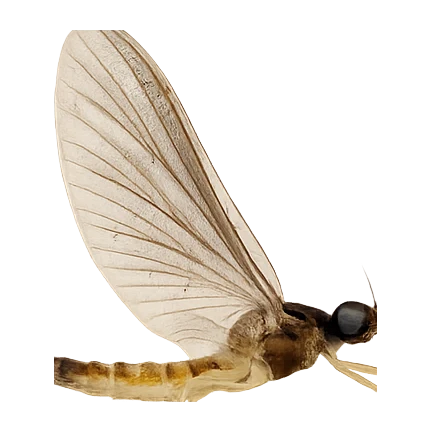
 Stoneflies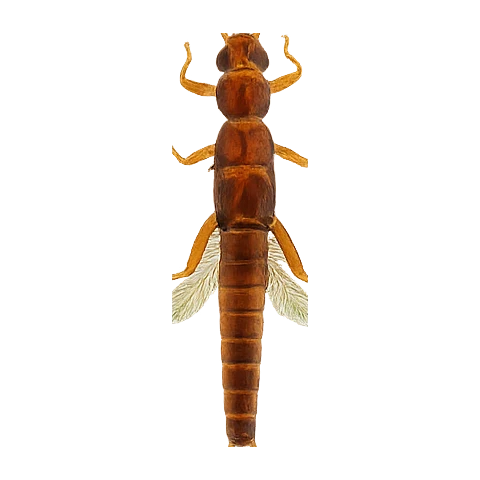
 Caddisflies
 Gammarids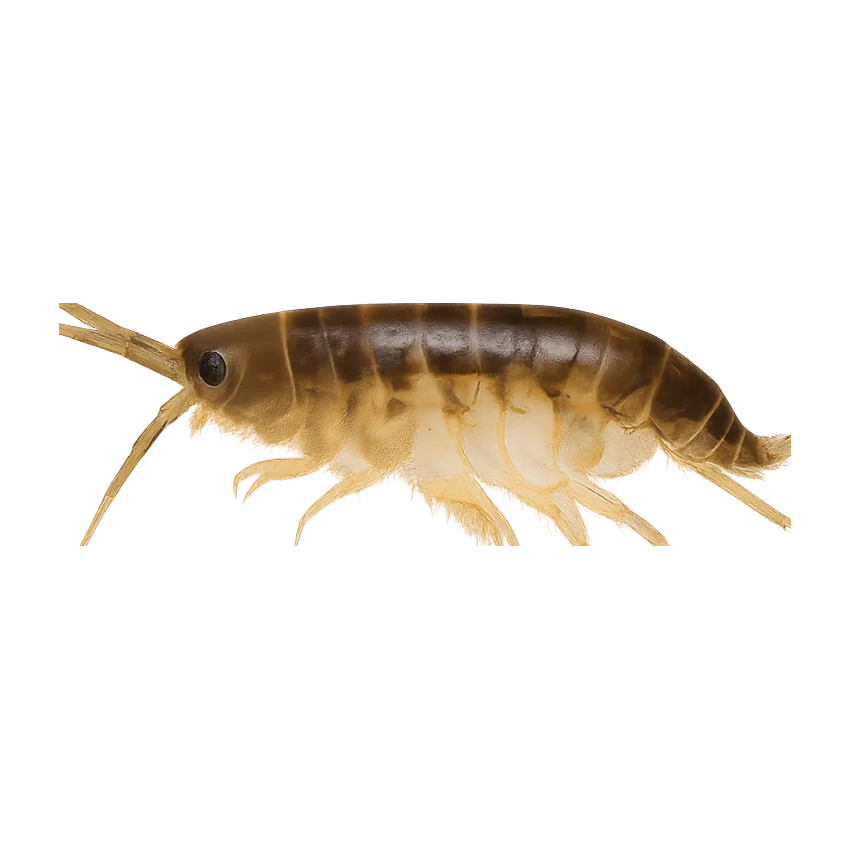

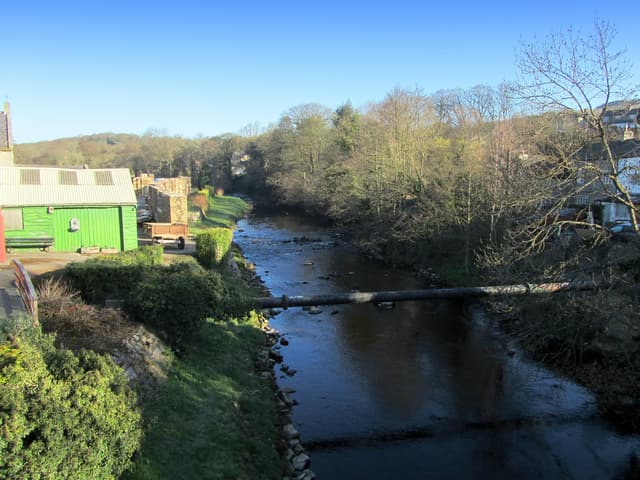
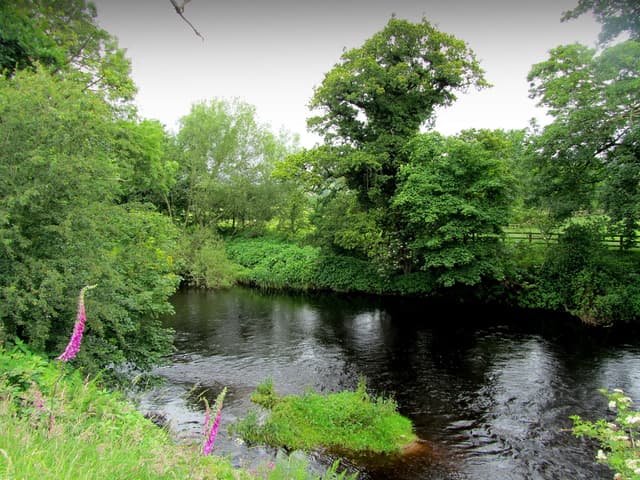
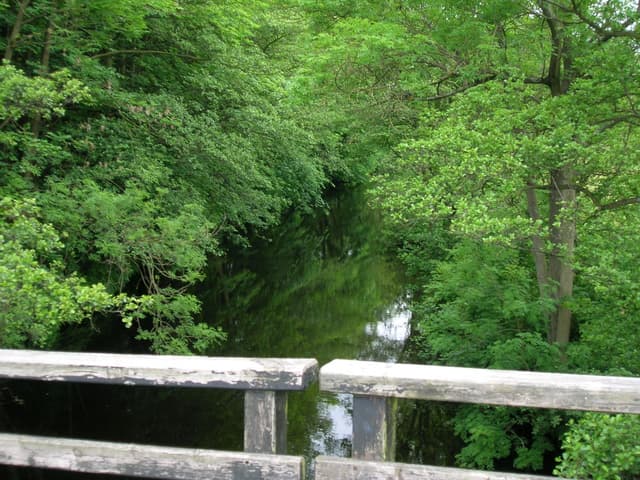
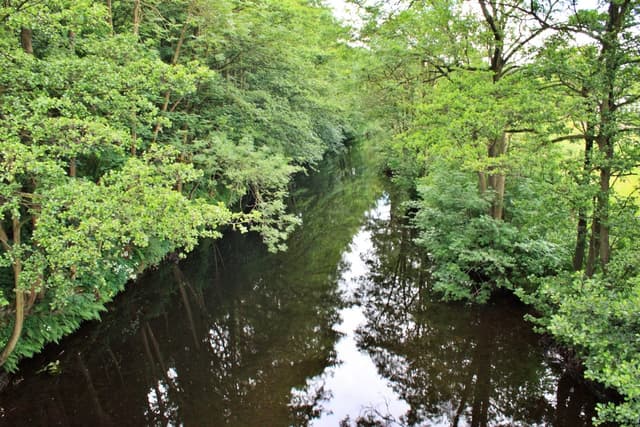
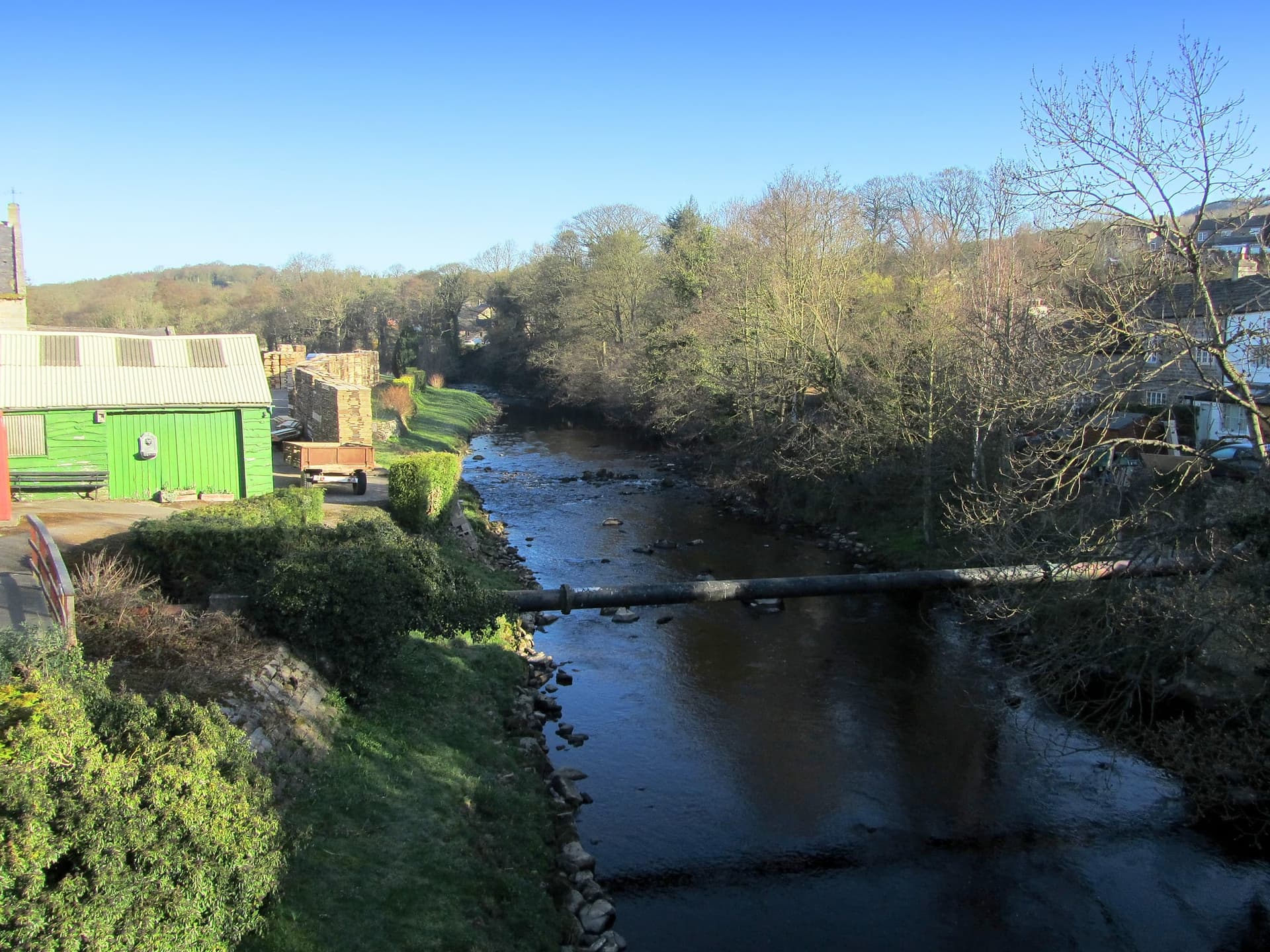
Tree-lined, intimate river that rewards subtlety more than distance. Mix of faster runs and deeper pools; excellent for soft hackle spiders under the canopy where dappled light and overhanging branches demand short-casting technique. Grayling and brown trout respond to a quiet approach and careful wading. Club beats (Knaresborough Anglers, Nidderdale) offer structure and clear rules. The Nidd teaches you that not every river demands a 30-foot cast — sometimes the opposite is true.
The Nidd is the Wharfe's neighbour and sibling — a limestone river rising on the same Pennine fells, running roughly 51 kilometres south and east through the Yorkshire Dales and lower farmland to join the Ouse near York, draining a smaller catchment but carrying the same geological and cultural DNA. The upper reaches through Nidderdale are steep and confined, cut through pale limestone in riffle and step-pool sequences; the character is responsive and intimate, especially in the narrows where Bewerley and Old Brimham concentrate the flow. Below the narrows the river opens. Through Pateley Bridge and into the agricultural plateau, the Nidd settles into partly-confined pool-riffle sequences on the same durable limestone cobble that defines the Wharfe. The pools have form and character — deep outer banks where trout hold predictably, gravel bars where current has done the sorting work. The overall impression is of a river that belongs entirely to the Dales — working landscape and fishing landscape intertwined so completely you can't separate them. The Nidd fishes smaller than the Wharfe and receives less pressure; it rewards careful approach and good water-reading. Spider and nymph are effective methods; dry fly works when the olives come. The wading is secure on limestone once you read the surface texture. The river's gift is intimacy and character; the fishing rhythm is deliberate and observant, the kind of water that teaches you to slow down.
Wading: Limestone slabs — secure footing, smooth surface
- Limestone
- Partly confined